Deontological vs consequentialist libertarians

That sounds a little creepy. I thought I was trying to get my head around Libertarian beliefs, but to my surprise, there is has been a bit of drift toward Anarchism here, and that is something I am totally unfamiliar with. I obviously have some reading to do on that subject.

I’m not advocating for statism, but I get the feeling you enjoy saying it anyway. Pragmatism is a constant with me. As I take in new knowledge, I drag pragmatism along with it. That’s basically why I asked if there were strategies for dealing with some of the issues I raised. My brain is going to move forward without the information - I’d just rather it did it with information rather than default assumptions.

The reason I said that it looks a little creepy is that I do not know the range of what acceptable is in an anarchist system. You may have written a coded message that is clear as a bell to the learned, but when I see ‘creative entrepreneurial solutions to difficult problems’, I think that we are now bumping up against restraint or constraint. Certainly the imagination in no time will come up with all forms of creative solutions. For instance, with regards to caring for the mentally ill… perhaps if it can be found that some do not demonstrate the capacity to handle their own unrestricted liberty, and must be ‘sponsored’, then maybe they could be auctioned off, with the money going to the ill person, but in care of the sponsor. Now the ill person, if physically capable, could be given a purpose, such as a laborer. Maybe they could be rented out.

Or is my assumption wrong? Maybe it is OK to be a danger to yourself and others. Maybe it is a right.

Unrestrained capitalism could be very lucrative. A person could court an aggressive state and enter into a contract where he/she leases their own property as a staging ground for an invasion, or a raid. Perhaps to steal all the gold. In fact, if you stood any chance of being adversely affected by the theft of the gold backing a currency, then it makes a lot of sense to facilitate that theft before someone else does.

Prime real estate would be mountain passes where where toll booths could charge a serious premium due to less alternative routes. Map makers could charge the owner of a toll road to have the road on the map. TV stations could negotiate the price of broadcasting or not broadcasting a story or some news. They would be lobbied harder than congress.

Boutique courts could be established and staffed by judges who specialize in having certain views. Actually, there is no need for courts if they are not backed by an authority with the power to grant of deny liberty. It would not make sense to agree to anything that worked against your own interests. It’s not like there would be a source of funding to enforce anything, so given that, it must be extended to everyone, the right to take preventative and punative action in the name of self interest.

A case could be made that there is no such thing as a conflict of interest - there is only self-interest.

I read some over the weekend, but I am just scratching the surface. The introduction to some of the concepts are a bit tough because there are a good number of thoughts that are predicated on historical truisms and axioms that I have never heard of. I’ll catch up with it, but there is no shortage of material to read.
Ontology is a branch of metaphysics. check wiki, or the stanford encyclopedia. I’m sure those two will have something to say.

You keep bringing up “beyond or after”. That merely denotes “beyond physics” meaning it has to do with principles and being that are of physics (or objects in general) but obviously these principles, though present (science is full of principles and discovering the natures of objects), these principles are not strictly material - thus why beyond physics. It takes an intellect to discover these.

I apologize in advance if I will stray somewhat from the topic ethics.

“The field of the sciences of human action is the orbit of purpose and of conscious aiming at ends; it is teleological.”~Mises Theory and History

I estimate that we can plan for unforseen events by having general rules(a moral compass). However, we can only judge actions in a historical sense. For the pragmatic out there, the following may help you in your definitions…

Causality and Teleology

I would also like to point the interested student to the following from Mises’ Socialism: An Economic and Sociological Analysis.

Socialism and Ethics

I hope this small amount of reading from a master can help progress this thread.

I think most of us here reject Etatism.

Has anyone read Benthams’ Deontology or the Science of Morality?

That’s a rather shallow “pop culture” definition. If you decide to study these things, nature is defined within science as intellect and the universe - conjoined.

yeah people just throw these words around for kicks sarcasm

they are defined and human beings protect them all the time (anytime somebody acts in self-defense) - unless they end up dying at the hands of coercion and thus have failed to defend their own life, liberty, and property.

Trying to define something out of ignorance is rather a deceiving ploy - whether intentional or not. Can any person walk off the street and show up at a particle accelerator to calculate? obvious no. They need to know what the heck they are not only doing but talking about first.

If you want to avoid talking about NR, then don’t talk about them in the first place. My advice to you is get educated on a topic before you begin talking. It would avoid you spreading any further ignorance no matter what the topic is you’re discussing.

Than Sir, by all means link or copy what you are trying to get at!

I am starting to think you are being priggish.

Please read what Mises has to say. I have created the links above in the hope that this will clarify some terminology.

If you are intrested in etymology, than the this link, is a nice tool.

That goes for any topic. I second this. Ignorance whether intentional or not helps nobody and only fails true knowledge and action.

dude. look it up. it’s not hard. You’ve applied a definition that simply isn’t accurate. You mean to tell me I have to do you’re homework for you. Here.

And I wasn’t surprised to find a nice concise definition:

“Metaphysics investigates principles of reality transcending those of any particular science. Cosmology and ontology are traditional branches of metaphysics. It is concerned with explaining the fundamental nature of being and the world.”

Metaphysics is an old subject - I’m sure you knew this.

don’t get so emotional so fast.[:P]

“It takes an intellect” - that isn’t obvious to you? Humans have an intellect. A horse doesn’t. As far as I can see only humans can discover metaphysical facts. I am being very simplistic. Intellect, the principles thereof - thus - metaphysical facts are immaterial in nature but completely conjoined to material facts. “Immaterial” - beyond physics.

I think you misinterpreted my sentence. What I was saying is that natural rights must be considered inherent; natural rights would exist simply by the very essence of reality and thus their existence would not depend on any one man’s definition of what “natural rights” must/should encompass. For clarification, “property,” though perhaps universally desirable by rational beings, is not necessarily a right afforded to one in the absence of society.

Perhaps you don’t agree with this point of view (so be it), but to call it “ignorant” would make many natural rights theories hard to swallow.

What do you mean by the absence of society? Are you talking about a Hobbesian state of nature?

Property is often confused as to mean only inanimate objects such as a car, shovel, or food, etc… Property, though, also includes a person. A person owns their own self - they are their own property.

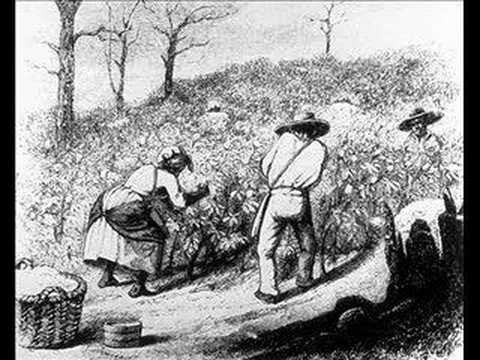
Slavery, such as what the southern U.S. had, is an attempt to completely coercively own a person, but it fails miserably. Because even slaves have free-will, live their life, and retain who they are (are their own property). Obviously they are not very free and their choices are very limited unless they want to enact self-defense - being rational with each other is an attempt to avoid such conflict. So… a master can’t take away who a person is. Even if they lost their identify in some sci-fi kind of way, the person would still be at liberty to move their own thoughts, vocal cords, arms, legs, etc… They are still that particular person distinct from another person. They would still be their own property though in this sci-fi kinda way they simply wouldn’t know their original identity. I posted on this before and provided some quotes and a list of people who define property and other NR for that matter the same logically consistent way. List includes Hoppe, Locke, and others…

NR are inherent even if one knows it or not - thus why realizing the nature of a human being is insightfully helpful. Science is a wonderful thing. Every person is alive (life), has free-will (liberty), and are they themselves (property).

Ignorance is the misuse of concepts without taking the time to learn their truth. If I’m ever ignorant I would be grateful that somebody would come along and teach or direct me to what is true about any particular topic. It’s not deragatory to be called ignorant for any person that thinks highly of critical thinking. It’s rather a compliment. What would be unfortunate is for me or anybody else to continue to use ill-informed reasoning.[8-|]

Yes, essentially. But I disagree with Hobbes’ conclusions and convictions.

It’s certainly food for thought, but, again, I don’t want to debate more thoroughly the philosophical issues just yet. Thanks for your input, though. (Quote shortened significantly for readability reasons, not because that’s the only part of your post that I read.)

Ok what would you define as ‘society’? Two people? Ten people? A thousand people?

The body is not “owned” in the sense that material objects are; rather, it is a physical extension of one’s being.

It didn’t fail because of the fact that someone is claiming ownership over a person, but rather it failed because of the objections of other individuals.

And I am my being. this particular being is my property.

I didn’t say that did I? of course I didn’t. that’s too simplistic of a notion (see below)

yeah which is why I discussed self-defense, etc… in my post. The free-will inherent in each person is what stops any coercive mastery. coercive ownership by a master over another animate property, a free-willing person is impossible. this taken absolutely is impossible cause even a slave has basic free-will. it’s why central planning i.e. communism, fails.

This what I learned at war. Thank you for the wording. I’m going to use it to explain what being a soldier for the state is.

or maybe Johnny Cash’s version:

You don’t think that is being smug?

I have no problem admitting to be in error. I made what is a common mistake. However, Wikipedia is not the most scholarly resource.

I think being polite is part of being moral, please forgive me if I was rude.

[metaphysics](http://www.etymonline.com/index.php?term=metaphysics) [![Look up metaphysics at Dictionary.com|16x16](http://www.etymonline.com/graphics/dictionary.gif)](http://dictionary.reference.com/search?q=metaphysics)
1387, "branch of speculation which deals with the first causes of things," from M.L. metaphysica, neut. pl. of Medieval Gk. (ta) metaphysika, from Gk. ta meta ta physika "the (works) after the Physics," title of the 13 treatises which traditionally were arranged after those on physics and natural sciences in Aristotle's writings. The name was given c.70 B.C.E. by Andronicus of Rhodes, and was a ref. to the customary ordering of the books, but it was misinterpreted by L. writers as meaning "the science of what is beyond the physical." Hence, metaphysical came to be used in the sense of "abstract, speculative" (e.g. by Johnson, who applied it to certain 17c. poets, notably Donne and Cowley, who used "witty conceits" and abstruse imagery). The word originally was used in Eng. in the singular; plural form predominated after 17c., but singular made a comeback late 19c. in certain usages under Ger. influence.

No it is not, one’s physical body is not a piece of property, but rather a physical part of the person. One’s physical being, and property are two completely different things: one is a physical manifestation of the individual in question, and the other is external objects being controlled by the individual. While property is alienable, someone can physicaly take an exterior object away from an individual, the body, as a physical being, is inalienable for it is very much apart of the individual in question.

The term “property” merely describes an object which a purposeful actor has ‘the ‘right’ to control’. Therefore, if an object is my “property”, I have the ‘right’ to control it. And, therefore, if you believe that each individual has the ‘right’ to control his body, you believe that each individual ‘owns’ his body; if you believe that the state has the ‘right’ to control the body of each individual who is not a government agent, you believe that each individual either does not or only partially ‘owns’ his body. If you do not believe that the body of an individual is the property of that individual or any other individual, what do you believe?

So, you believe that “some can physically take an exterior object away from an individual” but that does not apply to the body of the individual and, therefore, the body of the individual cannot be the “property” of that individual? You do not think that I “can physically take” your right index finger “away from” you via a hacksaw? If I remove your right index finger, would I violate your property rights or what?

idk. you wanted me to copy and paste something from wiki or stanford ency when a quick internet search would have brought you to it. i don’t have the time to perform such easy functions that we both would have easy access to. i simply wanted to point out an easy direction to go. if you didn’t know what specifically to look for or what have you, then i understand why you asked me to copy and paste. my apologies if you felt misguided in any way.

i used wiki as a quick access that i knew you would be able to get to. i could have also pointed the introductions to Aristotle’s works by various editors (and Aristotle himself of course) and other sources in which the same exact definition is given but that had the potential of being more challenging to access. i didn’t want to assume what you had access to or not.

i hope you didn’t assume i was intending rudeness or not that really wasn’t something i was interested in while discussing this topic.[8-|] i didn’t think your effort was intentionally rude (to be honest i really wasn’t focused along that train of thought). So, i guess, thanks for letting me know that your intention is politeness. And not to be dismissive in this cordial assertion, I assure you my intention is the same.[:)]

the quote you gave “first causes of things” is a definition of principles, and laws (etc…) in science. Theology, as you note and in which i never dismissed in total only within the context of the current discussion did I. For theology seeks first cause(s) too, but seeks being(s) theologically. Science - scientifically. I am focused on the scientific version and not seeking any theological assertions as i have noted. Metaphysics inquiring about the world and being would understandably fit with theology or any other fields (physical science, social sciences, etc…) that inquiries what is being. The latter fields of science are investigative, data gathering in which metaphysical postulates can be made in accord with new scientific discoveries. In theology it is probably questioned if angels are being or not. I’m not talking about theology though. As stated in my initial posts I’m talking about the metaphysics not of theological correlates, but of the broader scientific ones. Not that I think theology is true or false. I’m simply not making an opinion upon such in these posts. good day[:)]