Much more older than fascism. This is in fact old-fashioned mercantilism and monopolism from as far back as the 16th century, maybe.
Fascism only covers the first half of the 20th century. You can’t pin all evils on it.
Much more older than fascism. This is in fact old-fashioned mercantilism and monopolism from as far back as the 16th century, maybe.
Fascism only covers the first half of the 20th century. You can’t pin all evils on it.
Now you just built another entrapment for yourself: you made an argument that the state cannot privatize roads. Let’s take the example of my home country, again. Before there were no roads, simply small passages going through different people’s properties. Then the government seized them (through eminent domain) to build the road. Now we all know that the road has not become the property of government, it’s still individually owned in small pieces by the people whose lands were taken to build it. But the link to those people cannot be traced. According to your logic, we’re stuck. The state cannot privatize something that doesn’t rightfully belong to them, only the individual road owners can (their respective pieces of land). But how can we contact them for permission? This thing is around 100 years old now!
All we have here is a deadlock: a government that has control of the road, but under libertarian principles cannot privatize it because it does not rightfully own it. On the other hand, the rightful owners can’t be found because the matter is done-and-dusted. Besides, this argument still doesn’t deal with the “entrapment” problem because it does not specifically target the situation of a private road owner making it impossible for a person to use his road and therefore trapping him. It’s more of a general ownership argument that leads to other problems, above all, that of privatizing the road in the first place.
You have a point with homesteading: the entrapped person did use the road before (while it was under government control, but not rightful ownership) and therefore has a legitimate access to the road. But so have millions of other users of the road, and this brings us to the question: who is the legitimate owner among all of them? This again, is a philosophical obstacle in way of privatization.
What you failed to realize in your argument is that saying the government isn’t the legitimate owner of the road at the same time means that the government is in no position to privatize them.
I’m sorry, I’m not familiar with other alternatives. I’m still a newbie in Austro-libertarianism, working hard to learn as much as I can. The concession was simply a quick idea to solve the entrapment problem, it doesn’t mean that I don’t recognize another 99 problems that it will bring along. Please enlighten me with the other forms of de-statization / de-socialization.
Nor can it hinder any privatisation, though…
Of course it can. Read the example of my home country. There’s no way on earth to find the legitimate land owners for permission in order to assume the full ownership of the road.
However, you can find plenty of taxpayers who have been taxed all their lives to pay for the land improvements.
Millions of tax payers, millions of users - who’s the rightful owner of them all?
if you believe that there is no legitimate owner 'among all of them’ . Then it follows that the first homesteader of the unowned property becomes the legitimate owner, or does this not follow?
All of them, but some more than others. For example, local roads and schools are paid for by the taxes of the city’s taxpayers. That means the city taxpayers become the legitimate owners of the city. Whether or not it fully compensates for all they have been taxed is moot. They can liquidate their share for cash if they wish. As long as the government prevents the appropriation of the city that way, it continues the expropriation of the property owners.
The only way to achieve this, of course, is to break the power of the government to be the judge over disputes involving state property. Once other competing judges are in place, they can then rule over whom the property belongs to.
We are having the same discussion in another thread.
No homesteading can take place here because the road is already owned by someone: the many different people who previously owned the land parcels before they were forcefully taken away and transformed into a road. They are the legitimate owners of the road, not the people who travel or use it today.
Small correction: roads don’t come from many different land parcels, but from one large one that is subdivided into smaller ones accessible from roads. There are no “original owners” who have been expropriated except the original land developer.
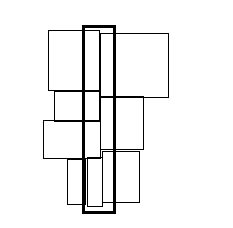
Check out this example. All the square and rectangular shapes are land parcels, and the big, long rectangle in the middle (with ticker border-lines) is the newly-built road. The government has built the road inbetween the parcels and by “biting” parts of them. This is how roads are built. Now the road may be in control of the government, but it’s still partially owned by these previous land owners. So there are many different original owners who have been expropriated.
contradicts your implication that there are no legitimate owners.
Haha. No legitimate owners among those many. As in, “which of you owns how much of the road?” This isn’t an issue for me, because again, there are already-defined rightful, original owners. I simply raised this question in regard to the argument of “taxpayers and users” as homesteaders.
I know how roads are built. Your graphic is not proof of anything.
Why would you claim roads are only built by taking land off one owner? The graphic is not mean as a proof, it’s an example of a case where more than one land parcel owner is expropriated when a road is built - which is the case 99% of the time.
You’re horribly misinformed. 99% of the time roads are built by land developers selling off lots, the other 1% the various transport ministries are expropriating their way through a single parcel to run a highway.
All the county roads in the American land grant grid, for example, where there before the land was sold off by the government. They weren’t expropriated from anyone.
Seems whether Bardhyl is right about that would vary by location and population density.
I have no idea what you are saying, you are presenting contradicitons.
on the one hand "No legitimate owners among those many"
on the other “there are already-defined rightful, original owners”
Maybe that’s the case in U.S. at a time when the land was in abundance and there were few owners of land, but that certainly isn’t the case in my country where there were many small rural owners when the first roads were built.
The discussion has gone astray and away from the main problem. I have yet to see a convincing solution to it.