@ kelvin silva
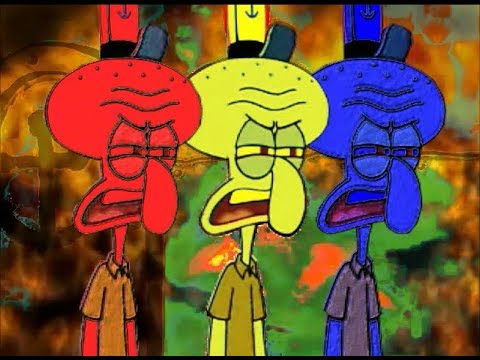
Well if you want your brain truly melted, I would look no further than here:

@ kelvin silva
Well if you want your brain truly melted, I would look no further than here:
whAT DID I EVEN watCH?
Freaking awesome, mirite?
Funny how we’ve gone from talking about George Washington all the way to sharing videos about SpongeBob on acid.
I’m not a fan of his. I think this topic should be renamed though. Instead of asking whether libertarians should respect him, the question should just ask do you personally respect George Washington. Whether you like him or not does not make you a libertarian.
That’s correct. And?
Why are you ignoring the Whiskey Rebellion?
@ Autolykos
Just checking.
Why the focus on the whisky rebellion? It was a tax protest that got out of hand from both sides.
If you judge historical figures of the past purely through the uncompromising ideal of NAP they will all fall badly short.
George Washington was a product of his times. A guy who did the best he could given the circumstances and cultural mores prevalent at the time.
Quite frankly America could have done a whole lot worse and we were lucky to have him when we did given potential alternatives.
The actions of such men must be judged in the context of thier times.
I can understand a push to get people to not venerate the founding fathers a gods. And yes they all could have done some things better/differently. But that doesn’t mean that thier accomplishments should not be respected.
To condemn them for not living up to some modern ideology is just ridiculous.
.
I don’t care how much you say that - I will not do so. I will judge them on my own terms, thank you very much.
That’s your opinion. I’m under no obligation to agree with you.
Then you are going to have a short list of people to respect. Cross off Plato & Aristotle, they supported the enslavement of other people…and COMMUNISMMMMMMMM
I love how most of your posts consist of you stating things like that, useless tautologies that are implied in any thought that someone has, adding no context, nothing for discussion, or simply asking one line questions, also with no context for further discussion. As if people should just know you cause you’re so fucking important.
What affect do you expect that to have on me, exactly?
**
[QUOTE/]
Autolykos said:**
That’s your opinion. I’m under no obligation to agree with you.
**
[Quote]
**
I view my post is just an alternative point of view to posts often presented on these type of historical judgement threads: that if a historical figure did not live up to the anarcho-capitalist ideal, they seem to be thrown under the bus as despicable pieces of trash - with no weight given to the historical context in which they lived and acted.
No one is under any obligation to agree with me.
But my opinion is just a valid as anyone elses.
Your post didn’t sound to me like just an alternative point of view. It sounded to me like you were trying to enforce your own value judgements on everyone else by presenting them as facts instead. More specifically, you seemed to be claiming that 1) people are (i.e. factually) obligated to judge people’s actions only in the context of their times and in no other way, and 2) that it is (i.e. factually) ridiculous to condemn someone who was alive in the past for not living up to some modern ideology.
By the way, the validity (i.e. worth) of an opinion is also a matter of opinion.
It is. It is a way of making yourself think that you are “better” (have more character, are smarter, more in charge of one’s will) than someone in the past because they thought differently. You see, you can talk all of the shit you want, but Washington can’t stand up for himself or challenge you. Ao, it acts as a way for people like you to tear down other people’s beliefs while you sit on a cloud of judgement telling them that thier defense of someone is useless because you have a more enlightened perspective.
It is certainly OKAY for you to do it, but it is not a respected opinion in the academic world.
/proceed shitting on academia.
Please prove that ridiculousness is in any way factual and not a matter of opinion (i.e. a [necessarily subjective] value judgement).
Ok, so let me get this straight - you disagree with me.
I know that people will disagree with me.
And if I took this:
“My point of view is correct. Your standards are overly harsh, and therefore wrong.”
And changed it to this
“I believe that my point of view is correct. I believe that your standards are overly harsh, and therefore wrong in my opinion.”
Would your level of disagreement with my viewpoint change?
I think not.
So it really doesn’t matter how I choose to phrase my views – either way you still disagree.
So why bother?
And in my opinion, your opinion that the validity of my opinion is also just a matter of opinion is no less valid than any other opinion.
.
Not ignoring per se, only pointing out a few things Washington did that were in line with libertarian principle. I never said we should laud him, only that his record isn’t wholly antithetical to freedom.
If you want to say that on the balance he scores a poor record for a man in power, then we agree.
Even the best thinkers back then–hell even today–were and are confused about liberty philosophy. Such contemporaries as Hayek didn’t have a proper theory of coercion and aggression. I think it’s only with Rothbard that we begin to see clarity on many previously murky issues.
Even John Locke fared somewhat poorly in his writings of the day. Washington then was hardly an ideologue either. Had the philosophy of liberty been advanced at that point in history to where we have it now, they may not have been so foolish as to attempt a “limited government” for they would know that no such thing is possible.
But the truth is, we only really know that now because they embarked on the grand experiment of the USA. It was a radical attempt at implementing freedom, even if in hindsight we must judge it a failed attempt. There are still things to be grateful for in their actions. Locke may have had some elements wrong, but he advanced liberty still. And Washington too may have done stupid things when in power, as all people in power inevitably do, but he was majorly responsible for America, which is still the world’s best hope as a springboard for liberty and libertarian principle.
My level of disagreement with you would change. The first example is factually inaccurate. The second example isn’t.
Why bother presenting your value judgements as though they’re facts? I suspect you have an ulterior motive.
It’s not an opinion that the validity (i.e. worth) that one attaches to an opinion is itself an opinion - it’s a fact. Try again.
I just pounded out my opinion on an internet message board. You analyzed the grammar of my post far more than I ever thought of doing…
Wow. You are reading into things far more than you need to.
Everyone else who read this thread probably got the jist of what I was saying in my posts without worrying overmuch about my unconscious grammar choices.
Ok, about the 34th post in you said: