Why is the population too small when you can get in contact with it and trade with it within a few seconds?
“Large” is not the same as “easily contacted”. To understand why large is important, you’ll have to read up. I quoted Mises and Rothbard last post. You can do a search for the phrases there, read the chapter in which they appear.
But bitcoins now have value (obviously)
It’s not obvious to me at all. If a few fools, which P. T. Barnum assures us are born every minute, are frittering away their hard earned money on it, that does not give it value, certainly not obviously.
BTW, since this thread has begun, bitcoins have lost half their “value”.
It’s not obvious to me at all. If a few fools, which P. T. Barnum assures us are born every minute, are frittering away their hard earned money on it, that does not give it value, certainly not obviously.
Value is subjective Smiling Dave, you know that. Whether you think BTC holders are fools or whether a monk somewhere thinks that gold owners are fools is irrelevant to the question of whether either ‘has value’. While people anywhere judge that either gold or BTC can be instrumental in achieving their goals, the medium in question has value.
Had I been the one who invented the regression theorem, I might be accused of moving the goal posts. But I was merely explicating what Mises wrote, and he did not move any goal posts. Ten pages before he explained his theorem, he stated that he is talking about something in common use.
Yes, there is some principle that bars it from growing to common use as geek cred. Very few people are geeks, and of the geeks, not all of them are interested in spending $17 on geek cred. And even in that miniscule microscopic population, once they have one bitcoin, that is all the geek cred they need.
We’re talking about a simple common sense idea here. Before something will be tradable, it has to be usable. You cannot trade what nobody needs.
Nobody needs bitcoins for anything. Pointing to a few geeks is not a counterexample.
In the form of a syllogism:
You cannot trade what nobody needs.
Therefore, before something will be tradable, it has to be usable.
Nobody needs bitcoins for anything, [because a few geeks is an insignificant group].
Therefore, bitcoin is not tradable. Therefore it is not now, and never will be, money. And a few fools speculating in bitcoins doesn’t count.
the quotes you provide only expose the fallacy in your argument. From Bitcoin not being a widely spread medium of exchange, you conclude that according to the Austrian approach, it is not money. So far, this is correct. From this you somehow conclude that it can never become money, and/or that its usability as medium of exchange is doomed. These two points, however, are empirical. You cannot deduce them.
The network effect present with media of exchange does not give any of them an absolute advantage, because their features and the requirements of the users are heterogeneous. It’s easy to miss this when you’re comparing coins to notes, but once you go digital the distinctions become more apparent.
Furthermore, centrally issued digital currencies cannot benefit from inter-issuer network effects due to, well, being centralised. And I’m even ignoring the government interference.
As a side note, I encountered another example of crappiness of encumbent “money” yesterday. I wanted to order some stuff from China and have it delivered to my mother in law in Malaysia. Paypal would not allow me to send the payment because my paypal account is registered to an Irish address. I asked the shop if they accept Bitcoins, we’ll see what they reply. To paraphrase agent Smith: Tell me, Mr. Smiling, what use is money if you cannot pay?
From this you somehow conclude that it can never become money, and/or that its usability as medium of exchange is doomed.
It seems to me that you wont have masses of people walking around bragging about geek cred, certainly not for an extended period like twenty years, certainly not with many bitcoins when one is enough. So that you won’t have it widely regarded as a commodity, meaning useful in and of itself, not just to speculate with or pawn off on the next guy.
Hey, maybe I’m wrong. Maybe great massesof people will, for decades and centuries, have this huge urge to establish geek cred, so much so that they will be willling to forego other pleasures. I’m willing to wait and see. An honest summary of the situation is that so far I am right, nobody cares about such nonsense at all, and I am willing to bet that even those geeks who once cared about geek cred from bitcoin no longer do, because the novelty has worn off.
The rest of your post is irrelevant. Network effects are irrelevant, the paypal story is irrelevant, and no Chinese or Malaysian will accept bitcoins. They have more pressing needs than geek cred, and more stringent demands as to what constitutes payment.. Even if you come back and triumphantly prove that the Chinese guy did accept your bitcoin, it shows nothing.
Unqualified needs do not exist. Only contingent needs exist. You may need gold in order to manufacture an electonic component, You may need BTC to increase your ‘geek cred’ or to send a low cost payment to your mother in law in Malaysia. If its true that ‘people need gold’ it’s also true that ‘people need bitcoin’.
Therefore, before something will be tradable, it has to be usable.
BTC is obviously useable. You can use it to pay your mother in law in Malaysia. Or to increase your geek cred.
Nobody needs bitcoins for anything, [because a few geeks is an insignificant group].
I see, so nobody needs X, except for a small group who don’t count because they’re a small group? This is a very innovative way of using the word ‘nobody’ in a syllogism!
Therefore, bitcoin is not tradable. Therefore it is not now, and never will be, money. And a few fools speculating in bitcoins doesn’t count.
Even if the rest of your argument worked–it doesn’t–The fact that BTC is currently being traded should tell you that there’s something wrong with any argument that ends with the conclusion that this is impossible.
All you wrote, dear bitbutter, does not refute the statement. It remains self evident.
What you wrote are examples of trade, not of use.
Thank you. It’s adapted from physics, where trivial effects are ignored. For example, when sin x is used in calculations only the first few terms of its infinite series expansion are used.
the regression theorem highly related to the network effect: it says that the utility the potential users of money derive from it is a combination of consumption value and the network value. But network effects work even for other media of exchange, especially when there is one present that is heavily manipulated by the government. You erroneously derive value from the number of participants of two networks and compare them directly, however these are heterogenous variables.
Furthermore, my story is exactly relevant, because it shows that there are factors influencing usage other than the number of participants, thereby refuting your claim. We will see if the shop accepts bitcoins. There is an exchange that trades RMB so they have no reason per se to reject it.
Bitcoin has a dual purpose: it is both a currency and a method of payment. You also erroneously assume that the latter cannot influence the former because you are obsessed with an incorrect interpretation of Regression Theorem and ignore all other factors apart from the network size.
In my village, fiat curencies have absolutely zero non-monetary value. Just because this example illustrates how commodites become mediums of exchange still does not exclude Bitcoin from becoming a widely accepted medium of exchange within it’s target market (the Internet)
An honest summary of the situation is that so far I am right, nobody cares about such nonsense at all
Ah. You must be using ‘nobody’ in that special way again: “a minority I find convenient to ignore”. It’s easier to produce more powerful sounding rhetoric when you ditch intellectual honesty, that’s for sure.
Nevermind the fluctuations in price, they’re irrelevant to your attempts to shown that bitcoins cannot be money. Focus on that, you have all your work ahead of you.
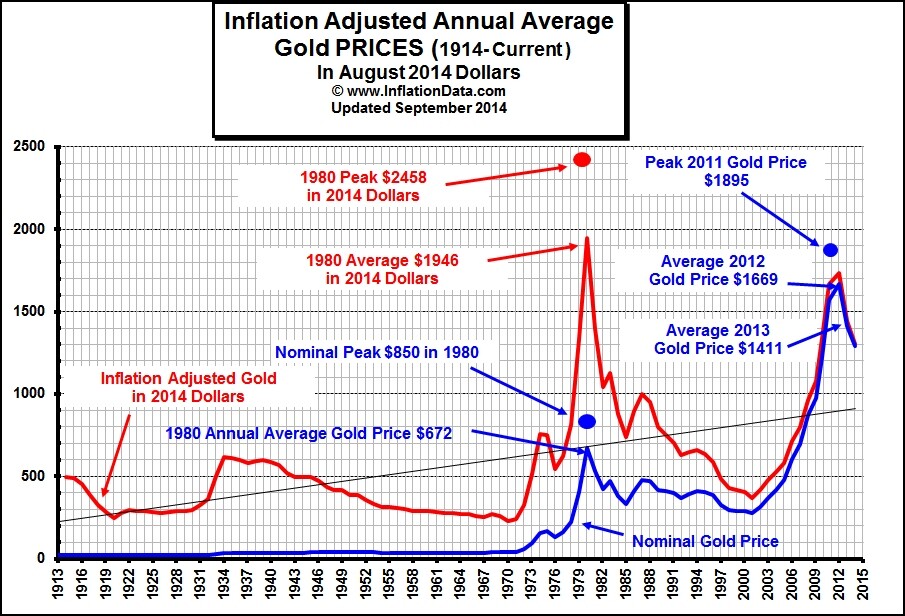
I’m obviously no expert at this, but the end of the gold chart looks a lot like the bitcoin chart up until the beginning of July (and the peak 1980). I don’t think I would feel comfortable investing in either right now. If I were to guess, I’d say the inflated gold price as well as the drop in bitcoin demand is due to the current economic crisis. People invest their assets in goods they perceive as safe, like gold, unlike monetary experiments such as bitcoin. Anyway, I think everyone agree there is a lot of speculation with bitcoins and that has driven up the prices, but that is not relevant to the question whether bitcoin can be used as money or not. Bitcoins only need a non zero value in order to be used as a medium of exchange, I still don’t understand why they can’t be widely used as such. (Although I haven’t read up on why money allegedly need a LARGE population of people who find them desirable for other reasons than for use as a transaction medium yet.)
I’m gonna say this again. Can I buy my stuff from Amazon or Ebay with bitcoins? If the answer is NO, then I have NO interest in it. Nor will the average person. Technophiles will latch on to it for sure, but main street will not. Just sayin’.
Right, the question is whether Amazon (an unlikely early adopter though) or other internet based businesses can and will start accepting bitcoins. I can think of several reasons why they would want to (these sites are run by “technophiles” btw) as well as why the average person would want to use them to pay with given the option. Some people claim that will never happen though, but they haven’t convincingly explained why yet.
But here’s the flipside. Banks are more convenient than bitcoin right now. You can’t easily integrate bitcoin into your credit transactions or your bank account. People who are naive may think this is a boon because of them thar evil banksters, but the reality is that everyone here still gets paid in some fiat currency or barter. That means you use something that is widely accepted which is integrated into both physical and digital infrastructures. So, if say tomorrow banks were allowed to use bitcoins instead of local currencies to exchange between each other electronically, then I would expect bitcoins and bitcoin services to expand and flourish. Right now, that’s probably not possible. So, I don’t care what the value or money status of bitcoin is just as much as I don’t care about the value or money status of the Zimbawe dollar. It’s useless to me.
If you have an internet business you might be tempted to accept bitcoin to avoid the difficulties and costs involved in accepting credit cards. The additional investment cost for a shop to start accepting bitcoins is small compared to other alternatives and so are any transaction fees involved. It’s not like a shop has to choose a single option, it’s fine to accept both credit cards and bitcoin, etc. If enough shops accept bitcoin then they will be useful to you and the average person. I also believe people use what’s most convenient but the fact that people take the trouble to use services like paypal or dwolla shows there is demand for alternatives. Bitcoins have the potential of being as convenient as such services, if not more so, without the disadvantages of relying on a central authority.