Mises was another logical positivist of sorts as far as morality is concerned. No wonder since he was after all an intellectual of the decadent austro-hungarian empire.
By the way, invoking the Mises and his mistakes doesn’t mean much…
Mises was another logical positivist of sorts as far as morality is concerned. No wonder since he was after all an intellectual of the decadent austro-hungarian empire.
By the way, invoking the Mises and his mistakes doesn’t mean much…
Uh oh. You mean someone detached from reality, who doesn’t believe in good and evil, 'cause “it’s all subjective” ?
How do you prove that? (I mean, you don’t even understand what problems ethics deal with).
No, you prove that there’s nothing wrong with stealing, murdering, raping and that kind of thing.
Or admit you are no different than criminals who think that stealing, raping, murdering, etc are justified actions.
Excuse me? You ‘philosophy’, if it deserves such a name, is objectively lame. Or are you talking about the food I like ?
Ah yes. You also can predict the subjective future…truly amazing.
Or maybe I would be convinced by the bunch of nihilists of this forum ? Well, I admit you won the best joke-of-the-year award…
Yet you stated that you thought it was wrong.
Well now you have gone from ethical propositions don’t have truth to well they can have truth but not everyone agrees with them.
Where are taxes a ‘good thing’? I’d learn to hear how you can work that in concert with austrian economics.
So your ‘opinion’ is beyond truth or fiction?
Well some ‘opinions’ are right and some ‘opinions’ are wrong. The simpsons is funny is not an ethical proposition.
Well Mises was obviously a utilitarian and that in itself is an objective ethical system in the sense that the maximization of social pleasure / welfare is the highest goal to be pursued.
No, it isn’t. Utilitarianism is just another expression of subjective preferences. Everyone is utilitarian.
As far as morality is concerned, Mises was right.
Once someone proves natural law, I’ll consider it to be a mistake.
No. Not at all. I believe in “good” and “evil” just as I believe in “humourous” and “humourless.” I mean someone who believes in something without proof. Hey, where is this proof of objective ethics?
How’d you come to that conclusion? (I mean, the problems ethics deal with hardly makes them automatically objective)
But Juan that impossible! Thats the entire point! How could I do that? “Right” and “wrong” are subjective opinions and therefore unfalsifiable (i.e. not truth-apt). So the burden of proof is on you, you who say objective ethics are provable.
I don’t recall saying such actions are just, in fact I said they were immoral. I just didn’t foolishly saying “its an objective fact that stealing, raping, murdering, etc ae immoral.”
Personally, I hope it doesn’t deserve the name philosophy. Philosophy is lame as we know.
What can I say, I see potential in you Juan. You’re just a little misguided.
Now you, the joker of all people, are giving me the joke-of-the-year award. You are more humble than I originally thought. You have potential my friend.
How many times does this need be repeated?
I think its wrong. (I’m making a purely ethical statement, it is only my opinion, which isn’t a proposition, it cannot be verified as true or false)
There isn’t any truth to any ethical statement. Even my own. Ethical statements are statements of opinion only.
Have you not read a thing I’ve written? Its impossible for taxes to be “good” or “bad.” I cannot and shall not try to work an ethics system into a science.(Please try and stay in the realm of ethics though to avoid any confusion over the economic meaning of good.)
Sure. But one has to distinguish between types of opinions. Opinions that concern something that is falsifiable, i.e. an interpretation of facts can certainly be considered wrong. Such opinions are tuth-apt. For example, “In think if you mix red and yellow you’ll get orange” That is right, or true. But opinions about ethics like, “I think eating meat is wrong” aren’t an interpretation of facts. They are nothing more than an emotional expression, unfalsifiable, not truth-apt.
Its a statement of opinion just like ones concerning ethics.
This thread is so of topic it’s awesome… Lol
That’s not really true. Mises wasn’t saying that we should organize society so as to maximize utility, Mises point was that one can’t make any scientific statements about ends. We can, however, demonstrate (or so the argument goes) that the free market is that form of social organization that will allow everybody to pursue and acheive their subjectively valued preferences in the long run.
as long as you are trapped in the objective/subjective paradigm it really isn’t constructive to continue the discussion. it creates a gap in the discussion.
A) for instance the first post you gave and I responded to in this thread: you said natural law isn’t necessary. i responded sarcastically that yes life, liberty, and property isn’t necessary (for human nature to flourish).
B) Second back and forth: Your objection to natural law was a supposed negation of its value based on your projection of what most people find worthwhile. So then I responded with an obvious consent that Obama is of value to most people that vote so therefore his book is a must read.
C) You say philosophy is lame and so I pointed out the first book Mises and others explicitly point out as a warmer to economics is philosophy, namely a specific Intro. to Logic book.
And lastly, simply by saying ethics is subjective isn’t anything of significance to the discussion. I don’t find it to have any explanatory power. I say the same about objective ethics as well. I always have since I’ve come to this forum. But my personal abhorring isn’t on what subjective nor objective ethics refer to. It’s the way some posters evoke few word answers and get caught up in the words and not the concepts invoke by the words. It’s usually the people that try to clear their minds of words as a relaxation technique of some sort (one that isn’t working well obviously) that actually are bothered by words, thus why their head hurts when they try to think or find it tiring to think. It’s their own individual fetish with words that has trapped them in a self-inflicted conflict between their own heart and mind.
I know it is universally absolute that murder isn’t good. And I understand a murderer and his or her sympathizers will not bring judgment upon the murderer in declaring such an act is bad or good. Unless, as some murderers feel and think in hindsight, they have some kind of reborn again attitude and confess that what they did was bad. I mean this is child’s stuff. Two green chairs are absolutely two green chairs, but then along comes somebody that says, “No one chair is slightly not as green as the other.” So what? They are still absolutely green - universally even. There is an exercise in honesty and in what field of interest any particular person has to these causes. Some people grow up to love Law and Order or CSI Movies and TV shows, some want to be lawyers, cops, or private detectives, and others don’t want to bother with it. so what?
I can state Natural Law is an absolute in human nature for intellectual law (aka natural law) includes all forms, such forms as how I feel today, the measured distance between me and a murderer, etc.., etc… are each calculated assessments that the intellect apprehends via the senses. There isn’t a knowledge void in what is gathered via the senses as I bring a certain epistemic skill to each moment. For example, a child doesn’t know a passing car can kill them if they run out in front of it. A more mature person is capable of such an understanding based on their intellectual maturation.
Yeah, you feel this way, I feel that way - so what? My intellect apprehends and interprets such feelings. I construct strategies in my life based on not only how I feel, but what my eyes relay to my mind and what intellectual maturity my mind, thus, my epistemic skill renders of the world. It is human nature to learn even when the learning is a discarding of events. I can choose to ignore that a passing car will kill me if I run out in front of it - so what? Then I die when I apply such knowledge. The epistemic gap in subjective and objective trappings isn’t worthwhile as it bogs down dialogue to a fit and fancy of how you are trying to encapsulate the whole of the world into one final concept: subjective. The world is a bit more than one word. There are other words and there are objects too. Yes objects exist, in other words, there is a capable objective perspective, and objects are not only trees but emotions, etc…; the world isn’t only about the ego of one subject/human as subjectivity blocking out the rest of the world entails. So the world isn’t only objects and isn’t only the selfish subject. It’s a bit more than such efforts to pack categorical boxes into one word universal theories such as subjectivity.
Even a farmer understands choices involve not only repeating “subjective”, but other words such as corn, beans, and shovel actually do arise. And sometimes a corn doesn’t grow good. It was a bad corn season. And yes the neighbor can find humor and laugh at the farmer and say it’s all subjective that it is a bad corn season while the neighbor munches on corn bought down at the grocery store. Sure people can laugh at the moral efforts of murderers and find comedy in the tragedy. Some people laugh about the ill-wills of others, but I don’t find that to be appropriate and considering. So yes, rape is bad and I not only feel remorse for the person raped, but I fully know if I could, I would bring justice to the rapist and have consideration for victims of crime and not simply reduce such events to humor. It is a awful ethics to perverse events in such a way.
Are you denying subjectivity and objectivity?
Read it. So what? Natural law isn’t required for life, liberty, or property.
I didn’t object to natural law. I asked for proof of it. I objected to the necessity of natural law. As I’ve repeatedly said, logic, economic laws are more than enough for humans to flourish.
I made a joke - you didn’t get it.
There is a crucial difference my friend. To claim something is objective, is to carry the burden of proof. All I’ve done is request that those who make such claims prove them.
And how do you know that? What evidence are you using? Or is it a “gut” thing?
What exactly is the Natural Law? In what units are the assessments calculated? The laws of physics (i.e. actually proven laws) determine the effects of a car wreck. These are all measurable, provable laws. Lacking knowledge of such laws is completely irrelevant. To the best that I can determine, that isn’t the case for natural law. Please explain how it is.
So what? Thats the point. What happens is that the laws of physics still apply whether you choose to ignore them or not. However, you’re feelings aren’t objective. By definition, they are a conscious subjective experience. Physics are indifferent to your feelings. In contrast ethics boil down to feelings.
Again you have falsely interpreted my position. I’m not packaging the world as subjective. I accept objectivity where it is verifiable. Laws absolutely exist. Laws of physics, logic, algorithms, etc… All of these laws are provable. Yet ethics isn’t. If it is please demonstrate. Thats all I’ve asked. And no, emotions certainly are not objects, they are, by definition, subjective experiences.
So it’s agreed humour is subjective. You’ll be a radical subjectivist soon enough.
No it isn’t. Utilitiarians propound that the good is maximizing social pleasure, the bad is vice versa. What maximizes social pleasure is subjective, however the system itself isn’t.
Here we go in the circle again, how do you know it is wrong if you can’t prove it true or false?
Then you are speaking jibberish in thinking you think something is wrong. You are just saying ‘Boo on taxes’. What use is that?
The economic meaning of good? Economics is a positive science, there is no ‘economic good’. I repeat again where are taxes a ‘good thing’.
It is a fact for those expressing the proposition. You seem to be getting into Jan Narveson in thinking that ethical statements between two individuals cannot be delved into to find common ground. That if I say I think property rights is right and you think property rights are wrong then we can’t do anything. I think that is a wrong mentality because why cannot one be convinced that property rights is right? Why cannot one be shown they are contradicting themselves? It is rather like David Friedman’s critique of apriorism.
It has nothing to do with humor unless you say is humor good or bad.
Mises took for ‘granted’, I guess you can say, that prosperity, abundance and peace are utilitarian goals that the world pursues.
Honestly I think you missed the point by responding to each point I wrote. I don’t deny them. I deny the hang-up. And life, liberty, and property are of natural law. You dismiss this, and I could care less. But when I read or discuss with somebody any particular concept I find it helps to know what I’m talking about and understand the traditional usage of concepts. Semantics word play is tricky of the weak. I’m not hung-up on trying to pin this down to such willy-nilly preferences to prove to a skeptic. How does one prove anything to a sophist/skeptic? Prove - skeptic are natural contraries.
How do I know what?
This is exactly the hang-up with those trapped in the subjective/objective paradigm. Feelings are objects that can be objectively defined. Feelings are of the subject and can be subjectively defined. And yet whether it is objective or subjective it is these feelings being defined. I have more stimulating intellectual curiosities to contemplate. No offense, but this isn’t anything ground-breaking to discuss. Maybe it is for you, but I don’t find running over intellectual ground that I’ve learned about years ago to be worth my attention today.
Emotions are objects. They are things. They can be referred to. I can intellectually apprehend the love I feel. I’m not in some mind-heart conflictive relationship. I’m at peace with myself more than such experiences would render.
Not really. You’re so focused on the paradigm of subjective/objective conflicts that you dare not to cross over and notice the conceptual arrangement beyond such mere labels that are not superbly informative, not even beyond two hints of an epistemic skill. It’s creates a stir of you supporting laughing instead of helping what are absolutely bad situations. I’m sorry, but I can’t discuss with somebody that is this heartfelt sick. It’s bothersome that people approach the world this way.
have a good day.
So the natural law is life, liberty, and property? Please elaborate and provide evidence for your claim. That has been my only request, this entire thread.
I understand the traditional usage of the term natural law and objective ethics and its differed tremendously. I’m not playing with semantics here, my language has been as clear and forthright as possible. If you feel otherwise please point out where your point of contention stems.
How do you know that “it is universally absolute that murder isn’t good”? Can you verify your opinion with facts. To be more precise, can you explain your opinion with something that is scientifically verifiable? Or is it just your own normative analysis?
You aren’t making any sense:
(1) Feelings are objects that can be objectively defined.
(2) Feelings are of the subject and can be subjectively defined.
Which one is it? If its both than you’ve answered my first question. You are denying subjectivity and objectivity.
But I’m going to consult Princeton to help what I’m saying.
Feelings are emotions they only exist within the mind, they are intangible. In stark contrast to an object, which exist outside of the mind.
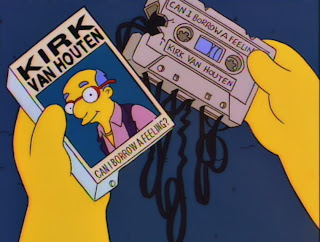
You cannot borrow a feeling. (Sorry Kirk) If you still don’t understand contact Kinsella, I don’t this to deteriorate further to another IP debat.
What circles? This is you just repeating yourself.
I DO NOT KNOW THAT IT IS WRONG.
IT CANNOT BE KNOWN THAT IT IS WRONG.
To express my preference. Whats the use of saying The Simpsons is funny? Is it still jibberish?
In economics, a “good” is a tangible product that involves the transfer of ownership from a seller to a customer. (Now, please do not make another comment concerning economic goods)
I repeat, this is you just repeating yourself.
Obviously taxes are “good” nowhere (except in someone’s mind).
Thats not a fact. There is no such thing as a “fact-for-you.” I’ll give you an example, “Ghandi murdered ten thousand Mexicans.” It does not become any more of a fact because I said it. My opinion here is false. As Ghandi never did such a thing and it can be verified that he never did such a thing. In contrast, the statement “Its was wrong for Ghandi to protest British occupation” cannot be verified. (Unless you can prove objective ethics)
I do enjoy Jan Narveson actually, you should read more of him to understand fully. As he doesn’t say there is nothing more we can do. Which is why I’ve repeatedly pointed to economic laws and logic.
Why? Thats the question I’ve asked you. Show that its ethically “right.” Show that they are contradicting themselves. But again, you don’t need to believe in natural law or objective ethics to believe in property rights. Look towards Leeson, Friedman, Jarveson, and de Jasay for a fuller explanation.
If its built on a subjective preference (pleasure, in this case) then it is 100% subjective.
The entire point is that you just ‘believe’ in logical positivism. You are the true religious fanatic here.
No, the burden of proof is on you : you need to prove that common sense morality is just personal ‘opinion’.
Are they? Or what you mean is that you call them immoral, but the word immoral is meaningless, or at best it only means “I don’t like it” ?
I’m sure that if look up “moral/immoral” in the dictionary I won’t find any entry saying that immoral means “something not liked by someone - a matter of taste”
Anyway, you are saying that you don’t like crime, but at the same time you claim that there’s nothing really wrong with it? Not very consistent, isn’t it?
Look, you are doing philosophy, whether you like it or not. As a matter of fact, your rejection of morality is just the sort of thing that post-modern, ivory-tower ‘philosophers’ would do.
So is language. So is meaning. So is logic. Lots of key things are ‘intangible’.
Then why do you think it is wrong? If you don’t know whether it can or cannot be wrong, why do you think it wrong?
The simpsons being funny isn’t a ethical proposition. It’s like saying ‘Blue is an interesting color.’
I never made a comment about economics goods meaning commodities.
So it is merely a matter of showing the rational to others why they are not good.
That’s not an opinion. That is a false statement.
Yes it can be through logical deduction.
A.) What was it about Ghandi’s protesting that was wrong?
B.) Under what conditions was Ghandi under?
C.) What was his motivation?
Explain how private property comes about.