The thing you seem to keep getting caught up on is how are YOU going to make a living doing what you do now in a free society… but this is a personal issue. Obviously, it is worthy to discuss, and there have been many suggestions in this thread on how it could be done. But you need to be an entrepreneur; you need to take risks; you need to innovate. There must be enough value to others to buy what you want to sell. To beg for copyrights to remain in place (not that you are) is to beg for a special privilege, and one that could only be provided by the state, meaning it cannot coexist with a free society. In one way, its similar to how ages ago, the people that copied books by hands felt about the printing press. How could they go on making a living if the government wouldn’t grant them some sort of special privilege? They were fighting technology. And the world is better off that they lost. Those that fight the ability of consumers to cheaply make digital copies with a computer are in the same boat as the old scribes. For the same of humanity, and its advancement, and most of all liberty (we are talking about the free flow of ideas), I hope technology win again. It always has.
As a side note, instead of you doing seperate replies to each post, I would recommend using the board’s quoting system (slightly broken). After you click the Reply button, if you take a look at the address bar you will see a “&Quote=False”, change that from “False” to “True”.
Or you can do it the manual way and type (change the <> into ):
This is text you want to quote
Or you can use the format:
This is text you want to quote
I then just copy/paste verything into Notepad and do the work there. One larger post with quotes is much more preferable to 4 small ones.
I will only sign the official version of my cookbook!
Allow me to quote yourself:
Against Intellectual Monopoly goes into the Utilitarain/Historical details.
Against Intellectual Property goes into the Principled arguments.
Jeff Tucker’s speeches are just fun, and covers books and the realm of ideas.
Kinsella’s course covers IP Laws themselves and a ton of questions/concerns.
The other videos I pointed you to are giving ideas on ways to compete, and how people currently DO compete in sectors with no protection.
@Phi: +1
Not me, not in that sense.
They can only get the music for free after I produce it and they copy it for nothing.
Yes but it’s one that doesn’t pay.
I’m sure somebody thought of that before they went to air…
Again, except for the value of just being famous and signing stuff, nothing I’m interested in - nobody gets paid. Certainly not the producer of the valuable “thing” - the music. Anyway, again I keep resonding to arguments and I’m not up to speed yet on what has already been suggested. So I’m trying to hold back!
I may do that, but that isn’t the point of my argument. A musical recording and the things you can do in a studio are not possible on a live stage. It’s another thing. Do people buy more copies of Dark Side of the Moon in DSD or HD or live concerts? I bet you it’s more than 10:1 at best. You argument in this regard is, with respect, from my point of view verging on the disingenous.
Now that IS disingenous… I don’t see how you’re making a connection bewteen someone writing a song and someone writing a song about someone else and using their name in the title which is perfectly acceptable. This is the thing, I’m not coming in here telling anyone how to do things I’m new to this forum, but to my mind the theories and the education available in this school of thought is revolutionary and should have become mainstream over 100 years ago but it didn’t - and a side thought I have to all this is why. Aside from the money interests having their hand to play in things, so far at least from yourself in particular I’m getting the impression of a bit of arrogance, as in “you don’t agree, well, too bad”. Well, that’s fine and you’re free to say that, but you’re not going to win people over. So the question then is, is this all just theory or do you actually believe it’s possible to impliment this so-called free society some day with a proper degree of practical success. It has to become the overwhelmingly populist approach, and it’s only going to do that by appealing to people’s reason, and if people get the impression that they can go to hell if they don’t agree, they’re going to say “well go to hell with you then”. You know, that’s how people are. That’s just my thoughts on the issue, I don’t make any judgements about anyone per se. It’s just my impression. But you know… if I’m wrong, kindly show me (and there have been many helpful suggestions I haven’t caught up on because I keep responding!)
I don’t care so much about the biggest names, much like you don’t really care about me haha - in the sense that yes mostly their income from their music is exaggerated and bloated by the system not by actual talent, so it’s almost entirely artificial at best. But for everyone in the wide swathe in the middle band of things, from just above the very bottom to underneath the bottom of the top that huge band there that’s everyone else.
Tex, I’m going to try to keep my replies in one message from now on. I don’t believe in “saving industries”. At all. I get that. I think intellectual property is just that, intellectual. nobody responded by the way to my posts about the mind, nature of reality, how property itself is an abstract fiction of the mind that unless we agree on it, doesn’t exist - all law is mental / imaginary. That was in dispute of the notion that IP is fictional. So is everything from that point of view if you’re saying it only exists in the mind. I don’t accept the argument of taking it to the extreme.
Ok, that said I’m going to shut up now, and really use will power to just not say anything further becuase I’ll probably be back here contradicting myself once I check out all that material. Thanks again.
Then you’re not most musicians.
Ask yourself: If I produce a razor-edged-back-scratcher, is it therefore valuable? The fact that you recorded something does not in and of itself make that recording valuable.
The real issue here, as one of the other posters above already identified, is that you are married to a particular business model and you want to use the force of government (IP law) to impose that business model on consumers, regardless of the un-aggressive choices of consumers themselves. “I record, you buy.” Who died and appointed you (generic) King? If it is not possible to profitably produce music solely on the basis of recording and releasing it, then - in a society where aggressive force is never justifiable - too bad. Pick a different line of work. Find another way to sell your skills. Boohoo.
Figure out how to make it pay and get rich.
Go back and re-read what I wrote, for comprehension.
I know it’s difficult to resist. There’s nothing I’m saying here that you won’t read in Boldrin & Levine… Read it!
Nothing disingenuous about it at all. 100 years ago, the only way to get paid, if you were a musician, was to perform. Lots of musicians make a living performing today. Where’s the disingenuity?
Yes, that’s me… winning friends and influencing people.
I think that’s a separate subject. IP is certainly no obstacle to free society… only in a small number of countries in the so-called developed world is there anything like strong IP law. The rest of the world already gets it: if it’s published, it’s fair game.
First of all, I just don’t care because I can clearly see that the system of control is here to stay for a long, long time. So what’s the point in making myself a target of the Establishment by “strategizing”? Furthermore, the success of the system makes the vast majority of people ideologically un-reachable. They are zealously enslaved to the Establishment. The idea of a “popular anti-statism movement” makes as much sense as a “popular atheism movement.”
Second, every “strategy” has been tried before, and they have all failed for the simple reason that any organization can be infiltrated and subverted by very virtue of the fact that it’s an organization. The process is no different than territorial imperialism. Invade, cut off the head, install a puppet, and force the existing government apparatus to fork over a sizable chunk of its taxes in the form of tribute, but in the case of ideological imperialism, it’s not about money so much as ideas.
Third, there is one strategy that hasn’t been tried and will work. In fact, it’s the only one that will work: secession. When we reach a point where people’s brains are de-programmed and unscrambled to the point where you can have a discussion about secession with someone off the street without the word “slavery” being the first thing to pop into their head, then we might be in a position to resume forward progress toward liberty. In the meantime, the Establishment is winning on every front.
Clayton
Finally found it… Jason Silva’s Radical Openness.
Clayton -
so simple, yet so profound(ly hard for so-called musicians to understand).
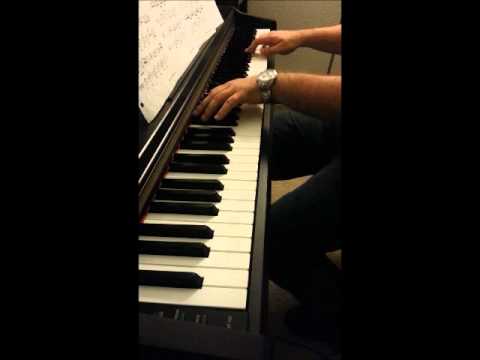
On that note, a recording I recently made:
Clayton -
Oh now that’s just going too far with the silly arguments. Now I may end up agreeing with you in principle at the end of this, but what is hard for NON musicians to understand that a performance is just one aspect of a studio recording, it’s not that simple as just performing and playing the notes. Go ask Pink Floyd to do Dark Side of the Moon again.
Hand-crafted, razor-edged backscratcher for sale. Laser sharpened, folded-steel blades requiring over 10,000 hours to construct. Priceless. Cost to you is my labor only at $20/hr. comes to $200,000. Serious inquiries only, please.
Making something that requires a lot of work does not entail you to compensation.
Clayton -
Is it just me or is that a completely nonsensical argument? It is to me.
What are you talking about?
You’re saying that as in your opinion my product has no value and is idiotic therefore the principle is void? I’m not asking you to agree to value. I’m trying to find out in principle if it is property. If it is, then it can’t be stolen with impunity in a lawful society. That said, I’m still out for break - but I had to reply just for the fact that the argument is nonsense and out of context.
I have a house for sale, it’s worth $1m . Serious enquiries only please.
???
They can only get the music for free after I produce it and they copy it for nothing.
What if I give my CD away to someone for free, or sell it in a garage sale? what’s the difference between that and digital copies. When I was younger I would make cassessetes off of my friends CD’s and record songs off the radio. I did not pay for these, what’s the difference?
I don’t have a problem with that. That’s going to happen in any society. I’m talking about, if you raise the limit and make IP no longer property, it’s a free for all. When you sell the CD, you’re selling the music on the physical item, now you don’t have it anymore. If you kept a copy, AND sold the CD, I wouldn’t say that was ethical, but I’m not saying you should be criminalised for it. But if you take the CD, make a million copies, and sell those with nothing for the maker of the music that is turning those cheap blank CD’s into something more valuable, besides the production of burning them - that’s what I’m talking about.
For those who keep insisting that it’s worthless, please watch this video, by the way:
http://www.youtube.com/watch?feature=player_embedded&v=SY5hI98HEi0#!
But you’re still ignoring how value comes about. You don’t get to decide what the value is. The consumer decides what the value is. So the fact is, if you sell an album for $10, and sell 1000 copies, and a few of those people make copies and sell them for 50¢, and sell a combined 100,000 copies, the fact is that more people value the album at 50¢ than at $10. Meaning so far, the average market value for the album is 59¢. Meaning, you are trying to sell the album at about 17 times market value. Tell me: how well is someone going to do in the market when they try to sell gasoline for $63.75/gallon when everyone else is selling at an average of $3.75/gallon? What if the one selling for 17 times market value is the one who discovered how to take crude oil and turn it into gasoline? It was his intellectual idea on doing that, shouldn’t he be able to force people to pay 17 times market value? Wouldn’t society be richer if we had to spend so much for something that could be done cheaper?
No. Now, if the guy who came up with the idea and technique to refine crude oil into gasoline wants, he can charge whatever amount he wants to show someone how to refine the crude into gasoline. This would be analogous to giving a consumer the ability to copy the music (by putting it on a disc that canbe read and copied by a computer).
And should someone figure out how to refine the crude themselves, on their own, they owe the first guy to do it nothing. This would be analogous to someone writing and playing the same song as a previous artist.
Has is helped you understand the stance against IP any better?
Decision of value takes place on both sides of the transaction and then is agreed upon or not. But I’m realy befuddled here guys, your arguments just don’t make sense to me and I can’t put my finger on why yet. Don’t you get what a music recording is? It’s not a piece of paper, or a gallon of gas or a piece of wood. It’s a piece of art that can be duplicated. If I want to sell more copies I can drop the price myself. As the seller in the marketplace I can determine where the price point is for quantity of sales versus individual sale price that works best for me and my customers. I mean don’t you get that someone is taking my work and selling it while doing no work?
I have no problem with someone writing their own song, emulating or copying a recording technique or style - those things can’t be patented. But a recording is a discreet individual unique tangible item I suppose that is my argument. You say it is not. You say it is like so much “air”. I breath, you breath, we all breath, you can’t copyright the air, you say. That is the fundamental crux of the argument, if I’m not mistaken. And I maintain that a recording, something I created, is my property. Now you say also that IP laws puts a restriction on what people can do with their own faculties - it means they can’t use their own property the way they see fit - they can’t burn a thousand discs and sell them with their own computer, or something of that nature. Fine, but isn’t that what all law does - I mean the law says you can’t use your physical body to go and kill someone else, or rob them, or damage their property. You may have a car, it’s your property but you may not drive it into someone’s bedroom wall with impunity. To say “you can’t stop someone driving into a property with their own car if you make a law against it” is a nonsensical argument to me. Of course you can’t, but if you say there’s no law against it, and it’s actually free to interpretation - ie that there is no consequence, not damage or harm done by doing so, then a lot more people are going to do it than would otherwise. Perhaps more to your point, there is no recourse for the injured party.
Of cousre I’m against these spurious IP laws that criminalise end users. And I remain undecided. But I have to say, your arguments so far are unconvincing because they really literally seem weak and nonsensical to me - I’m sorry. I may change my mind. But that’s my point of view so far, I remain really unconvinced.
Again the core argument is DO I have a piece of property in something that I have created. Yes you can go do the same. I promise you it will never be the same. If the public does or does not see value in the uniqueness of what I or you have done, that is our problem individually, and our benefit if they DO see the value - isn’t that like any other free market transaciton. NO product is guaranteed value. Again, the question is simply is IP property. Is an album I have created property. In my opinion so far you will lose a lot of thinking people with these arguments, they will simply turn away from this school of thought because this aspect is repugnant to them. If you don’t care about this, then this is really just theoretically and I’m not interested in that if it doesn’t have a practical application. Now I happen to give this school of thought a lot more benefit of the doubt than that. But, I hope you see where I’m getting at anyway.
Edit: I guess what I’m saying is that theory has to adapt to the complexities of society or it’s not going to practically be accepted. I’m not talking about special interests. I am saying almost everyone universally agrees that a piece of music or a dvd as a piece of art is considered property of it’s creator(s). Although you say these things are intangible, they are tangible. If everything is experienced in the mind - even touch, and even property ownership is a mental construct - an agreed upon idea - then ALL WE HAVE is ideas we agree upon - which is to say merely I don’t agree on the dismissal of IP solely on those grounds. Again, I have more research to do. I’m complaining more about what I see as the ireelevance of the argument to the point at this stage (as I see it).
Why is a recording, or a painting, or a book considered by you to be “art” but farming, or wheel grinding, or oil drilling is not “art?” Maybe this is the crux of why you are so stuck on IP and our arguments, so far, have been unconvincing.
This recording you make takes skill, attention to detail, years of practice for expertise, and technique. You developed all of this over time, and you feel that for all your hard work, it qualifies as “art” and should be protected by force, or threat of force, so no one that obtains a copy of that recording may utilize their body and property to generate a copy.
But why limit it to just music, for example? The farmer may not gives two hoots about what you do, and he may not even consider it to be “art.”
However, the ear of corn he makes takes skill, attention to detail, years of practice for expertise, and technique. He develops all of this over time, and he feels that for all his hard work, it qualifies as “art” and should be protected by force, or threat of force, so no one that obtains a seed from an ear he grew may utilize their body and property to generate a copy.
Why are the two (bolded) scenarios different?
If you should be able to find those that bought a CD from you, then used their own computer and disc burner and blank CDs to make copies, and take all their copies and any revenue they generated from the sale of those copies to protect what you consider “art,” why shouldn’t the farmer be able to find those that bought an ear of corn from the farmer, then used their own dirt and tractor and harvester to make copies (more ears of corn with many more copies of the original ear), and take all those ears and seeds and any revenue generated from the sale of those ears and seeds to protect what the farmer considers “art?”
The thing is, what is considered “art” or “intellectual” can be and is very, very subjective. So you consider music and paintings and books to be “art.” Others may consider farming and wheel grinding and oil drilling to be “art.” The thing that distinguishes libertarianism from many other ideologies is that it is consistent. If theft is wrong for one person to commit against another, libertarianism holds all things, even the state to that standard. Hence, the condemnation of taxation. Just because the state does it, or just because a majority of people agree with it, it is not legitimate if it isn’t on a person to person level. So even if the majority of people think music is “art” and farming is not, that shouldn’t afford a special privilege of monopoly from the state to those that work in the music industry and not to those in the farming industry.
So the point is, if what is considered to be “art” is subjective, than, in a free society, where all men are equal before the law, either IP is afforded to anyone and everyone that views their line of work to be “art” or no one is. This is where Austrian economics can help society decide what they prefer. If society prefers the most free and prosperous society possible, then the society should be one with IP being viewed as illegitimate, as an IP-free society would allow for the greatest amount of unhindered trade, which leads to the greatest potential for prosperity. If the society prefers a planned and controlled population, with special privileges for some, and the greatest potential for corruption and low-quality products and services, then IP can be considered legitimate, and everyone can hope that they work in the protected industries.
And again, I am not contesting the fact that a CD that you purchased and wrote a recording onto is not your property. But the idea of what is on that disc is not your property, because ideas do not exhibit the qualities of property (scarcity, ability for exclusion of use). If someone takes the your property (like the CD) you do not have it; this is exclusion of use. Only one can use it at any given moment. Likewise, assuming it is the only copy in the world, if someone takes your property, you do no have it anymore; this is scarcity. But if you have sold a copy of that CD with a digital file of your song on it, and if that someone makes another copy, you not only still have your property (the original CD), but you can also still use your CD, be it to play, or copy, or save, or alter, etc. Thus, someone copying an idea does not affect your property. Likewise, the ear of corn a farmer owns is property. If someone takes the ear, the farmer no longer has it, and he cannot use it. But if the farmer sold an ear of corn (a copy), and then if that someone took the seeds and grew more ears of corn, the farmer still has his original ear of corn and can still use that ear of corn, be it to eat, or plant, or store, or breed, etc.
Does this help at all, or are you still unconvinced?
By the way, as a musician and farmer, I know how much time, effort, skill, attention to detail, knowledge, etc. both of these things require. My buddy does the recording engineering, as well as the physical recording, mixing, editing, mastering, etc. I’ve seen the hours he spends on a project. I know how long he has been perfecting his skill and technique. I am not belittling your work, believe me. But if you consider your work to be “art” and “deserving of protection” but you do not feel that way about farming, or anything else, are you belittling these talents and industries?
Because you’re missing the point entirely I think. Whereas in the farmer example, the second person is making their own crop, so too can someone go and make their own music and put it on a CD. The CD is just the medium. They can copy their own music as much as they want. The digital file, is just the medium for the thing to exist on also. The music itself, that is a distinct, unique, discreet, identifiable, tangible thing. You cannot say it exists only in ones mind. A group of people can agree between this piece of music and that piece of music as being discreet. You can also test them in a computer system and verify that one is the same, the other is not and so on. These are real things. That they exist in a sense “non-locally” does not change that.
In the music examle, someone can by all means go and record their own album, using the same equipment, techniques, copy my playing style, and make their own variation. I actually have no problem with that in the context of this argument (trying to just pin something down here not sure what yet). But we’re not talking about that person doing that, as though they took a seed from an ear of corn and using my farming technique we’re talking about literally copying my work. Now this is where I think everyone is confused is that there is a failure to make a distinction between something physical that can exist in only one place at one time, and something like a music file that can exist identically in the more than one place at one time. That’s just the fact of modern life that we have these kinds of technologies, and you can’t simplify that to a level of farming.
This is kind of quantum physics almost: But I’m going to go out on a limb with a weird argument: If a farmer found a way to make simultaneous copies of his corn exist in muliple places at the same time each discreet where if it was used in one place it wouldn’t get used in the other, then if you stole some of that corn in a second location it is still HIS corn and still theft. If you make your own corn OR your own method of multiplying that corn, ti’s still YOUR corn.
Edit: To just add: There can indeed be an amount of art to farming, which is why a given farmer may choose to keep his cherished secrets just that - and his high quality product as the only evidence of something else going on behind the scenes. Likewise a musician or engineer might have secrets they don’t wish to divulge. Good engineers however tend to not mind because from their point of view, it’s the individual who uses those techniques who gets the certain results, it’s their aesthetic sensibility that determines the actions they take with a given technique and ends up in a result which, if succesful in that sense, listeners will covet.
The farmer therefore has the right and the power to protect his art - the musician should not?
To begin with what you finished with, no, the musician should not have IP rights in his song because I don’t believe the farmer should have IP rights to his crop. It’s one thing if the farmer doesn’t tell anyone how much o this or that he adds to the soil after this many days after planting, or any other secret techniques he uses. Likewise, the musician doesn’t need to tell people where he goes for inspiration, or how he comes up with the fluctuation to make the vocal line, or any other secret he has. That’s not what we are talking about.
I specifically choose farming to compare to music for a reason.
When a farmer does what he does, he might breed this corn with this corn, then cross the hybrid back to this corn, etc. After some length of time and experimentation, he comes up with what he believes to be the juiciest, healthiest, prettiest ear of corn he has ever seen.
To the farmer, THIS IS NO DIFFERENT than the process of, over time, experimenting with different chords and fluctuations, tempos and rhythms, effects and instruments, the musician arriving at what he thinks is the fullest, dynamic, and prettiest song he has ever heard.
The resultant breed of corn is no less distinct, unique, discreet, identifiable, or tangible than the music. A group of people can look at and taste this corn and that and find the discreet difference and agree. No different than the music. In fact, computers and laboratories can test the DNA of this corn and that corn and identify which is the same or different. No different than music.
Therefore, if someone should not be able to obtain a digital file from you and use their own property and body to make a copy, then no one should be able to obtain any seed from a farmer and use their own property and body to make a copy. Where the CD and file are just a medium that holds the information in the IDEA of a specific piece of music, the seed and DNA are just a medium that holds the information in the IDEA of a specific life form with certain qualities (the idea of that breed of corn).
You are still stuck on trying to enforce what you believe to be “unique, art,” which is absolutely subjective, as deserving privilege, while denying that what another believes to be “unique, art,” also subjective, the right to have such a privilege. If I’m wrong, please try to explain your position in a different way, but I gathered this assumption from your wording: “There can indeed be an amount of art of farming…” That’s like me saying, “There can indeed be an amount of art to music…” where, when I say “can” I imply that music is not necessarily art, and when I say “an amount” I imply that the level of artistic skill required for music production is lesser than what I consider to be highly artistic. Unless you have a way to objectively define “art” and, also objectively, measure the “amount of art” in something (if so, please propose how), it’s all just subjective, my friend.
So to be consistent, IP must either be illegitimate in all forms, or it should apply to specific breeds of corn the exact same way it applies to a specific piece of music. Of course, you don’t have to be consistent if you don’t want to.
Prices of goods tend towards Marginal Cost. The Marginal Cost of producing one more copy of a digital good is… nearly $0. Jeffrey Tucker covered this idea in the Publishing lecture.
The cost of books used to be astronomical (months/years of a monk copying books by hand), then came the printing press. Very few were made, they were very expensive, and so much time was spent just trying to keep the books in a proper condition. The printing press allowed you to have an exact duplicate of the book for a much lower Marginal Cost.
The digital storage of ideas is just another step in a long chain of improvements in storage/distribution, making it cheaper and easier than ever before (just as the printing press made it much cheaper and easier to replicate books). (Marginal Cost ~= $0)
So what you have to do as an entrepeneur, is come up with ways to bundle the music/video/book as a service… as has been stated before with the cases of Amazon, Netflix, Steam, LFB Book Club, Liberty Classroom, etc.
It is not property, Property Rights arise only because of scarcity. I will again just restate that this is all taken care of in the lectures (and Against Intellectual Property).
Here is another hour lecture Kinsella gave at Mises University 2011 which builds from the basics:
http://c4sif.org/2011/07/intellectual-property-and-economic-development-my-mises-u-2011-lecture/
McDonalds can spend thousands of dollars in research in order to figure out where is a good spot to place their new restaurant. Once the construction begins, a week later Burger King decides to build one right across the street, and then Wendys moves in as well. Burger King and Wendys has spent $0 on research! They STOLE McDonald’s idea and didn’t have to spend a dime on it!!! This is just competition.
I really like the recipe/food/fashion examples, since those currently do not have any IP.
Let us say McDonalds spends millions of dollars of research in order to figure out that people want to eat chicken instead of hamburgers. Next thing you know, Burger King and Wendys follow suit. How dare they STEAL my chicken idea!!! I spent millions of dollars and they got to spend nothing!
I spend thousands of hours and my own dollars to invent this thing called a Cheesesteak, I cut some steak really thin and chop it up, I put some cheese, and toss it into a roll. Someone eats my Cheesesteak and falls in love with it, they walk out and begin selling it in their restaurant across the street for half my price. That thief, how dare he STEAL my cheesesteak!!! I am the first one to come up with sticking X, Y, and Z together, and I demand to have a monopoly on cheesesteaks for X amount of years (should I be able to own this idea of a “cheesesteak” until forever? Why or why not?)
I spend so much time and money cutting up my jeans so they have holes in the knees and I try selling them to people. I walk down the street while wearing them and someone sees my cut jeans. They decide to do that with their own jeans and begin selling them. How dare they compete against me! I should be the only one allowed to sell my jeans for X amount of years!!!
Music and art are the exactly the same as recipes/fashion. I can copy your exact same cheesesteaks right across the street for half the price, I can copy your idea of a fast food restaurant and put it right across the street, I can STEAL your cut jean idea and sell them too. What you are arguing for is that you want to be granted a monopoly on item X for some arbitrary amount of time, instead of wanting to compete in the marketplace.
It reminds me a lot of the chapter in Economics In One Lesson “Saving the X Industry”:
http://www.fee.org/library/books/economics-in-one-lesson/#0.1_L15
Competition is hard, so I want tariffs/subsidies/monopoly grants for Industry X.
So is a cheesesteak, so is jeans that are cut at the knees, so is a chicken burger. It is unique, I am the first one to have created them.
Air is a perfect example of a PHYSICAL good that is NON-SCARCE. Air cannot have Property Rights assigned to it because it is a non-scarce good. Ideas are an example of a NON-PHYSICAL good that is NON-SCARCE. Also unownable.
Listen to the lectures, they cover all of this.
I forget the exact term Kinsella uses, but it is something along the lines of “Labor Theory of Ideas”. He mentions it all the time in his articles whenever writing about Objectivists. I believe it is covered in his IP Class.
Just because you put a lot of labor into coming up with this idea, does not mean it is ownable. For example, the food examples I gave above. Or I believe one of Kinsella’s favorite thought experiments is a large marble slab (this is definitely in the IP course).
The lectures go into the details, I will not type more of this.
Here is a little Jeff Tucker/Kinsella article titled “Goods, Scarce and Nonscarce”:
There is also this little cartoon pointed to in that article:
http://ninapaley.com/mimiandeunice/2010/08/15/rivalrous-vs-non-rivalrous/
As a side note, what do you think about Price discrimination?
https://en.wikipedia.org/wiki/Price_discrimination
There are many cases of IP Law being used to crush someone from selling your own good cheaper, because you refuse to charge the market price in the given country/area.
Here is one article of Kinsella on the topic: