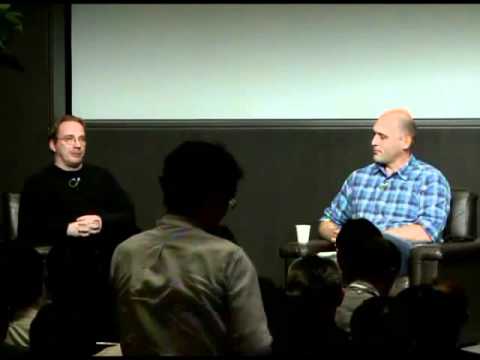
Linus Torvalds and Greg Kroah-Hartman on 20 years of Linux
Linus Torvalds and Greg Kroah-Hartman on 20 years of Linux
i use linux at work and used to use it at home until i got a mac mini as a present. i actually like it that its so customizable and supports lot of filesystems. but im not gonna fool myself. its too fragmented and unreliable.
The open source community’s anti-making money mentality is what’s keeping most open source stuff from becoming mainstream. Android, for example, is mainstream because Google is trying to make money off of it.
the number one thing linux needs right now is standardization. the other day i had to make install a utlity from source because there were no repositories. no normal user should or will do this. moreover i had to google and find out that i needed to install gettext, because it was giving an error.
you have half a dozen audio frameworks, 20+ window managers, poor driver support (esp. vid cards), the quality of app selection is subpar to windows or mac.
I can’t run Unity on my desktop, yet I was able to run Ubuntu Netbook edition on everything and Unity worked.
I could go to the Ubuntu forums for help, but then I have to solve 2 plus 2 every time I do a search query.
I would rather have paid $50 for a license of Ubuntu that worked right out of the box.
I’m not so sure standardization is what is needed. If there are different people trying different things, then people can still learn from each other and see what works. If there are only very few projects then less of people’s visions can be tried out at the same time.
I much prefer Ubuntu Classic right now, with Avant Window Navigator, and with the bottom panel removed. Maybe in the next versions if things can be tuned more. You can select Ubuntu Classic when you log in (when you’re asked for your password).
i’m using 10.04. its probably one of the best releases.
Official Nokia N9 ad
http://www.youtube.com/watch?v=gfE3B6L-Otw
(600K+ views in one day)
Nokia N9 MeeGo Smartphone - detailed hands on and walkthrough
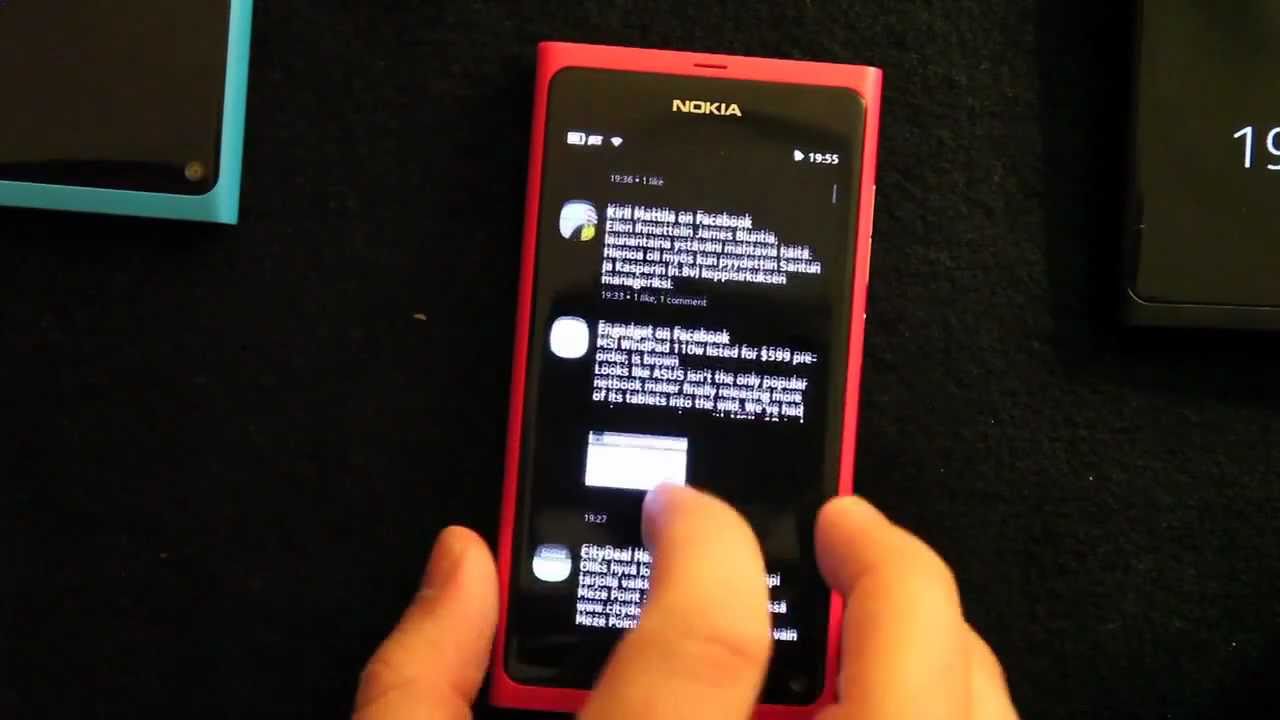
Strictly speaking, the Nokia N9 does not run MeeGo as its operating system. It instead run what Nokia refer to as a “MeeGo instance”. This is because during the development of the device that would become the N9 and Maemo 6, Nokia and Intel merged their projects, respectively Maemo and Moblin, into one new common project called MeeGo. Not to postpone the development schedule, Nokia decided to keep the “core” of Maemo 6, such as middleware components (GStreamer) and packaging manager (Harmattan uses deb not RPM), and integrate the user interface framework of MeeGo in Maemo 6. Nokia is dropping the Maemo branding to adopt MeeGo as to not confuse customers.
MeeGo is a Linux-based open source mobile operating system project.[2] Primarily targeted at mobile devices and information appliances in the consumer electronics market, MeeGo is designed to act as an operating system for hardware platforms such as netbooks, entry-level desktops, nettops, tablet computers, mobile computing and communications devices, in-vehicle infotainment devices, SmartTV / ConnectedTV, IPTV-boxes, smart phones, and other embedded systems.[3] MeeGo is today hosted by the Linux Foundation.[4]
It was first announced at Mobile World Congress in February 2010 by Intel and Nokia in a joint press conference. The stated aim is to merge the efforts of Intel’s Moblin and Nokia’s Maemo former projects into one new common project. According to Intel, MeeGo was developed because Microsoft did not offer comprehensive Windows 7 support for the Atom processor.[5] Amino and Novell also play a large part in the MeeGo effort, working with the Linux Foundation on their build infrastructure and official MeeGo products. Amino was responsible for extending MeeGo to TV devices[6], while Novell is increasingly introducing technology that was originally developed for openSUSE, (including openSUSE Build Service, ZYpp for package management, and other system management tools).[3][7] In November 2010, AMD also joined the alliance of companies that are actively developing MeeGo.[8]
Harmattan, originally slated to become Maemo 6, is now considered to be a MeeGo instance (though not a MeeGo product), and Nokia is giving up the Maemo branding for Harmattan and beyond (Maemo 5, aka Fremantle, and previous versions will still be referred to as Maemo).
While I agree that app compatibility is poor, the poor video card drivers are the GPU vendors’ fault, and possibly Microsoft’s fault for forcing standards that work best with Windows. Maybe they even pay nvidia and/or ATi money to not make good drivers for Linux.
I also don’t think standardization has been a good idea, mainly because Microsoft’s standards aren’t that great IMO and they’ve always been behind.
I wouldn’t be so hard on MS if they didn’t abuse the Patent system. I always try to support opensource or whatever is not patented, even if it’s inferior to what’s patented
I think if DX hadn’t picked up so much momentum, a lot of which was arguably due to the existence of IP, we’d be using a more programmer-friendly OpenGL (or something that replaced it) for games.
The video driver issue’s a touch more nuanced - the AMD/ATI proprietary driver(fglrx) is targeted primarily at the workstation demographic and so isn’t rigorously tested for desktop use(though this is changing). nVidia’s are supposed to be better, but they’ve been known to reliably take out the system in some cases. The FOSS drivers are generally the most stable, if behind on 3D features and performance(AMD and Intel are both funding development of the FOSS stack).
I installed openSUSE on new harddrive. I was finally able to connect it to the Internet, after 6 hours of trying to figure out what is an “External Zone.” Yay for usability.
EDIT: Next step: Figure out how to change the clock. It’s 7:30 PM here… and somewhere else in the world.
EDIT 2: Figured out how to change the clock. Next step: Figure out how to change the screen resolution. Be back in a few… hours.
Doesn’t Opensuse have a full control panel? I find what you’re saying odd.
http://www.flickr.com/photos/linmagazine/4857296094/lightbox/
I see a Country/Region tab, and a Display and Monitor tab.
Not directed at you, but I thought this was hilarious:

Maybe it’s because I am accustomed to Windows and Ubuntu. I’m still on the learning curve with regards to openSUSE and KDE.
I replaced openSUSE with Ubuntu 11.04 Desktop… and I am loving it! Unity is awesome. And the fonts are so much cleaner than before.
EDIT: And my printer worked right off the bat!!!
If you like Unity but want to have something highly configurable (including placement), you could try Avant Window Navigator.
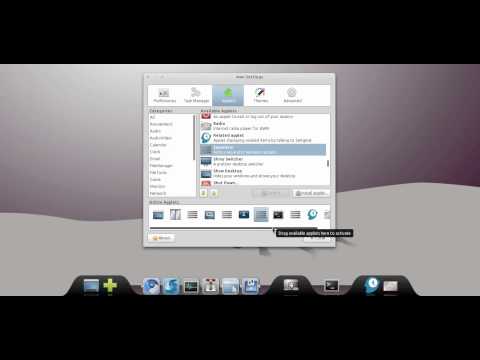
I’m using that under Classic mode (when you’re logging in, and after you’ve selected the user, the option is at the bottom of the screen). There’s no unity in Classic mode and it looks like regular gnome.
Using AWN, I’ve also removed the bottom panel, and I slide away the top panel, because everything can be done from the dock (has all sorts of applets, including main menu).
Anybody know of any stock/commodities/international/etc. tracking software for linux? It doesn’t have to be anything opensource; it can be commercial software.
Not sure exactly what you’re looking for, but from a quick search:
http://eddelbuettel.com/dirk/code/smtm.html
http://search.cpan.org/dist/Finance-Quote/
http://search.cpan.org/dist/Finance-YahooQuote/
http://www.kde-look.org/content/show.php/Stock+Quote?content=90695
AGORA I/O - the liberty unconference
http://agora.io/laozi/schedule/
Sep 23, 2011
Stephan Kinsella - Open Source Agorism: Prosper Without Patents or Copyrights
Relates to:
Why Libertarians Should Use Freed Software (and other freed culture)