Clayton - right as I was posting I checked whether it’s free, but it’s not. It costs 10 cents per page. Still too expensive for a 400 page book.
Aren’t
there
epu
b
versions of the books? Than use an eBook reader that let’s you annotate.
^^^^^ I’m not going to correct that. The RTE is $h!t.
Recently picked up Ricardo’s Principles at a used bookstore. After I finish Capital, I plan on reading that along with Marshall’s Principles, Keynes’s General Theory, Keen’s Debunking Economics, and Smith’s Wealth of Nations. I’m also interested in reading Walras, Schumpeter, and Sraffa–and more Marx of course!
Wheylous: Get the Epub version. Or Kindle desktop app and use the free Calibre reader to turn it into a .Mobi. Pretty sure the Kindle lets you do annotations. Plus, you get searchability. There’s also an audiobook version for both.
Moved on to what or who exactly? I suppose Hoppe has taken up at least part of the mantle. I’m sure Rothbard’s not the end of the intellectual journey, but I think he should be the start for any libertarian 
Moved on to what or who exactly?
To whatever else, which is a vague answer, but there’s a lot with Rothbard that after some time I’m just like “eh, whatever.” I simply don’t adhere to everything he says like I used to. When it’s strictly economics and political structures I agree, on other things I just don’t pay any mind to it anymore. But on a whole my intellectual focus has moved on from econ and politics to religion and Jungian psychology.
I think my main disagreement with Rothbard is whether the contents human nature can be known a priori or empirically. Rothbard seemed to think that it can be determined a priori. I disagree. This kind of throws a wrench in his ethics.
Clayton -
I am finishing up Fifty Dead Men Walking - The Heroic True Story of a British Secret Agent Inside the IRA.
This kind of throws a wrench in his ethics.
That being another thing. I don’t care for Rothbardian ethics at all, but it would be like preaching to the choir on that subject on this forum.
I don’t think that’s necessarily true. You might be surprised. Personally, I’m dismayed by any author who shortcuts to “right” without starting from a fundamental explanation of what occurs. With the Political and Ethical, I start from the assumption that all of what actually happens can and should be understood first from a Praxeological framework. If we explain how the things that happen occur, then we can ask interesting questions. What follows from these specific beliefs, norms, laws, political institutions? What is the side effect of these religious teachings on time preference, on savings, investment, capital accumulation, work ethic, etc?
I think Rothbard provides some very sound analysis and explanation of how different ethical and political principles impact the social group. But instead of leaving it at that, he continues beyond this to ascribe secondary and tertiary mischeivous purpose to the members of society who drive or implement such ethical and political principles. I don’t believe this is necessarily fair. Or even appropriate. The analysis of the necessary side effects is sufficient. Leave it to the reader to draw his own conclusions about the world he wishes to pursue and embrace.
Yeah that’s what I meant was the unfortunate part…not that her views on Africa changed, but that she didn’t stick to subjects she understands.
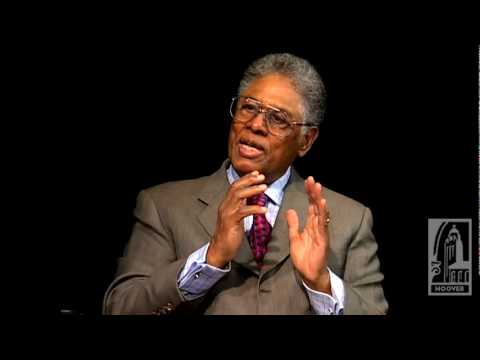
Sowell wrote a whole book largely on this topic:
Did you say this elsewhere in the forum? This sounds so familiar.
Did you say this elsewhere in the forum? This sounds so familiar.
Yeah, you were the one who previously asked as to why.
I finished reading Building Blocks for Liberty. Overall, I thought it was a good book. The first section was the best. The Human Rights section elicited some criticism from me as I read it. The language section was not very useful (except the “national income” section - that was pretty good).
I just started reading the short ebook, The Global Manipulators: The Bilderberg Group … The Trilateral Commission … covert power groups of the West by Robert Eringer.
Just read “A Land Remembered” by Patrick D. Smith. Incredible book (I know it’s not libertarian, but it’s still a great story)
I’m reading How Capitalism Saved America by DiLorenzo and Basic Economics by Sowell right now. Next up are Sowell’s Economics Facts and Fallacies and Applied Economics. And I just finished A River Runs through It and Other Stories. Excellent reading.
Attention Readers: I’ve contemplated the idea of writing a “conspiracy action genre” fiction (think Da Vinci Code but completely different of course) piece. I have some really, really wild ideas for the setting and some plot surprises that I’m sure would keep people guessing and maintain suspense. However, I’m a firm believer that it is really character development and character-conflict that draws people into a story and keeps their attention. To this end, I’m curious if anyone would be willing to share their favorite fiction characters that really just reached out and grabbed them: real, three-dimensional characters; characters with Shakespearean depth and subtlety. Character conflicts that are completely believable and engrossing.
Clayton -
Don Quixote, definitely.
Jeeves and Bertie wooster
Offhand, some more worthy than others but all good in their way and place:
Kim
Tess of the D’Urbervilles
Alice
Pip
Odysseus
Sherlock Holmes
Mr. Toad
Elizabeth Bennett
Moomintroll
Sir Lancelot
I’m avoiding Shakespeare here, you seemed not to want those characters. I hesitated over Tess, because I couldn’t respect her. But she’s awfully memorable.