That sounds a bit more conspiracy oriented than I am led to believe the truth lies.
Originally I couldn’t fathom that such smart people could think such stupid things, but the more I’ve dealt with these people the more I’ve come to agree with Hayek’s assessment, although I still struggle with this.
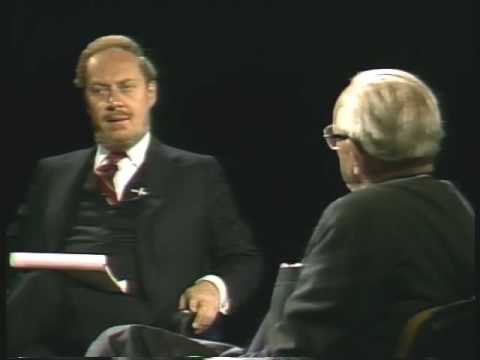
In the beginning of the video Bork brings up the fact that he noticed what he calls an enormous resistance by very bright people, to what are fairly basic and simple ideas of economics. His conclusion was the possibility that something more than intellectual error is at work…and he even uses the word “sinister”. Hayek’s response is that it is quite understandable that intellectuals would reject that which they did not understand…that which was unintelligible to them. This is the part I have a problem with, which I’ll get to shortly…
But his point is much clearer and more compelling by the end of the clip…his feeling is that intellectuals operate under the notion that nothing can be good unless it can be demonstrated that in that particular case it achieves a good object, which of course is impossible, because a social subject like economics can only be understood in principle but not in detail. (Which kind of goes to a sort of deductive reasoning versus empiricism point).
I have to admit when I first saw that interview I didn’t have the same take on it. I even found it a bit difficult to follow. As time has progressed I find I can much better appreciate the optimism and brilliance of his last statement: “I think I would give them the benefit of the doubt at least…I think in most instances it is a deeply ingrained intellectual attitude which forces them to disapprove of something which is unintelligible and to prefer something which is visibly directed to a good purpose.”
That I understand and can (at least to some degree) buy as a viable reasoning for the animosity and belligerence of statists. It would certainly explain the overwhelming acceptance of so many government programs.
But what I still have trouble with is the idea that the alternative is unintelligible to them.
I have a hard time understanding how things as simple as the broken window fallacy could be so blatantly invoked. But people like Fool on the Hill make a really strong case for the notion that yes, they actually don’t understand…and actually do believe what they are saying.