Adequately-funded welfare programs reduce poverty (in the short-term)

If you look at the welfare programs in Europe, they clearly reduce poverty (in the short-term). In the US, they haven’t worked as well, but this is unusual. I think there’s a simple reason for this: the US doesn’t spend very much money on welfare programs compared to Europe. I’m merely pointing out something that may trip you up when debating liberals.

Most arguments against welfare programs focus on morality, tearing the social fabric, the dependency cycle and the opportunity cost (more growth). I think these are very good arguments, but the debate should also focus on:

a) the long-term unsustainability of welfare programs, due to borrowing to pay for extra privileges to welfare recipients and public sector unions.

b) entitlements eliminate the possibility of open borders, which greatly improve the living standards of immigrants - and natives.
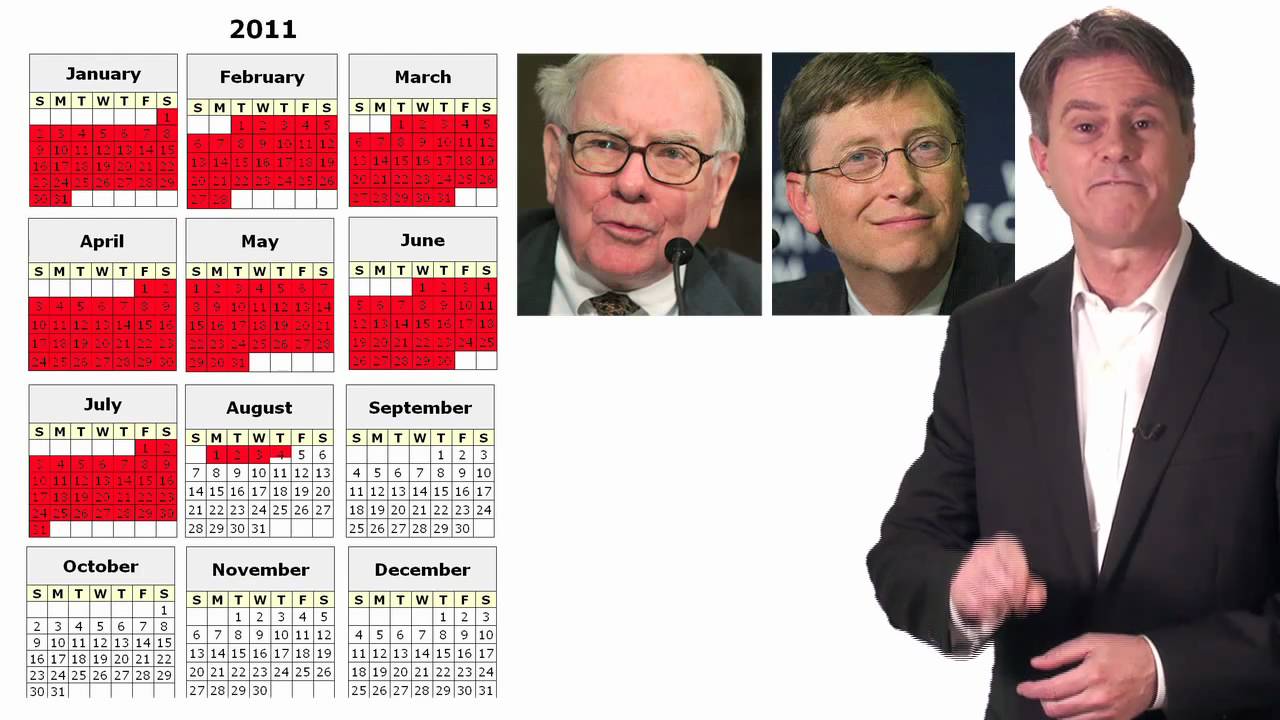
My response to those liberals:

  1. You can prove anything with decontexualized numbers.

  2. Confusing cause and effect.

So let me get this straight. You’re saying, if I take a bunch of money from some people…and hand it to people who didn’t have a lot of money before I came along…you’re saying the amount of poor people goes down? Holy shit!

Listen to Stossel’s opening statement here. (And bear in mind that number was over 10 years ago.)

What I’m trying to say is that essentially the people on welfare in Sweden are not living in poverty, because the welfare state pays them enough money to stay above the poverty line, and continues to pay them. This is not a long-term solution, of course.

America now spends about $40,000 on every family of four below the poverty line… You could just cut them a check for that and they’d be out of poverty.

US govt programs are much more inefficient than Scandinavian govt programs. It might be because they are more privatized, but maybe because they have more faith in their governments, and so try harder to get them to be more efficient.

Have you looked into this at all? Or is this all just speculation you’re coming up with based on heresay and general “conventional wisdom”?

Once again, please, read a book.

Here’s a great list. (A list of lists, actually).

Leftists really don’t want to go there. They think they do but they really don’t.

Clayton -

Evidently, you’re wrong. (Didn’t even get past your first point. womp womp womp)

In my view, adequately funded welfare programs keep politicians (particularly democrats) employed in the short and long term. These schemes, like free healthcare, are designed to keep politicians in power permanently by giving the masses something they don’t have to pay for. Then they’ll keep reelecting you.

We can avoid some statistical nightmares of welfare and its effect on poverty, by focusing on the argument that income redistribution strangles growth, which would offset any short-term benefits. It looks like this is the best that liberals can do:

The third type of criticism directed against social-welfare policies suggests that they

undermine economic growth and thereby fail to reduce the number of poor in the long run,

even if they do provide some temporary near-term assistance… Reducing income inequality may expand and stabilize

consumer demand, increase investment by the poor in education, and heighten worker

motivation and workplace cooperation. Furthermore, as Gosta Esping-Andersen (1990)

has argued, expansive social security programs, which account for the bulk of transfer

expenditures in all industrialized nations, may enhance firms’ flexibility in labor deployment

by facilitating early retirement. In addition, social services have become a significant source of new jobs.

http://www.lisproject.org/publications/liswps/188.pdf

Pretty miserable arguments if you ask me.

(I think I jumped the gun with the title of this thread.)

Here’s an interesting snapshot of the flawed debate about human nature regarding welfare:

Those formulating the argument against welfare fear that, given the opportunity, people will do just what pleases them and no more. In a welfare state, people can receive sustenance without working; this is too great a temptation, and many people—being motivated by self-interest—will choose not to work.

“You will never be disappointed if you presume people will act out of self-interest,” respond welfare proponents, “but you will never understand people if you think that’s all that motivates them.”

Proponents argue that when human beings are given the chance to express themselves fully, they are, by nature, interested in the well-being of society and all its members. They will not only work but will also offer assistance to the needy, bringing the poor to an economic level where they can begin to act in a similar respect toward others.

http://www.scu.edu/ethics/publications/iie/v8n3/welfare.html

If we have to rely on welfare because people are too self-interested to give to charity, then people will be too self-interested to get off welfare, rendering the system unsustainable in the long-term.

[The welfare] program, however unintentionally, must be constructed in such a way that it increases the net value of being in the condition that it seeks to change—either by increasing the rewards or by reducing the penalties.

Once welfare benefits pay people to live above the poverty line, it becomes even more attractive, and even more unsustainable.

The Stosselhof says…

Now the trillions we have spent have certainly helped some people. When you spend that much, you’re bound to help some. The real question is, is this the best way to help poor people?

My point exactly. If you throw a shitload of money at welfare programs, you can reduce poverty. But mutual-aid societies will do it better and more efficiently if they aren’t crowded out. That’s a great video.

  • Reducing income inequality may expand and stabilize consumer demand

If the minimum wage and other price controls are abolished in conjunction with welfare, there will be no decrease in total purchasing power - it will just be distributed better. The difference is that people will be employed, rather than on welfare.

  • Increase investment by the poor in education

In a free market in education, many businesses would supply scholarship funds/apprenticeships to people, provided they agree to work for them for a set number of years. If there are potential investments waiting idle in the community (that is, ambitious poor people without an education), why the hell wouldn’t businesses seek to realize those investments?

  • Heighten worker motivation and workplace cooperation

Employees who are better motivated are paid more. Therefore, income inequality cannot detract from economic efficiency in this way.

  • Expansive social security programs… may enhance firms’ flexibility in labor deployment by facilitating early retirement

Again, it seems we need a government solution to a government problem. When there is freedom of contract, firms will maximize their flexibility in “facilitating early retirement”.

  • social services have become a significant source of new jobs.

So if we break the farmer’s eggs, we can make up for it by hiring an egg breaker. Broken windows fallacy…

I’m against eliminating “poverty” however you define it. Some people should be poor. Some people should be helped.

Everyone still seems to assume that scarce objects appear out of thin air if we collectively decide that they should. Which is silly. Poverty is lack of stuff, not lack of money. Scarce objects do not become any less scarce because the government distributes them for “free”. People within the borders of Sweden can afford the same amount of food and housing with or without welfare. Welfare does not reduce poverty.

Careful…you’re playing into Michael Moore’s hands:

Actually I completely agree with what Michael Moore said there around 1:30. Thats practically an Austrian conclusion, he is just wrong about the why. The conservative host concedes the money equals wealth fallacy, which is why I never liked that argument.

I thought it was clear I was talking about what he said directly before that.

America is not broke. Not by a longshot. It is awash in wealth and cash. It’s just that it’s not in your hands.

Does any of that sound Austrian to you? Because I see a stated fallacy, a subjective statement, and an fallacy implied.

I would argue that the reason we have less poverty is not due to government welfare but due to the general success of capitalism. Of course government welfare contributes to the reduction of poverty. But we can thank capitalism for the increases in the standard of living. More goods of a higher quality for a cheaper price, allowed for the same amount of money to purchase better goods, in spite of inflation. Even poor people in the uk have large screen tv’s and fridge’s and other material goods that alleviate poverty and increase the standard of living.

I would also point out the problems with welfare and immigration. Welfare creates an incentive for Immigrants to immigrate and this increase in demand causes increases in the cost for the welfare system and ultimately more government debt. In high density areas this can be a problem because it can increase demand on public sector services and this will decrease the quality and availability.

I personally think it’s wrong to conclude that the welfare state in Europe creates equality. I think that because the fact that the Swedes are a homogeneous population is what creates equality there. The poor also have to pay more for it anyway because their tax system is more “regressive”.

The reasons there is more inequality here than in Europe are due to the fact that there are more regulations and more corporate spending here and the fact that America is a very heterogeneous population. Income is correlated with IQ and the standard deviation in European countries is lower than it is in America . I realize that high IQ does not cause high income, but low IQ usually does not allow for high earned income.

All of this is why we have to look at ethics, rather than utility. Government can’t change human nature, but the free market is ethical for sure.

I meant the entire Michael Moore clip. He is correct that America is currently awash in cash, and that this is largely in the hands of the super wealthy. All that printed money goes somewhere. He’s just wrong to confuse this with real wealth. But here’s the thing, Bill Whittle isn’t any better on this. He doesn’t point out the difference between money and real wealth. Instead, his argument is that there isn’t enough money wealth to pay for all the goodies socialists want. Since both men assume that money equals wealth, which of the two positions sounds more Austrian to you, that we are awash in cash or that there isn’t enough money to go around?