The claim is made that companies will not want to drop out of a trust because it will mean a lower profit margin even though the market share will grow. What is the response?
Force them all to drop out.
What do you mean? Anti-trust legislation?
That claim is pure hogwash. It could never be pulled of without some coercion. history has shown that if your a farmer and someone comes to you and tells you to “restrict output and rice prices, we’re all going to do the same thing and we will make a killing!” your response is generally to increase output and grab the cartels market share. And even if, by some miracle, it does work in a free market, competitors will come in as the profits increase. Even in the quasi-free markets of the gilded age cartels/monopolies couldn’t form without government intervention.
People sometimes forget this about the Gilded Age, but many of the trusts came into existence with the help of government. Railroad firms received massive federal subsidies to construct their tracks, and in some situations they were literally given land at no cost.
But they say that profit margin decreases by dropping away from the trust. How do you argue against that? They say that even though total profits increase, it is not worth it because profit margin decreases.
What does profit margin matter?
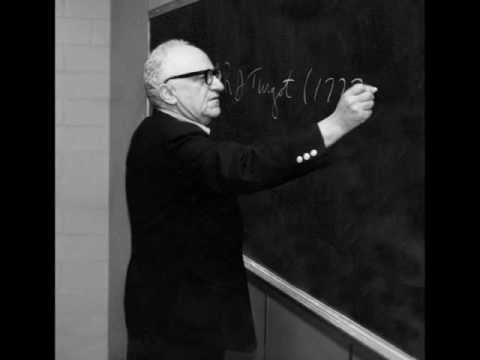
Monopoly and Competition (by Murray N. Rothbard)
It matters to shareholders who want dividends.
They would prefer a higher profit margin to a higher total profit?
A higher profit margin would mean more money per dollar invested, wouldn’t it?
Didn’t meant to post, sorry.
No, that’s higher Return on Equity. Higher profit margin means more money earned per dollar value sold.
My first response (the second post in this thread) was sarcastic. Regardless of the validity of the OPs claim (which is crap, btw) on what basis would one (me, you?) propose what other parties ought to do with their property (or not)? What is a “trust” if not a partnership?
Apropos to this, what are people being deprived of if the price of a given good is “higher than it could be”? I can imagine the price of all goods being zero (i.e. free) - does that mean I’m being deprived of something since I have to shell out money to buy them?
Well if monopoly prices are set instead of market prices, then people are being deprived of that good because of some sort of collusion.
The standard reply would be that we need to break up the trust because they are controlling most of the market. For instance, what if this is a market that takes a while to get into? How long would you allow that trust to exist before outside competition could break it up. I’ve been arguing that even though that may be the case, that there is an incentive to drop out of the trust. Where does the company see the benefit?
So what?
Again, so what?
I’d let it exist for as long as it does exist.
It sees the benefit if/when it realizes that it can undercut the competition by reneging on the agreement. However, I think the bigger threat to the trust (if you will) comes from outsiders. New competitors will ultimately arise because the trust creates profit opportunities for competing in the same business outside of the trust. Those outsider businesses cannot be legally forced to become part of the trust.
Sorry to slice-and-dice your post, but I felt like there were several parts of it that warranted independent responses.
How is the trust “controlling” most of the market? By shoving its products/services down customer’s throats at the point of a gun? What gives the trust (or any company with a large market-share, for that matter) this “control” apart from the support from its happy customers, and why would either party need you to “save” them from such a predicament?
If a company can provide better service to enough clients by exiting the trust, then it will do so. If it calculates that it won’t, then it won’t. What business is that of yours (or anyone else’s) either way?
The point is that I have a market that takes a long time to enter, and I have all of that market by colluding with other businesses. We jack up prices higher so as to increase our profit margin. How do I show that dropping out of the trust will be better for the business?
So drop out of the trust, offer lower prices than the trust’s “jacked up” ones while still enjoying a decent margin, and steal all their business away.