Hi,
I’m fairly new to this forum and Libertarianism in general. I’m trying to get to grips with some concepts I have heard about or read.
One of them is something Ayn Rand said about monopolies and how they come into existence.
She said that no monopoly can exist without government intervention in one form or another.(I’m paraphrasing from one of her interviews which you should be able to find on YT quite easily) When I first heard her say that, I thought, ‘Yes!!!’ Don’t ask me where that came from but I have long been a sceptic of mainstream or at least something about mainstream. The tendency in the modern era is to view anyone who has made a success of his business as being uncaring and callous by using the super-wealthy corporate head as exemplary of a successful businessman. But of course if it is the case that the super-wealthy achieved that state of wealth through government subsidy, priviledge or protection from bureaucratic barriers to production then he can not be said to be a successful businessman worthy of being upheld as a role-model. Unlike the businessman, small or largely successful, who does not benefit from state subsidies or protections.
It just makes sense to me that people who have risen to super-wealthy positions and have no interest in the increased responsibilty that should come with that are very closely allied, at least in mindset, with the state.
So what is my question? Okay. I’m not sure the above is an adequate argument but I’m looking for some examples - for or against. Does anyone know of any specific examples of where this can be seen to be playing out or, if in the past, having played out? Or if you disagree, can you put your argument forward for consideration?
References to articles covering this particular aspect of Libertariansim would be appreciated too.
Thanks
Hello,
There are two ways to define a monopoly: (1) only seller of the good or (2) is an exclusive privelege to carry on a business granted by a government.
Generally, Austrians don’t believe the monopolies in the first sense of the term will arise on a free market, and that even if they do, they won’t be able to set what is referred to as “monopoly pricing” because there is always the possibility of competition. If one provider did have the whole of the market, this would be due to the individual decisions of economic actors trying to get the best product for the lowest price so it’s a good thing that we have such a productive provider in a certain area; but if their quality goes down and price goes up, somebody else will step in to take away the customers with lower prices. As far as price collusion between a bunch of companies to keep the price high, people are able to try this, but some players will probably decide eventually to undercut the price to get a bigger share of the market.
Governments help to create monopolies if not by decree as in public monopolies, they create barriers to entry through a lot of regulations which make the cost of entering the market as an entrepeneur through patents, licensure, corporate personhood and inflation/credit expansion.
I would suggest reading this article because it debunks the usual example of monopoly, Standard Oil (But if I remember correctly, Standard Oil did get government privileges):
http://www.fff.org/freedom/0592c.asp
You could check out the Mises audio files by Robert LeFevre about the Fear of Monopoly Part 1 & 2 where I think he does a great job explaining why people think we need the state and why this isn’t a good reason for it. It’s about an hour all together so maybe slow but I like it a lot. I’d link it but something weird is going on with the media pages right now.
This is one under 10 minutes that I think goes over the argumnts very well and quickly: http://www.youtube.com/watch?v=pdNC_NpgM1s
Outside of that, this is the Mises wiki on monopoly: https://wiki.freecapitalists.org/wiki/Monopoly which has links about more libertarian theories on monopoly which I haven’t personally read so cannot suggest but I’d guess they’re good.
Hope that helps!
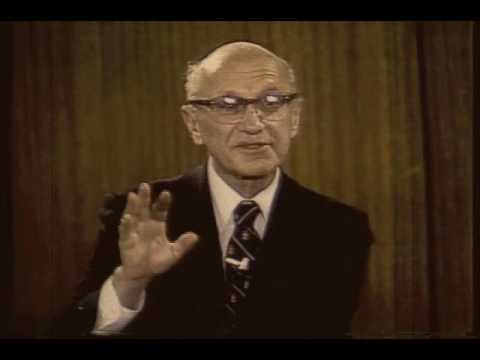
By and large, this is true. Here Friedman makes the case, although with two caveats which he admits he doesn’t quite understand and defers to his colleague (and fellow Nobel laureate) George Stigler…the NYSE, and DeBeers.
For other resources on monopoly, see here:
"Government and Microsoft: a Libertarian View on Monopolies"
"Fear of Monopoly"
"Monopoly and competition" (Chapter 10 - Man, Economy, and State)
“The Political Economy of Monopoly” (PDF)
“The Myth of Natural Monopoly”
Dominick Armentano and Ron Paul on Monopoly
Not sure about the previous history, but lately the diamond industry is regulated: http://en.wikipedia.org/wiki/Kimberley_Process_Certification_Scheme.