I seem to spend a great deal of time debating and discussing issues with all manner of folk on Facebook, these days. I’ve encountered a variety of anti-market types, naturally, and most of them have the same common misconceptions about capitalism that we’ve all probably heard repeated ad nauseam and can easily counter.
I heard an interesting anti-capitalist example of “market failure” today that I was not familiar with; the West Virginia Coal Mine corporations of the WWI era (through the 1930’s). I did a little light reading about the abuses of both the companies and the unions that attempted to counter them. The companies involved in what turned into open warfare, certainly don’t look good, in the defense of unregulated markets/labor. However, it’s clear that local and state authorities colluded with the companies on several occasions.
Can anyone point me to some good analysis of this little bit of history? Good books from the market perspective? Any info would be helpful, thanks!
The claim is the failure of the market to self-regulate, in this case. The anti-capitalist I’m chatting with is employing the progressive rhetoric of victimized labor, those damned “robber barons”, and so on. Workers were abused, paid in “scrip”, “forced” to shop at company stores, “forced” to live in company housing, cheated by the men who weighed their daily coal output, abused by violent thugs from what was essentially the company’s private army, etc. My first and most basic response was; “who forced these folks to do remain there?”. However, I know nothing of the history and instinctively, it seems as if there’s got to be more to the story. West Virginia seems to have a unique history, as far as coal mining. Why DID these people stay and essentially participate in a miniature civil war? Wouldn’t they have gained by moving on?
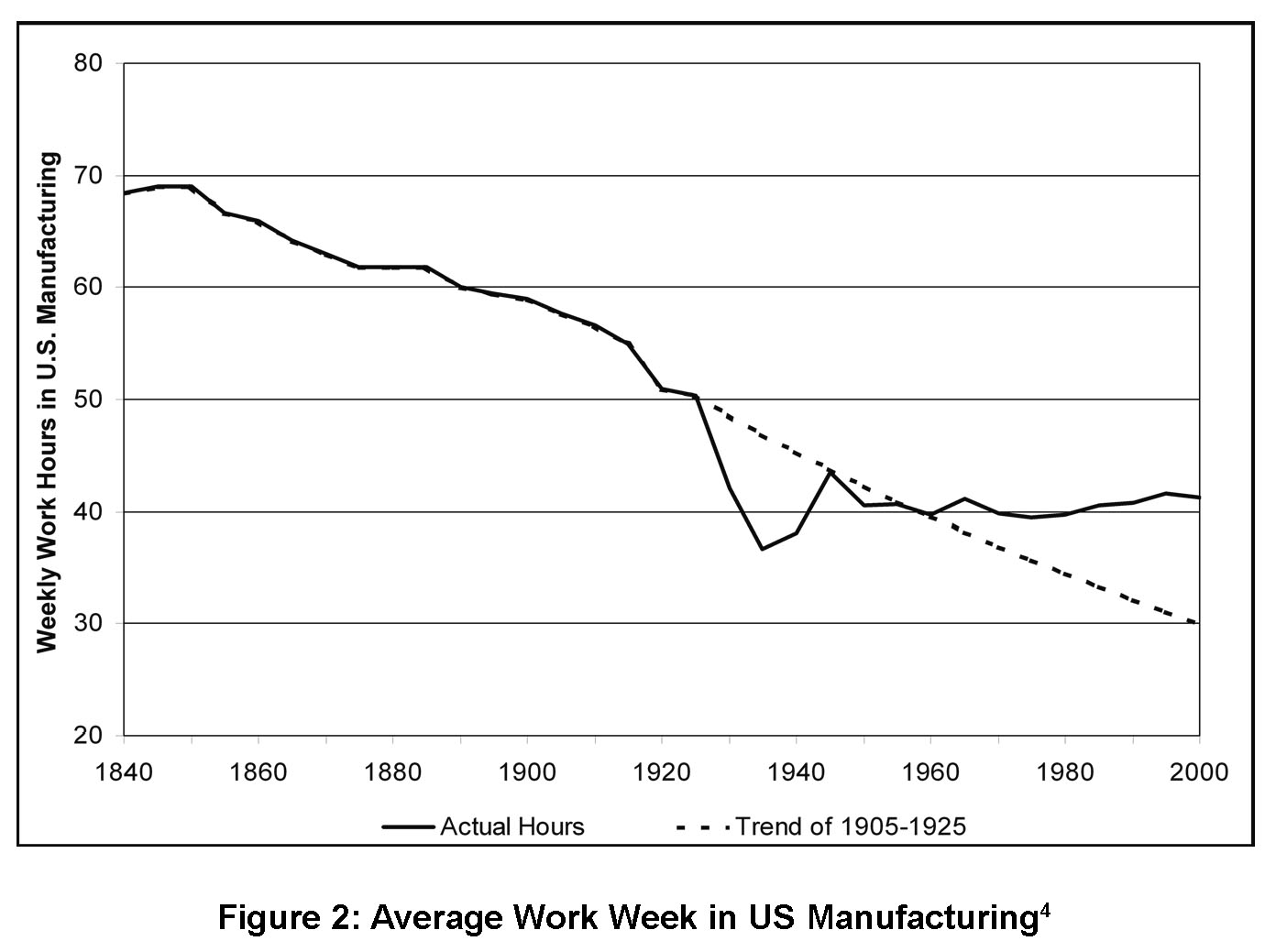
I remember reading somewhere that the average work week was something like 60 hrs/week on farms. These sweatshop scenarios anticapitalists rail about were actually an improvement over this. They had to be in order to draw people out from rural areas and from other countries.
If more of the world had been a free market, there wouldn’t be a need for mass immigration. The “army of unemployed” was created by government.
On the other hand, I absolutely hate when they give you a “citation” followed by “read this and educate yourself”. I’m not sure why it’s my responsibility to do the research on something they have to prove. Which brings me to my argument in regards to the opening post. The burden of proof is on them, especially since they are the ones providing the evidence. They have to give an objective (well, hopefully, it’s objective; otherwise, the clearer the bias the least likely your argument is correct) analysis of their evidence.
Otherwise, arguing against “Statists” is impossible, as they will be able to bring up hundreds of little examples that you may not know a lot about, and “prove you wrong”. For example, I was arguing with my friend about the free market and security, and he said that in Rome during the Republic (I believe) there was no police force, yet the city was in complete chaos. I don’t know much about the city of Rome during the era, although I suggested that the government played the individual gangs in the city, so I couldn’t really argue with him over that (I politely said, “I don’t know much about that, and so I can’t possibly comment”). He is rational and so he said, “Well, I can’t really use it against you, but just keep it in mind.”
But, the point is that if we worry about proving little examples wrong, without having them give us all the necessary information (which they need to do if their argument is to have any merit), then we are bound to lose the argument in the long-run.
I’d have a pretty brash comeback if someone insinuated that I was uneducated because I didn’t know about 2 mining companies in 1931. Asking them for a citation just gives you a starting point. I actually tried to look up this mining companies and couldn’t even find them… if I did research on my own I might be forced to conclude that they don’t exist and then look like an idiot if they actually did.
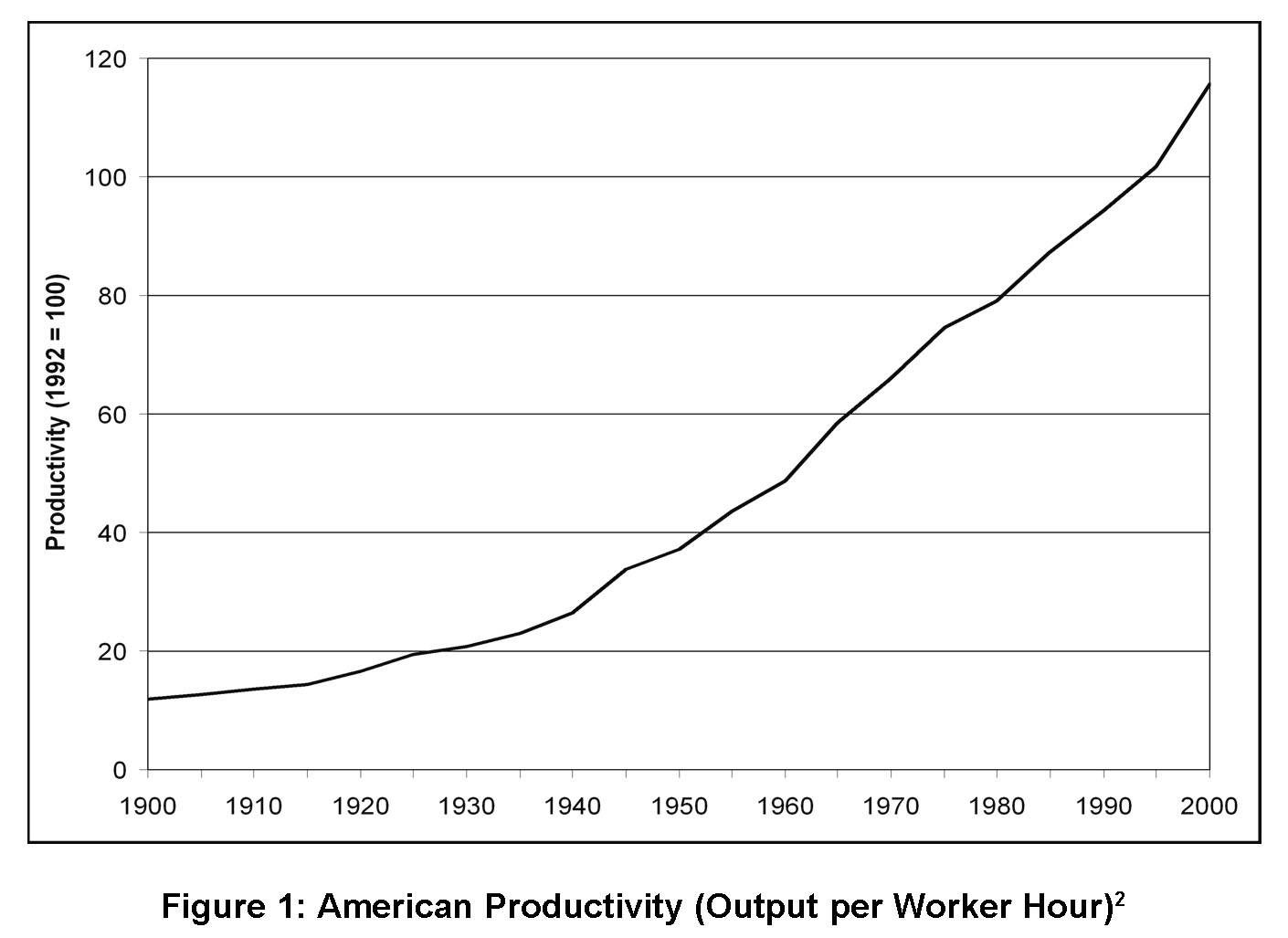
This is why i prefer to focus on macro trends. Easy to learn, easy to access, and on our side
The general causes of the conflict of 1921 developed over many years. From the time the first shovelful of coal was removed in West Virginia, the men who did the mining were exploited by those who owned the mineral.
So, typical, but then they say something very interesting:
A ray of hope appeared for the miners in 1890 when the United Mine Workers of America was organized by a merger of two earlier miners’ unions. By the turn of the century unionized mine operators in the northern and midwestern fields were putting pressure on the UMWA to organize the younger West Virginia industry, whose cheap coal was undercutting established markets.
It seems as if other unions, who unionized workers belonging to firms that could not compete with West Virginia’s firms (as these West Virginian coal firms were selling their coal for a cheaper price), instigated what comes down to a very violent strike. This is a deduction originating from ignorance (given that this is the first time I’ve ever researched this topic), but it seems as if the strike was designed more to disrupt business than to actually help the workers fight their way out of the plight which was forced upon them (although, the article admits that there was an alternative route: “One either accepted the system or moved on.” (Bold mine.)
Their wages, as of 1913, were 48 cents per ton of coal. The annual wage for a pick miner was $737.62, an increase of $119.10 over the previous year’s earnings.
The article doesn’t specify why this wage increase took place, but it seems as if conditions were better than what the previous article suggests. If they had to go into virtual warfare in order to coerce the industry to make certain concessions, it doesn’t seem likely that the industry was coerced into raising their wages by $119 over a period of a year.
The article goes on, but this is less positive:
The feudal system (coal companies being the “Barons of the Manor” and coal miners being the serfs) made it possible for the miner to live in housing consisting of rough lumber with no indoor plumbing and to do his necessary shopping at the company store where he might purchase on credit. He was paid in a “play money” called “scrip” which was exchangeable only at the company store. He was required to furnish his own tools and blasting powder, which he purchased at the company store.
If he were married, the needs of a growing family usually outstripped his ability to provide for them on the wages he earned, thus most of them were perpetually in debt to the company store. Most married miners had a little kitchen garden to produce some of their food needs. When his wife had need of obstetrical attention, or if there were family illnesses, the company doctor was called in, and the miner had that expense deducted from his wages. more than one miner, at the end of a pay period, would pick up an empty pay envelope because his indebtedness had taken all he earned.
What I don’t get is that if conditions were so bad, why didn’t the pick miner leave the industry?
A miner’s sons would often follow him into the mines. The sons had grown up with mining and it was all they knew. It is not uncommon in these MINE REPORTS to see not only fathers and sons killed in a mine explosion, but to see many brothers perish, too.
So, the conditions were not bad enough for a son to realize that he would live in poverty and despair. Instead, it was likely for the son to follow the father into the business. Something is not making much sense.
The daily living conditions of coal miners “pre-Unions” is so well known that historians need only consult older family members for more details. Mr. William O. Williams, now deceased, had worked in the mines of Logan, Boone, and Kanawha Counties, also in Pittsburgh, Pa., for 40 years and spoke of coal mining, as he had known it, as being “The meanest life in the world”. He spoke of bad air, miners being trapped behind smoke and being Unable to get out, pins not holding and causing the slate to fall, water seeping into the mine shafts making working conditions damp and cold, and the sheer physical agony of working in a narrow seam of coal all stooped over, or laboring on his knees in a puddle of water for the entire duration of a shift.
This reeks of dishonesty. Not that Mr. William O. Williams is lying per sé, but that it seems likely that there is information being left out. Compare these conditions to the conditions that those “extreme fishermen” (those fishermen that you see on TV). They go through horrible living conditions during the months at sea, but they accept these conditions because they get paid a lot. In other words, the benefits outweigh the costs. If we accept a priori that people are rational, then obviously this was the case for the mine worker in West Virginia.
And, the most important excerpt:
Harsh working conditions, and inability of miners and coal companies to negotiate and make changes, led to militant unionizing efforts, which were eventually given the stamp of approval by President Franklin D. Roosevelt.
So, Roosevelt pretty much legally justified the union’s violation of the company’s owners private property rights. The entire thing reeks of “appeal to emotion”. For example:
Even with improving working conditions, mining was still dangerous work.
Sago Mine disaster: Clearly, the State must step in! The workers are too stupid to make the decision of whether or not the benefits do outweigh the costs themselves!
Companies figured that they could increase their control by importing miners from a variety of areas such as Russia, southern Italy, and Austria-Hungary. They came from countries with oppressive systems;…
Obviously, since they came from countries with oppressive governments the fact that they decided to work in these companies had nothing to do with the fact that the situation at the mines was superior to the alternative situations they could have chosen to put themselves in.
The United Mine Workers of America felt compelled to unionize Appalachia after the turn of the century. The Central Competitive Field companies agreed to unionize if the unions could force Appalachian mines to pay their employees the same wages as those in the CCF. The union would lose its credibility if it failed to compel the organization of the Appalachian fields.
If one accepts the first site to be true, then the above is pretty insightful. It could be that these unions operated under the veneer of “workers’ conditions” to simply force the costs of coal from West Virginia to go up.
This would certainly be an interesting case study for somebody to research. If I wasn’t broke, I would probably think about doing some research myself.
Thanks Jonathan, I think you found the same article I found, when Googling this topic. It would make for interesting analysis, for sure. There absolutely has to be more to this story.
That’s the back and forth I had with this fellow, on this issue. Sure there were abuses (and still are) but they don’t justify the regulatory state, which would only make for new and more widespread abuses for all, in favor of a few. The irony that the state colluded with the mining companies to further the violence and supposed “oppression” was completely lost on this guy. Why were basic laws not enforced? None of it makes sense.
Obviously, a man of sound mind and body would vote with his feet, once the situation became this dire. However, all info I can find on this piece of history point to unions and the state as these miners’ savior. It’s very typical progressive-era rhetoric, all around.