I believe that the Austrians were more skeptical of the Soviet economy then the likes of Samulson. So what is the Austrian view of the Chinese economy given that the street loves it. While clearly not as artificial as the USSR it would seem to have many of the flaws that one would not wish to see in a free market economy. Is there a consensus view? at a minimum I’d expect it to have a blow out like Japan in the late 80’s, but could be worse? or in Hayekian terms does it get the benefit of the doubt as it could be said to be run along the lines of a benign dictatorship?
One giant bubble economy. They are building ghost cities (literally) and empty super malls. Their growth is inflationary and they can’t have a functional price mechanism. It is different from the USSR insofar as it has more sophisticated and a higher degree of markets–but it’s still structurally unsound.
lewrockwell.com periodically carries articles which are optimistic, fond and favourable. I am too.
You will notice people who are sceptical do not have a really deep knowledge of conditions in China and can not really back up their scepticism. They just repeat bubble, bubble, bubble…
I am not an expert either but I hold the burden of proof is on the sceptics, because it is they who are going against all the obvious, common sense indicators like China this year becoming the biggest market for autos, China loaning money to loads and loads of small and/or 3rd world countries around the world, Chinese players in online games lagging less and less while their proportion of gamers increases, etc.
Did you see any of these sort of this in regards to Soviet Union? A cash-rich, exporting behemont of an USSR with a huge domestic demand for automobiles and an ever growing base of computer users? Of course not.
In the heyday of the housing bubble, we saw Cadillac Escalades for everyone and there was lots of time for white suburban youngsters to play World of WarCraft. Maybe not the best indicator.
Prove it.
Cadillac Escalade. Sales almost tripled from 2000 to 2006, but the bust years have thrown the model’s sales back to 1998 levels.
World of WarCraft. Although faring better than the Escalade in terms of buyer loyalty, perhaps aided by the gain in free time due to unemployment, it has still fallen below 2007 levels in terms of user activity.
A friend of mine from China said that they are going through a real estate bubble just like the USA did and that banks are popping up left and right.
here is an example of a news report that would make me at least suggest that they are in a bubble.
http://www.youtube.com/watch?v=0h7V3Twb-Qk
i guess on the assumption that gov. planning fails in the end,is China any more centrally planned than Europe and the US?
Not much to go on. If we go by this then the pyramids in Egypt were a produce of a bubble.
I would agree, but I put more stock into the ABCT which (essentially) states that credit expansions lead to booms, and when the credit gets more expensive, it turns to bust.
I don’t think they’ll be in the situation Japan has been in for 20 years now, or the one that the US is in now. China produces a lot of what the world wants, the debt levels aren’t terrible, and there has been some saving.
So to those who say “you just don’t understand China” maybe I don’t. But I do understand that the ABCT will apply to any country’s economy. I see a big bust coming. Whether they recover from it or not is up to the Chinese government.
The USSR didn’t have a bubble. It was a centrally planned economy that slowly caved in on itself. Such economies aren’t really subject to the ABCT.
How do you know their boom is credit driven?
There’s some info there. I’m having trouble digging up more stuff about their credit markets, though.
On top of that, there is the stimulus.
Trusting ABCT is a good thing because its happening again in China: http://www.bloomberg.com/apps/news?pid=20601080&sid=aJhBD4AeX8WA
Perfect example of ABCT. Though I think the chinese goverment is showing some courage because they are popping the bubble on porpouse before it gets bigger. They will have a recession to clean the malinvestment and as long as they dont want to try too much it will be a quick recession and they will be on their way.
The real question is that if China is going to keep contracting the credit to pop the bubble and clean the economy, they have to let the yuan apreciate against the dollar, and that would be big big news.
China is a bubble economy when considering that they do engage in credit expansion which distorts investment. However, at least in my opinion, it is more sound then other countries who practice the same evils. The bubble will eventually pop, and how successful China becomes will depend on how they act. If they do what Japan did and try to reinflate and stimulate through fiscal/monetary expansion, then they will experience serious difficulty and retard their growth. However, if they do the right policies then they will quicken the fall of the American empire and reveal to the world their true economic might. Alot of the world depends on China, and if the Chinese economy tanks then it will surely bring the U.S down with them because the U.S will have to find new potential bond buyers and people to make all of the goods they import (most likely meaning higher costs, which will mean much higher prices for the U.S economy). My guess is that if the Chinese bubble pops before people lose confidence in the American system, then the dollar will rally for a little bit and buy America some time. However, if the Chinese persevere through and the American economy falters before they do, then I think people will lose confidence in the American system and finally shift investment/confidence to Asia.
The Chinese government is spending a lot of money on investment (better than just throwing it away on transfer payments and tanks, I guess) to the point where there is significant malinvestment.
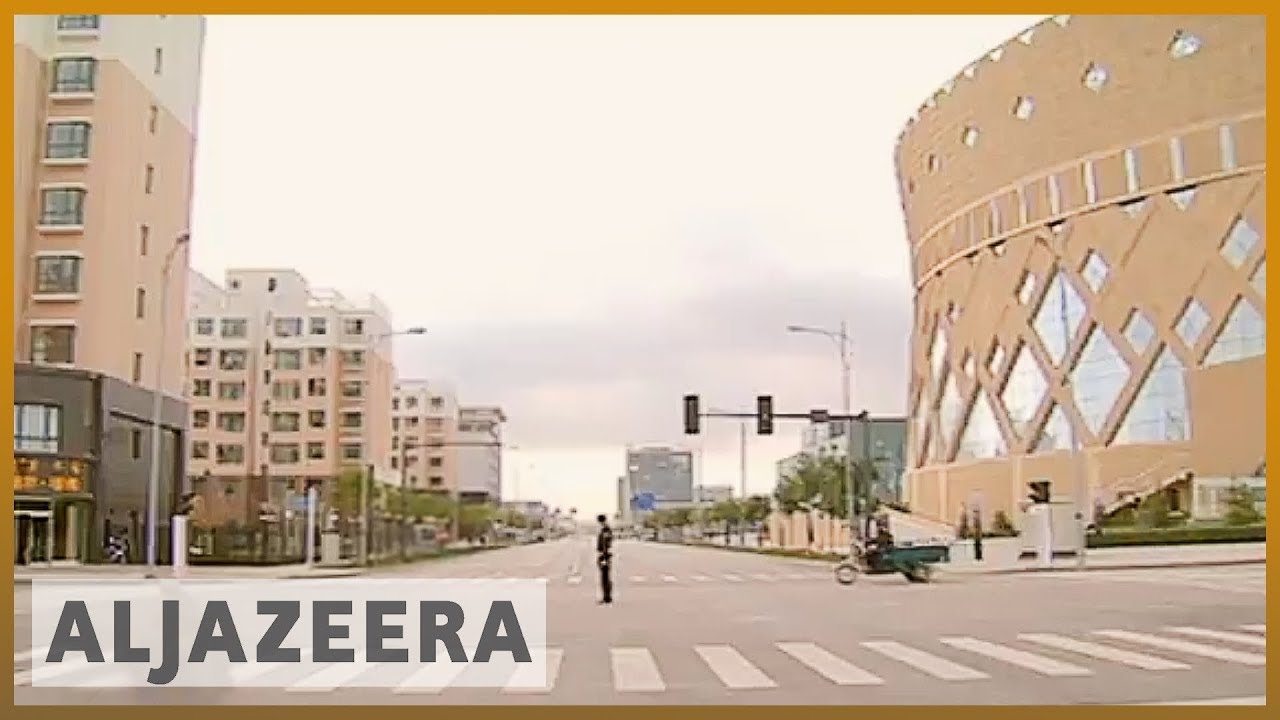
How absurd. First of all, all we can do is speculate. But the empty cities they’ve built, the fact that they devalue their currency in order to stimulate exports, and their parasitic relationship with the U.S, which will soon come to an end, are pretty good reasons to doubt their economic growth (oh, and the fact that they own 3 trillion dollars in U.S bonds, bills and securities–about the size of their GDP). Who knows what their banking system is like. There is one promising aspect of the Chinese economy, and that’s their enormous savings rate (which is mostly forced).
What’s your point? How does this refute the socialist calculation argument? China is freer than the former Soviet Union, but this doesn’t mean that it’s structurally sound/not experiencing a massive bubble.
It doesn’t have to be credit driven in socialist economies (though it can be)… The government can, by decree, continuously lengthen the structure of production and engage in all sorts of malinvestents (like empty super malls, for example).
As you’ve seen there’s no “official” view on China.
All Austrians, even the most hardcore, agree deregulating the economy helped transform China from a collectivist hellhole into a an economic powerhouse in little more than two decades. The most inquisitive hint this was not all China’s doing: growing regulations and taxation pushed many European and US manufacturers to turn to China to provide those goods they were struggling to deliver at acceptable prices. In short is better dealing with Chinese bureaucrats than with US and EU bureaucrats. You may even say Deng Xiaoping timed his reforms just right.
While many Austrians are warning about the dangers of various asset bubbles in China (and they will happen), I agree with many who have a positive outlook. China has invested heavily in capital goods. Sure, the super-rich may have built extravagant palaces and bought Ferraris at grossly inflated prices but they also built state of the art steel mills and chemical factories. They are building refineries and nuclear powerplants. Also the Chinese still believe strongly in rolling up your sleeves, getting to work and saving. Mises clearly talked many times about reducing present expenditures to build up capital: the Chinese treasure this teaching, even if they’ve never heard his name. Workers save money to open their own workshop: perhaps they’ll go bust in a few months, perhaps they’ll remain just low level subcontractors, perhaps they’ll become a power to be reckoned with. But that’s how things are supposed to be in the real world. Compare to the “my house is an ATM” and “the State owe me big time” mentality of the West.
In the end I think many Austrians (whose intelligence and understanding of the real world is quite often above the average) will agree with me in saying that while China has the moral strength to survive the bubbles that will pop in the next few years, the West has pretty much run its course. GDP figures or not.
I’ve heard this argument before and it seems to easy. Devalue your currency. Everyone buys your stuff. You get rich.
It seems to me that if China devalues its currency it acts as a subsidy that will cost the Chinese government a lot of money. Yet isn’t China running a huge surplus? If the US tried the same thing wouldn’t US deficits be even higher than they already are?
You think the Chinese government buys US dollars (from exporters, or rather indirectly from them through banks) with taxed RMB? They print RMB to buy dollars.
It helps exporters at the expense of all holders of RMB (and there are a lot of those =0) It costs the Chinese government nothing (actually, they get to stockpile dollars in exchange for something they create out of thin air, the irony…), but it sure costs the average Chinese person a lot.
China is a very complicated place. Sometimes the places you think are ghost towns fill up in a remarkably short period of time. Two examples: Most of the new skyline in Pudong (east of the Huangpu river in Shanghai) were mostly empty skyscrapers when they first went up, now it is a thriving financial district. Here in Shenzhen (one of the richest cities in China, across the border from HK) they put up something like 50 very new and very tall skyscrapers in what was open fields when I came five years ago. They were mostly empty for a while, but are really filling up now.
Are either of those cases malinvestment? Sure they are, especially with how much influence the Shanghai and Shenzhen governments had in constructing them (and moreso in the cheap credit which financed them, made possible with very loose monetary policy). But they aren’t empty ghost towns. I’ve seen the same thing happen in “industrial zones” setup by local governments in many major manufacturing cities across China - the infrastructure goes in first, it looks empty for a while, but then it fills up with new factories much much faster than originally seemed possible.
There is a lot of malinvestment in today’s China, fueled mainly by very expansive monetary policy and direct loans to state owned enterprises. There is also a massive amount of savings & capital accumulation, many, many small businesses that skirt regulations (as a buyer I’ve had the chance to buy goods for a fair bit less if I don’t go with any formal government issued / bought receipts) and other obstacles that would otherwise make them unprofitable (for example the smallest design shop in China all have all of the latest versions of Photoshop, Illustrator, Corel Draw, etc on every employee’s computer), and an entrepreneurial drive that is hard to compare to most of America.
Are there bubbles waiting to pop? Yes. Does it mean China itself a giant bubble waiting to collapse? Only if their government and central bank does too much in the coming years, as some of those bubbles implode.