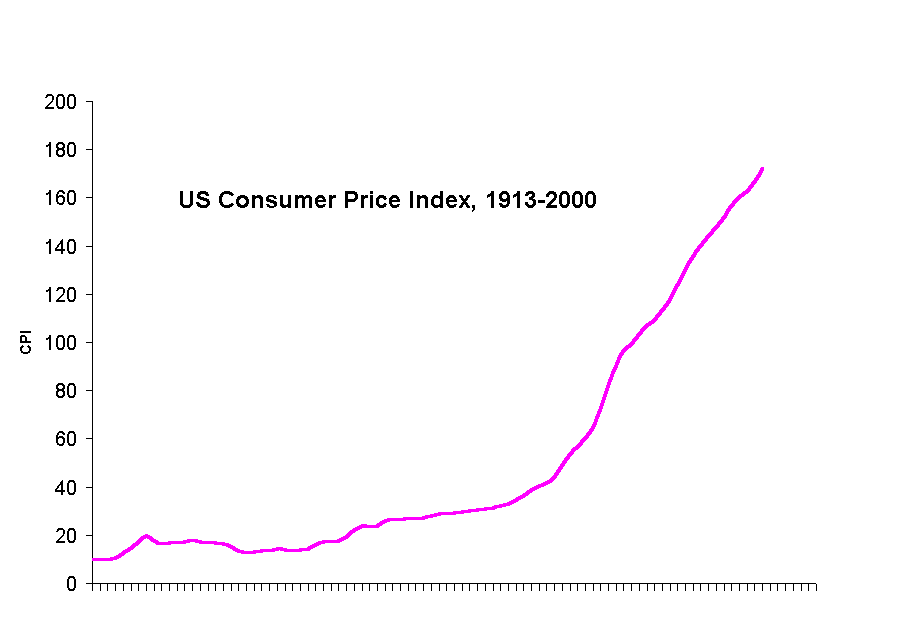
Just wondering, if a region had sound money, prices would be dropping, and hence, the money appreciating. Should money not be of stable value? Which would mean stagnant prices and more money?
I assume by sound money you mean currency fixed to a commodity. If this were the case, prices could drop, but don’t have to necessarily. Now, assuming the free market were to be able to develop fully, one would expect that, generally, the prices of goods and services would drop relative to the supply of money due to competition increasing the efficiency of production. Or, stated differently, the money appreciates relative to prices. It’s not exactly a case of prices dropping AND money appreciating, since these are just two different ways of looking at the same situation.
That being said, why would you want money to be of stable value? Again, I assumed you mean a commodity standard when you said sound money, and furthermore, I assumed you meant a 100% standard, with fractional reserve banking being considered fraud/forgery. This means the denomination of money is fixed to an exact amount of commodity, ie, one dollar = 1 ounce of silver. This is all that needs to remain stable. To have what you ask for, that is, stable prices and a supply of money linked proportionally to changes in efficiency of production, would be just a third way to look at the same situation. But to employ this method would require some central bank-type authority, and that is where the issue lies. Not only can no man or group of men ever know the exact proper supply of money to keep prices of all things unchanged, but power (in this case, to manipulate the creation/destruction of currency) is a magnet the corrupt and corruptible.