Deflation negatively effects borrowers, because they have to repay their debts from past (with more valuable money). Most of borrowers go bunkrupt, so what is the possitive effect of deflation? It helps reallocate resources?
There’s no real advantage to deflation. Those who had wealth transferred from them to those who benefited from inflation typically are not reimbursed during deflation. The advantage is that, while in a depression, you can buy more with your money. If your pay check is less due to a forced pay reduction then at least you can buy more goods with your money - which only raises your real wage. An Inflationary depression, however - like what we are / will be experiencing, is bad. While your pay check remains the same or is reduced by a pay cut it takes more money to buy groceries, etc.. Whether we experience deflation or Inflation the companies that malinvested during the inflationary boom will have to restructure and therefore layoffs need to occur. Deflation and higher interest rates helps make this correction happen faster. Inflation and low interest rates helps prolong the correction period and continues to transfer wealth from the individuals with investment capital / money to those that don’t. Those with investment capital are the strong entrepreneurs who typically are most profitable and have made sound investment decisions. Those without are typically the ones that rely on debt to survive or have made poor investment decisiosn.
We’re not experiencing deflation, in the true definition of the term, as per claims of mainstream economics. We are experiencing asset price declines and cheaper commodities. The money supply has been expanding as credit has been contracting. If the money supply were shrinking then all prices would be falling. All things I have been buying are either stable or going up in price. Magazine subscriptions, movie tickets, McDonalds, Restaurant prices… Yes commodity prices like copper and oil have declined, but this is what happens in a recession/depression while correcting the economy by restructuring the producer goods industry. Besides the price of gasoline / diesel and other assets that were inflated during the inflationary boom, prices for most new consumer goods (besides cars and houses - excess supply)appear stable. This is because Bernanke has been running the printing press 24/7. The monetary system we have today is geared toward inflation. During the great depression and pre 1933 it was on a gold standard and geared toward stable money / less money printing. Existing assets are falling in prices because people and companies that too much debt. They bought a lot of stuff or inventory with debt and now to pay it off they have to liquidate. The extra supply to market is driving prices down. When the excess supply clears prices will restore to their previous levels or even higher.
What kind of deflation are you talking about? Are you talking about deflation as it’s supposed to be used (monetary contraction) or as it is used today (price deflation)? I can tell you that there is nothing wrong with secular price deflation. When prices fall, it indicates that the economy is growing: businesses are producing more products, thereby increasing profits. In this case, it is actually easier for debtors to pay back their debt, since their cost of living is lower and since they’re making more money from their accumulated capital. However, in the case of monetary contraction, prices fall because of a fall in demand and demand falls because there is less money in the economy. This causes there to be less profits for businesses and therefore individuals. It makes payment of debt harder insofar that income has fallen, but on the other hand, prices have fallen as well. Monetary contraction cannot occur in a free market though, since there is always a money to produce more money as long as there is deflation, since deflation = rising price of money.
This table is an excellent summary of this article: http://mises.org/daily/1298
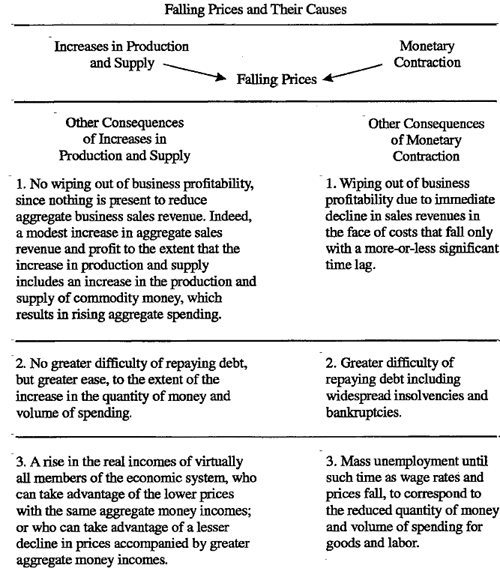
Monetary contraction I had in mind.
Thank you for the explanations!