Very good point and I am in agreement. If such a change were to take place from our current starting point then we would just be cementing the our current condition. For it to work as intended, as unlikely as it may be, all current legislation would have to be submitted for reveiw and that which is incapable of being unanimously agreed upon would be eliminated.
Correct me if im wrong but most of our current ideas about national identities didnt really exist at this time, instead loyalties were along dynastic lines. So the partition was due less to lack of a unified national identity and more because of Poland geographic position, wedged between 3 powerful neighbor. Any nation at this time that showed weakness, politically or militarialy, would be blood in the water.
It is a complex question. Personally I think ethno-linguistic identities existed even then however whereas today this type of identity is an overriding one in comparison to which the importance of all other identities fades into insignificance back then it was merely one of several identities a person would value (alongside social/class, regional, religious/sectarian, political…)
It is not quite that any conquest would be deemed as justified as any other and that therefore war on weak states could be waged at will. War would still need to be presented as, for one reason or another, legitimate. But because the audience judging legitimacy was different then also the justification was different. Instead of having to present the case to nationally awakened masses the case was being made for the benefit of the only segment of the population that mattered - European monarchs and aristocrats. Accordingly the usual legitimate case for war was not liberation of co-nationals but claims granted by titles held.
For example the only reason the English kings during the hundred year’s war maintained that they are the rightful kings of France was because this way they could “legitimately” wage war on the French kings - ostensibly in order to restore the rightful kings to the French throne. But in reality they were interested only in localised conquest and did not actually envision themselves ever ruling the whole of France. However this allowed the Burgundian dukes desiring eventual independence from Ile-de-France but mindful of their pledge of fealty to the French crown to be able to ally themselves with the English against the French.
Poland specifically got itself in trouble in the later years because attack on it could be presented to the classes in control of European states as some sort of legitimate police action given the radical ideas emanating from it.
I think that requiring unanimous consent of the governed is a good idea. I think maybe things that are positive liberty and warfare should have to have a unanimous vote by the citizenry.
This is about how I understood the politics worked. But a savy monarch or noble with land or title claims, real or fabricated, would wait until political or military weakness was apparent to press that claim.
This is what I am curious about was Poland targeted because there were radical ideas, such as freedom for the common serf, emanating from it. Or was it a target because, as you mentioned earlier, Poland was just collection of tiny despots with no real difference from the surrounding nations except that the monarch had little control. Meaning no real opposition to its partition.
So, a country with a very decentralized political system, venetian style elective monarchy, a good army, legendary tolerance and liberal climate and an almost totally paralytic central government? Man, it should have kicked Austrian, Russian and Prussian ass and big time and have no problem aggrandize itself.
Germany could never have been formed, and the polish commonwealth would have expanded into a Switzerland-like heaven encompassing everything from the Bosporus to the Baltic, from the Rhine to the Volga. Instead it vanished totally. (the same can easily be said of the Holly Roman Empire).
I don’t believe that we can find a way around the pretty obvious fact that Poland ‘behaved’ totally differently from what we would have excepted it to. A good answer must be found. Personally I don’t buy the “it had three powerful neighbors” stuff: Switzerland’s neighbors have always been way bigger.
PS: As for a lack of national identity, for Heaven’s sake are we really advocating a unified national mythology?
Probably the closest thing you can get to a voluntary government (well maybe not that close). It seems to make sense from a governmental point a view. After all if you cant opt out everyone should have to agree to the rules and/or any changes.
Nothing ever will receive unanimous consent, so it is a stupid standard.
Certainly the politics of the day was the most important driving factor as to why Poland was a target and Switzerland was allowed to remain in relaltive peace. But I think it is obvious that if the combined political and military power of Austria, Prussia, and Russia was incapable of forcing a partition the partition would not have happend. So what ever the motivation, I think three powerful neighbors is relevant.
I’m not sure anyone has advocated it, only recognized it as an important force in shaping the history and borders of Europe.
Exactly, thats why it is a better form of democracy. (if there is such a thing)
Why? You could never decrease taxes.
Under any other form of democracy taxes will most likely always increase.
Obviously any form of government action under unanimity would be impossible, and so what would happen would be either a coup by the bureaucracy or a complete state collapse.
Even market anarchy does not rely on unanimity, but on reciprocal agreements between individual sovereigns.
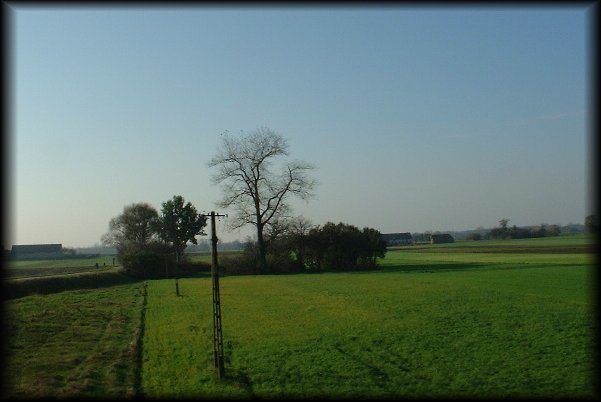
Let’s compare and contrast:
Poland:
Switzerland:
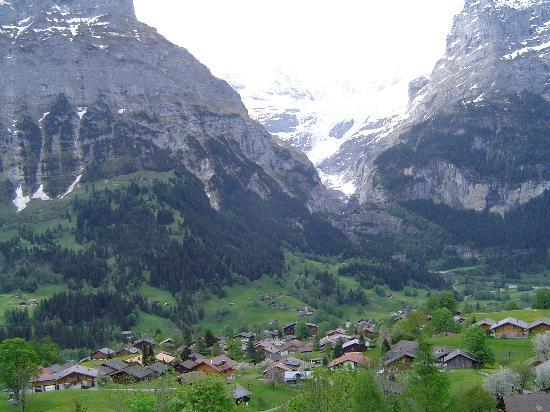
Which seems easier to invade?
Not only that, but we are talking extremely centralized neighbors, two of which also took turns being Emperor of the German People.
No, but it does help to get people to kill themselves for your ambition.
It is impossible to with full certainty gauge someone’s motive. Did the attackers really buy their own BS or was it just a ploy to enlarge their possessions? We do not even know precisely for what reason did the elites in America launch a war on Iraq so what hope do we have to getting to the bottom of what really motivated the power elites in 18th century Prussia and Russia? But yes, I am inclined to believe the most fundamental reason was thirst for power and that therefore Poland was targeted because it was weak.
But the liberal constitution certainly made it easier for its neighbours to target it. Just like Saddam’s transgressions made it easier for US to target Iraq albeit they were never the real reason the attack happened and albeit there have been cases where countries were attacked based on cases that were 100% fabrications without ever actually transgressing in the slightest (eg Grenada 1983).
I think we are really on the same page here, it is merely that you wanted to emphasise one thing, and I wanted to emphasise another.
Or it would persist indefinitely on past endowments of power, never growing or shrinking, while people learn ways to solve thier problems through means other than government force, untill possibly the institution is viewed as antiquated and then abandoned. We could only hope.
Agreed.
But this does bring up another question. How well does this history lesson bode for a completely decentralized anarchistic region? Is there anything to learn about defense in a totally free society?
I feel it is important. Another (non-perfect) but relevant example was the conquest of the North American (minus Mexico) landmass. Smallpox and guns only go so far to explain the relative ease in which an entire continent of people were (for all intents and purposes) completely wiped out.
“Divide and Conquer” was used to remarkable success by the Europeans when fulfilling their manifest destiny. For a new tribal confederation to survive, there must be a common interest, mainly the maintaining of the status quo, rather than letting petty tribal feuds unravel the whole of anarchistic society through deals with some centralized devil. That’s why I mention national identity as so, IMO, potentially vital to any anarchistic experiment succeeding. Could also be religious commonality, idealistic, or ethnic, whatever.
I think it showcases the need for an effective propaganda war. We must not allow ourselves to be demonized in a media campaign or else there is no limit to the means the enemy can get away employing against us. This does not mean that we compromise ourselves and modify our actions in relation to what we are being accused off (which would only serve to lend validity to the enemy accusations), but that we wage a media counter-offensive exposing the aggressor.
There have been plenty cases of wars which could have gone on longer than they did not because the elites were not able to convince the populace which was supposed to fight them or pay for them that they were legitimate. French war in Algeria and Vietnam for example. There France was from beginning had to rely on professional soldiers only because as far as the French youth was concerned France had no business being in those lands in the first place.
So you had the case where the aggressor had resources at its disposal it could not use for the war effort because having failed to win the propaganda war it found its hands partly tied up. Thus the imbalance in resources at the disposal of the two belligerents was mollified before even the first shot was fired.
Indians were dehumanised thus you could get away with gifting them diseased blankets, paying a bounty for their scalps or just massacring their villages with cannon. They had a bad PR department. Had they been seen as equal to they Europeans they would be in a position where instead they could only be fought in accordance to rules regulating war in contemporary Europe and would have therefore lasted a little bit longer.
It is the same with the South. Had the hatred not escalated to the heights it did Sherman’s March would have been inconceivable and the South would have lasted longer.
Had the Iraqis not been thoroughly demonised during the 1990s the US could not get away with keeping Iraq under blockade for over a decade and they would have lasted longer in the 2003 invasion.
Had the Serbs not been thoroughly demonised during the 1990s NATO could not get away in 1999 with bombing civilian targets and using this as leverage in the negotiations and Yugoslavia would therefore have had much less reason to negotiate an armistice.
On the other hand we have the case of Ireland, both during the Irish War of Independence and The Troubles, where due to cultural proximity the weaker party could not be readily demonised. So the stronger belligerent found itself in a position where it had to compromise very early on and at a relatively low cost for the weaker party.
Ireland was granted independence for the cost of just several hundred dead. And during the troubles due to superiority of the republican propaganda campaign over the unionist propaganda campaign the security forces had to operate in an atmosphere of relative fair play thus the IRA was in position where it could inflict three times the casualties suffered by itself.