They got along as Dhimmis which are people who’ve submitted to the contract of protection. They lived in submission and as unequal citizens.
Read the post directly above yours for more details.
They got along as Dhimmis which are people who’ve submitted to the contract of protection. They lived in submission and as unequal citizens.
Read the post directly above yours for more details.
Heaven’s to Betsy! We just got over an ad hoc highly modern, localized, and simplistic look at the thousands of years of Jewish history by dudes with an ideological pet bias to put forth. Now it looks as if there is an influx of “islamo-fascist” haterade drinkers. It’s the Attack of the Fox’s and WASP’s! Oh well, at least it isn’t Xtian bashing, that gets old quick. It’s become a bit of a bore, it gives other religions a chance to see dudes with an ax to grind.
Anyway, real point: I’ll let you know when my acknowlegment of Israel’s right to or not to exist makes a fig of difference in anything that matters.
Were the concentration camps and gas chambers classes on human rights? I don’t see how being imprisoned, starved and tortured can teach you anything on respecting other human beings.
Abrogation is a silly theory, and I don’t care for scholars that have no understanding of context or classical arabic. Why don’t you read this http://www.hadith-studies.com/Burton-Theories-Abrogation.pdf ? The reference to the tampering of God’s message is to revelations that came BEFORE Quran. But of course you wouldn’t even think to understand the context of any verse. Most of the concepts of abrogation comes from unreliable hadith. Bukhari’s hadith is filled with his own abstractions and you can research that yourself if you care.
I’m not going to go through everything- but let’s look at something you quoted here->
"The Sword verses: the Call to “fight and slay the pagan (idolaters) wherever you find them” (sura 9:5); or “strike off their heads in battle” (sura 47:5); or “make war on the unbeliever in Allah, until they pay tribute” (sura 9:29); or “Fight then… until the religion be all of it Allah’s” (sura 8:39); or “a grievous penalty against those who reject faith” (sura 9:3). All of these contradict “There is no compulsion in religion” (sura 2:256). Note here that sura 9 was one of the last suras to be “revealed to Muhammad”. Logically, it should abrogate “there is no compulsion in Islam”.
You completely ignore the verse right before 9:5 which is referring to those that have broken a peace treaty. It comes off as obvious to me as to what Sura 9 is referring to, especially if you read 9:6 where even if the enemy army asks for your safe passage, you must grant it to them and provide them shelter then let them back to a place of security. Sura 9 is very specific as to who is talking about when it comes to fighting, they don’t just stand alone.-[9:13] Would you not fight people who violated their treaties, tried to banish the messenger, and they are the ones who started the war in the first place? Are you afraid of them? GOD is the One you are supposed to fear, if you are believers.
Also that quote lists 8:39 as an example of the violence that Islam advocates-> why not list the ENTIRE verse and the verse directly before it and see the manipulations for what they are?
[8:38] Tell those who disbelieved: if they stop, all their past will be forgiven. But if they return, they will incur the same fate as their previous counterparts.
[8:39] You shall fight them to ward off oppression, and to practice your religion devoted to GOD alone. If they refrain from aggression, then GOD is fully Seer of everything they do.
And if Sura 8 truly abrogates 2:256- then why does it also include the verse that I posted that YOU just quoted saying it was abrogated?
(8:61) If they resort to peace, so shall you, and put your trust in GOD. He is the Hearer, the Omniscient
You’ve taken many liberties with all the quotes you’ve taken from Quran as well, substituting words for “abrogate” when the arabic doesn’t even mention it. (or rather, not you but the answeringislam website)
But if anything should come from this- I would hope you understand that there are different viewpoints on Quran from what you believe and what others believe. Why should I care about anything written by Bukhari? Because some Islamic institute somewhere says so? Because answeringislam.com says so? So what?
[quote=“Isaac “Izzy” Marmolejo”]
[/quote]
So?
I’m a libertarian and I adhere to the NAP because I completely refuse the notion that any initiation of violence against a pacific party can result in a positive good. That’s why I abhor the state, because I don’t think that some initiation of violence against a pacific party can end up bringing some positive good, period.
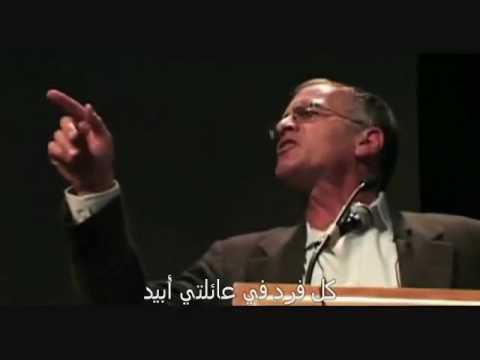
What this guy is saying (and you seem to agree) is that, all in all, the Holocaust was terrible, but it surely had a positive side. It taught him (and it should teach other Jewish people, it seems) some lesson on human rights.
I don’t see how a Libertarian can agree with that.
the halocaust card is overused… yes it was wrong…but that does not justify for a Jewish State or or justify how they treat Palestinians. This is not a debate dealing with the NAP, so I do not know why you bring it up
Seeing people suffer firsthand can give people the energy to act charitably. Not that the suffering was necessary, but it can result in sympathy. I don’t see how that contradicts NAP.
That is true- the left/right political agendas have nothing to do with caring about innocent people. But at the same time what’s wrong with pointing out atrocities committed by a certain state? Why should that mean that libertarians are siding with the left? Israel’s close ties to the US are one of the biggest reasons there’s so much conversation about it.
If that’s true then please clear a couple things up for me. Originally Muslims used to pray in the direction of Jerusalem. Then Mohammed changed the Qibla (direction of prayer for those not familiar with the term) to Mecca. He claimed to have received a revelation in the middle of his prayer. How is this not abrogation?
Also, Explain to me why drinking and gambling are considered haram? If what you’re saying is true and later verses don’t supersede the earlier ones why can’t Muslims drink? Because the earlier verses in the Koran are much more lenient with drinking.
First Prohibition (of sorts): yes and no
Maududi says that most of Sura 2 was revealed shortly after Muhammad’s Hijrah (Emigration from Mecca to Medina) in AD 622. The following verse in Sura 2 shows that Muhammad partially or confusedly permitted or condemned drinking and gambling at that time (Maududi, vol. 1, p. 161, note 235).
2:219 They ask you [Prophet] about intoxicants and gambling: say, ‘There is great sin in both, and some benefit for people: the sin is greater than the benefit.’ They ask you what they should give: say, ‘Give what you can spare.’
In no way is this verse a clear and uncompromising edict on the two personal practices of drinking alcohol and gambling. (Islam teaches that all intoxicants are criminal; cf. Bukhari, Drinks, vol. 7, nos. 5579—5589; Muslim no. 7186.) It seems contradictory to call the two acts mostly sinful but partially beneficial. It may be argued that alcohol is sinful in its morality, but beneficial in its health for the body (e.g. helping digestion). However, Allah will later prohibit it completely, so either it is sinful morally regardless of the year on the Muslim calendar, or it is not.
Second Prohibition: only during prayer
According to the historical evidence and the content of Sura 4, Maududi says that the sura was revealed between the timeframe of AD 625 and 627, because various verses indicate different events. For example, vv. 1—28 speak of the Battle of Uhud in AD 625. Verse 102 indicates a military expedition in AD 626 during which Muhammad taught his Muslims how to pray while out on campaign. Verse 43 takes place during another military expedition in AD 627 when he taught his holy military warriors how to perform ablutions (washings) with pure dust if water was not available.
Maududi speculates that the target verse 43 came at the chronological beginning of the entire sura and therefore early in AD 625 because many Muslims showed up intoxicated for public prayers ‘and made blunders in their recitations’ of Quranic passages. So Muhammad had to correct the problem. However, some hadith passages (the hadith is the reports of Muhammad’s words and actions outside of the Quran) say that some Muslim warriors showed up at the Battle of Uhud intoxicated and died, but this was before Allah had prohibited it, so they were not held responsible (Sura 5:93; see Bukhari, Oppressions, vol. 3, no 2463; Jihad, vol. 4, no. 2815; Commentary, vol. 6, nos. 4618, 4620).
Regardless of the exact timeframe, for our purposes all we need to know is that Sura 4 was revealed between Sura 2 (see above) and Sura 5 (see below). Thus, Allah’s ‘eternal’ revelations on the morality of drinking intoxicants are changing according to external circumstances.
4:43 You who believe, do not come anywhere near the prayer if you are intoxicated, until you know what you are saying . . .
Because the Muslims showed up intoxicated for public prayer, ‘they changed the timings of their drinking so as not to clash with the timings of their prayers,’ says Maududi (vol. 1, p. 337, note 65). So Muhammad prohibited drunkenness only during prayers. This means that Muslims were permitted to get drunk in between the forced prayers that Islam imposes. How is this guidance? It is quite odd that in this confused state of affairs Muhammad did not completely and absolutely prohibit intoxication at this time, when the Muslim community needed it most. Quranic revelation on this matter falls short.
Third Prohibition: final and absolute
Maududi says that Sura 5 was revealed in the timeframe of AD 628 and 629, so it is a late sura (Muhammad dies of a fever in AD 632). It lays down rules for a growing community after the Treaty of Hudaybiyah in AD 628 in which Muslims were promised a free and unmolested pilgrimage to Mecca a year later, which took place. So it was important for Muslims to prepare themselves and to give up all intoxicants. Hence, these two verses came down from Allah:
5:90 You who believe, intoxicants and gambling, idolatrous practices, and [divining with] arrows are repugnant acts—Satan’s doing: shun them so that you may prosper. 91 With intoxicants and gambling, Satan seeks only to incite enmity and hatred among you, and to stop you remembering God and prayer. Will you not give them up?
The total prohibition came last but according to you that doesn’t mean anything if that’s true then why is drinking haram? It’s because the doctrine is real and is well established and adhered to in Islamic tradition.
Another example, The night prayer performed by reciting the Quran ought to be more or less half the time of the night (Sura 73:2). This was changed to as much as may be easy for you (verse 20).
Abrogation is everywhere in Islam, the whole faith is incoherent without it.
Ok! I’ll do just that!
9:3 And a proclamation from Allah and His messenger to all men on the day of the Greater Pilgrimage that Allah is free from obligation to the idolaters, and (so is) His messenger. So, if ye repent, it will be better for you; but if ye are averse, then know that ye cannot escape Allah. Give tidings (O Muhammad) of a painful doom to those who disbelieve.
9:4 Excepting those of the idolaters with whom ye (Muslims) have a treaty, and who have since abated nothing of your right nor have supported anyone against you. (As for these), fulfil their treaty to them till their term. Lo! Allah loveth those who keep their duty (unto Him).
9:5Then, when the sacred months have passed, slay the idolaters wherever ye find them, and take them (captive), and besiege them, and prepare for them each ambush.But if they repent and establish worship and pay the poor-due, then leave their way free. Lo! Allah is Forgiving, Merciful.
The “Peace Treaty” mentioned in 9:4 is the contract of Dhimmitude. it’s saying that those who’ve already submitted to the rule of Muslims shouldn’t be made war against until they break the treaty by stepping out of their position of submission to the Muslims. 9:5 says to kill all non-belivers till they submit and pay the Jizya and recognize the Muslims as their masters.
How very nice of Allah who claims to be all merciful but talks about hell for non-belivers a lot.
Sura 8 has in turn been Abrogated by Sura 9 the last revealed chapter of the Quran. The most violent one too. The one that doesn’t start the Sura with the Bismillah, In the name of Allah, most beneficent, most merciful.
Once again It’s very easy to show Abrogation in action.
yes it was wrong…but that does not justify for a Jewish State or or justify how they treat Palestinians.
Well what is, is. Talks about justification of this and that are moot. What is amusing though is that the Halocaust, the State of Israel, and the set up of the Mid East was white Weatern secularists (i.e. athiesticish protestants) blowing a gaskete over these things. And these are also the same ones that are saying (and perhaps in some cases admitting with that unique “self hatred” they like) who is or isn’t evil and / or justified in the same region. and how to handle and judge it.
And the kicker is, there are some of these people on this very thread! Western Academic babble just can’t help itself. It won’t shut up. It has to talk about things, and within it’s own context and framework (which is obvious). Amusing, assuming you are not one of the poor bastards within it’s crossfire.
If you both agree that initiating violence against a pacific party may result in some positive good you have no moral basis to question a statist who wants to initiate violence against a pacific party in order to promote some kind of ‘social justice’. He’ll just tell you that in the end that initiation of violence will result in a positive good. What are you going to say against his argument if you believe that violating the NAP may result in something positive?
And that’s just one side of the problem, which concerns only libertarians, but there’s another one, which concerns everybody, by saying that violence should teach its victims not to be violent you are putting a moral burden on these victims of violence. While I don’t think that being a victim of violence gives you any moral basis to initiate violence or to make your violent acts somewhat understandable, I will never expect from someone who has been victim of violence to have superior moral values than someone who hasn’t been a victim of violence.
That’s absurd and completely anti-libertarian.
I’ve never said there’s something wrong with pointing out atrocities committed by a certain state. What I find terrible is when libertarians dispense a huge amount of hate towards the state of Israel because their terrible human rights record when there are states that worst offenders than Israel. The only justification for that is because this individual has been brainwashed by left propaganda which portrays the state of Israel as the ultimate source of evil just to piss off their friends of the right.
I’ve actually seen some libertarians calling for boycotts against Israel while they are more than happy to buy stuff from the US, China, Saudi Arabia and some other violent countries. That makes no sense whatsoever if this individual’s trully concern is innocent people being killed.
Here we might have a disagreement as to what Qibla itself means. http://free-minds.org/name
I’m going to ignore all the quotations you listed regarding Bukhari, again you can do the research yourself to see how valid they are. I don’t care for them.
I don’t see 2:219 and 5:90 being contradictory. Both tell you to shun intoxicants- 2:219 just goes a step further in instructing you that even if you find benefit the harm outweighs it. What contradiction is there in saying that there might be some benefit as well as harm? If you drink you can feel good, if you gamble you can certainly make lots of money- but 2:219 is saying that the negative qualities outweigh the good. Why is that a difficult concept to understand? Neither verse uses the word haram. They both have the same and most obvious message.
The point of 4:43 is to make sure you come to prayer with a clear mind- people may drink anyway and turn to prayer for repentance, but Quran advocates to wait till you are clear of mind before you do so. Mistakes are ok in Islam as long as you ask for repentance, no one is expected to be perfection. There is no case of abrogation here, its just in your head.
As 9:12 and 9:13 easily point out, the beginning of Sura 9 is referring to aggressors as its always been in Quran when it comes to war- not just simple non-muslims . What is Jiyza? It certainly isn’t the arabic word for tax, although unfortunately many Muslim Statists want it to be that way. In means to repay a debt, “recompense”- it is in reference to war reparations from aggressors. 9:6 and 9:7 should tell you that pagans don’t have to convert. A peace treaty is a peace treaty- not some contract of dhimmitude or whatever.
Once again there is no concept of abrogation, the example you show with intoxicants just comes off as very very poor reading to me. You want to say that any passages in Sura 9 referring to war have to do with some type of conquest/convert plan- and everything else in Quran that advocates the opposite is pointless. Have fun with that.
Seeing violence can create sympathy for the victims. Is that impossible? No one said its preferrable for the violence to take place- it can have all sorts of results, vengeance or sympathy. For Normal finkelstein he felt closer to the human plight of suffering. That was his physical/emotional experience. I don’t think its a question of being right or wrong, that’s what happened for him.
I’d say your right that no victims of violence should be expected to be non-violent.
Well it looks like we are talking about ghosts. Maybe I didn’t read the thread very precisely but I don’t see anyone here advocating boycotts against Israel, why not speak specifically about who you’re talking about?
I see your point though, why not speak out against all oppressive regimes instead of focusing on Israel, but it could be perhaps that there is much more media regarding the Israeli-Palestinian situation out there than most conflicts in the world, so that’s what people are going to talk about since those thoughts are constantly in their heads. What can you do?
I am not advocating that all. I am saying is that Israel cannot justify itself because of its people’s past sufferings. Nor can they violate other people’s rights because of their past sufferings.
You want to see other states dismantled? I don’t understand where it’s your place to wish something for another country. You sound a lot like Alexander Hamilton, to me. Being a nationalist pig, he was very concerned with what neighbors to New York were doing and decided to ruin the American government. He ruined states’ sovereignty and now we have this huge, consolodated republic ruining the country.
Communists and socialists care about their neighbors and want things for other countries. I don’t know if you consider yourself a capitalist, but I view that perspective to be completely contrary to capitalism. In my opinion, the seed to tyranny is making a habit of peeking over your neighbor’s fence.
There si no such thing as a government or a country. It’s a figment of your imagination.
I like turtles.
What exactly do I sound like? I don’t get it.
People can’t even determine which parts of Islam are authoritative…this coming from the same guy that doesn’t believe in authority?
Am I getting shrill and accusatory, or am I merely stating an opinion? Next time I pop open a beer and it tastes horrible and I make the claim that it tastes horrible, I’m sure my friends will also claim I’m being shrill and accusatory. After all, all opinions must be, right?
And from what studies have you determined that people who are shrill and accusatory are usually losing an argument? Or did you just make this up?
Where did I say I didn’t believe in authority?
I didn’t just make it up. You still haven’t articulated an argument. Proof is in the pudding, isn’t it?