Game makers strike back at used game market

Game makers strike back at used game market

by Mike Smith
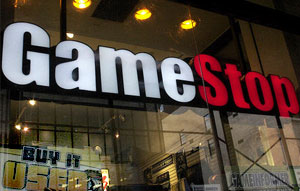
Buying and selling used video games has become a fact of life for many consumers – but if game publishers get their way, it’s about to become a lot more difficult.

One 2009 estimate puts the size of the used game business at about $2 billion, representing about one-third of all annual game sales. That’s a big deal, especially for market leader Gamestop, which is thought to get over 40% of its profits from reselling traded-in games. Major retail chains like Best Buy, Walmart, and Amazon have all dipped their toe in this lucrative market over the past year.

But while it’s a serious earner for retailers, it’s a complete bust for game publishers, who make nothing from secondhand sales of video games. They’re looking for ways to get a piece of the pie – or, failing that, to take the pie away altogether. Here’s a few of the tactics they’re using to make buying and selling used games harder for consumers.

Single-use download codes

Were you one of the millions who bought smash hit space opera Mass Effect 2 last month? If so, you probably noticed it came with a card bearing a code that gives the purchaser access to the game’s online “Cerberus Network,” containing all manner of downloadable goodies. Buy it used, though, and you’ll have to pay a $15 fee first. Ouch.

Multiplayer restrictions

But those are extras, right? You can still play the game without the Cerberus Network, if you don’t want to pay. Nobody’s actually removing features from games for used purchasers, are they?

Actually, yes, they are. Just-released PSP shooter SOCOM: U.S. Navy SEALs Fireteam Bravo 3, which proudly trumpets “a robust competitive multiplayer component…continuing the franchise’s tradition of unparalleled multiplayer gaming,” requires buyers to register online before they can access its online modes – and that’s a one-time deal. Buy it used, and you’ll have to fork over an additional $20 (which goes straight into the publisher’s pocket) if you want to play online.

Digital distribution

Buying games through Xbox Live, the Playstation Network, Steam, or other download channels is convenient. It’s quick, it’s easy, and because your purchases are tied to your account (Xbox Live ID, Steam username, etc.), you can re-download them easily in the future. But what you gain in convenience, you lose in value: there’s typically no way to transfer ownership of these games without giving up your whole account. Want to sell just one digitally-purchased game? Tough.

Limiting installs

Think you can avoid that by only buying physical copies of PC games? Not so. Take Spore, one of the best-selling titles of 2008: if you have a physical, boxed copy of the game, you can certainly resell it. But the buyer won’t actually be able to install the game without the username and password originally used to register it. Don’t have that? Better hope you can convince the seller to cough it up, or else you’re out of luck.

Much like is true for Toyotas, ensuring that video games have long-term resale value allows publishers to sell their games for a higher initial price.

None of the markets above demonstrate an intent by game makers to destroy the used games market.

I mean, tbh, some games I’ll buy new and some I’ll buy used. If someone really wants all the features, they can buy the game new, if not, they can buy them used. Also, ME2’s DLC is going to cost money after this next character installment, so it’s not like just because I got the Cerberus network for free that I really got all that much. Just the terminus and cerberus armor, zaeed and this new chick, can’t remember her name.

I’m out of the loop. I still prefer the classics. I recently downloaded Super Mario RPG: Legend of the Seven Stars and Legend of Zelda: A Link to the Past on my girlfriend’s Wii. It would cost near $100 (or more) to get those games new in a box. I paid $8 to download each.

Game maker’s can do whatever they want. There is a way around those codes, though. Either you can pay, or have the knowledge to get around it. When you buy those games, you should know what you’re getting into. It’s not like they are adding hidden fees.

I’m really hoping at least one of this coming generation’s consoles uses direct downloads only.

I’m going to side with Stranger on this one. For one thing on Steam there’s often deals for new games that don’t happen for on-sight/retail sales of the same games. Granted, you’re stuck with a login in some cases, but Valve tries to make it as less invasive compared to their competitors (save for Stardock’s own Steam analog). So, I think it’s not a damnation of the new strategies to lock users into their new purchases or to get some extra cash from the used market, it’s just that times are changing and so are game makers.

They’ll just manage to push more and more people into the “black market”, just like the music industry which managed to cover itself in ridicule by putting anti-copy protections which made their own CDs unreadable from most players. People will just look for “cracks” and “hacks” or just download a pirated copy of the game altogether. I am still to find a software protection which a technically-minded college student with a bit of time on his hands cannot crack/disable.

In the end Disney Company got it right: when one of their executive officers was asked why they are investing so heavily in children-oriented products he said candidly “People will always find a way to crack our protections open but which self-respecting father would give his daughter a pirated Jonas Brothers CD?”.

There’s good reason they cost near $100!

(pats his old cartridges)

Why would I ever sell them? [;)]

I remember even when those games were still contemporary my Super Mario RPG cartridge was around $60. I’m sure you can get a used copy for cheap, but it constantly erasing comes with the price (I remember A Link to the Past would erase on me occasionally in dark world, and that was back then).

Nowadays even 64 cartridges can get the same glitches as NES/SNES. I have to blow into my Donkey Kong 64 cartridge, and it will occasionally freeze on me if the console moves around.

I think used games are beneficial for those who cannot afford the hihgly priced games which come out. The publishers get enough of the cut and still are hungry for more phew!!!

digital artists need to wake up to the fact that their stuff is worth less (than current market value) in a world without IP laws. And people have been able to ignore IP laws, for the most part, as bandwidth and computers become cheaper. They need to accept this fact.

Valve’s Steam is the best example of a company that has embraced technology changes. They are happier and more succesful and their customers are happier.

RIght? Valve is the shit. I buy their stiff no questions asked. They already have the digital zone on lock down and you can’t re sell those, or even your account.

I did a whole blog post on this. http://eatingpropaganda.blogspot.com/2011/06/internet-epitome-of-anarchy.html

Secondary markets for games are just as useful as used cars and used clothes, but the game PUBLISHERS are the ones grubbing for more money. The DEVELOPERS don’t get as much. That is why they sell us that DLC bullshit. “no no we didn’t cut it out of the original game to sell to you later at a higher price, we just made it. Buy it as see!”

I’ve games my whole life and I will pirate until they realize what the above poster and my blog say.

"RIght? Valve is the shit. I buy their stiff no questions asked. "

Right on. All the people I know who pirate games, WILL BUY STEAM GAMES. That says it all. They must be doing something right.

I agree with Limitgov and Jacob on all their points, especially that valve has super high profit margins because their customers are happy. GoG (I imagine Jacob and Limitgov know about them:) also gets a lot of my money, and I don’t ever buy hard copies of recent PC games anymore. Unfortunately, I think the Protect IP Act may pass. Nintendo supports it, and that’s largely why I just download WAD files for free and play them on Dolphin.

I’ve pirated some pc games (I don’t play too many games now adays). I buy only SOME console games. But the majority of my video game related purchases have been steam based. Although I buy a lot of games that I could easily pirate in sales, I also buy a lot of games brand new off the store, or preorder games (for example the Orange Box, L4D series, etc). It’s great. I LOVE VALVE. Their support is so awesome. All my games and saves in one application? Hell yes. I even set up shortcuts within steam for games I didn’t get through steam.

I don’t know why other video game companies don’t copy their model as much. Think about it. All the games that people pirate, a publisher or whoever, doesn’t lose money, though they don’t make money off piracy, they could still be making money off Valve’s model. Through valve’s model, you have startup costs and support costs, but you can basically sell a video game at any price after those expenses, because you do not have to pay extra to reproduce that same copy.

I was not aware that fathers base their self-respect on buying CD’s.