Let’s say you were in a Walmart, about to pick up a bottle of Coca Cola in an ancap world. Except, the bottles of Coca Cola could have been produced by anyone (including, shudders, Pepsi) who wanted to get in on the Coca Cola brand, and the bulding your standing in isn’t a Walmart at all, just some shmuck’s store who decided to stick the Walmart logo on the front.
Would “brands” survive the transition into a stateless society? Not just particular brands, but the concept of “brands”, in their entirety?
WalMart wouldn’t carry knock-offs that had inferior taste, since they want to keep customers. They would do some of the work in getting the “real thing”. As for fake WalMart stores, they’d have to go through an immense amount of work to fool people into thinking they were the real thing. Given that there aren’t many WalMart stores, they could just have a list of the real ones in a given town.
Have you ever heard of generic cola? Generic or store brands are common now, and I see no reason why they would not remain common in libertopia. If anyone claims that their cola is Coca Cola, then they are guilty of fraud. I don’t see why Coca Cola wouldn’t remain either in libertopia. They keep their recipe a trade secret. If you want that particular flavor of cola, then you will have to buy Coca Cola. If you aren’t particular, then you might buy the cheap generic or store brands.
Seeing as Coca Cola is popular now, I don’t see why it wouldn’t be popular in libertopia (unless it just falls out of fashion). It’s popular not because of laws but because of taste. There may be some laws protecting Coca Cola, but like I said, they keep their recipe secret. So it’s not like everyone knows how to make Coca Cola and they aren’t permitted to.
I admit, I hadn’t considered that pretending to be something your not could count as fraud.
As for your comments about taste, the specific reason why I chose a product like Coca Cola is because there’s no way of determining quality of the product until after you’ve purchased it. So, you could have two bottles in a shelf, one with legit CC, and one with generic, both with the same label… it wouldn’t be until you’ve handed over your money, cracked open the bottle, and started drinking, that you knew which one was the right one.
Well at that point you would realize that you have been defrauded. However, that depends upon whether or not the trademark has become genericized. While trademarks would not exist in libertopia, if the brand or logo or whatever has not become genericized, then it would be fraud. If it has become genericized, then it would not be fraud.
This is interesting, you’re saying product branding woud basically become a truth claim, such that anyone trying to copy that branding would be essentially committing fraud?
In a copyright-free environment, a company couldn’t even protect its company name nor its art style for that name. But truth claims would still be sacrosanct, as in your “manufactured by” idea.
But since company names aren’t necessarily protected there could be a hundred different coca-colas. Maybe it would be to a free-society’s advantage to at least ask companies on a voluntary basis to choose different company names. Else even the truth-claim / fraud idea doesn’t work.
I think that trademarks would still be protected in an anarchist world, since a trademark says something specifically about the product, something which cannot be replicated, whereas IP can be. Coca-Cola is so widely known that selling something which says coca-cola on it is almost certainly fraud.
Anyway, even if trademarks weren’t protected businesses would still have an incentive not to sell fake coca-cola.
In fear of “retreading ground” (so to speak) I took a peek in Stephan Kinsella’s “Against Intellectual Property” and he appears to share the view that the consumer’s rights are being violated in cases of trademark “piracy”:
He even uses an example of a burger chain changing their name to that of one of their more successfull competitors. The conclusion (not in the book, my own words) being that doing so would not be prohibited, but could be used by consumers in a court of law as evidence of fraud.
I don’t know if anyone follows PC gaming news, but one can find there a good example from the real world. Bethesda recently threatened to sue a developer (Mojang) for calling his upcoming game “Scrolls” - they claimed it was too similar to “The Elder Scrolls” which is a game series they produce. The games are completely different, as is their logotype. In the libertarian society envisioned by Kinsella, Bethesda would have no right to sue as their property rights are not being violated. The developer of “Scrolls” could keep the name practically without any fear of being sued since he knows that the consumer is extremely unlikely to mistake his game for The Elder Scrolls series.
If anyone is interested, the two companies reached an agreement outside court. I quite liked the tone of the article summarizing it on rockpapershotgun.com. The writer seems to pick up on the extreme bureacracy that is current law despite not being a libertarian (as far as I know).
I think that “product differentiation” matters a whole lot less than we are told it does. If people who buy Nike care so much about the quality of their clothes and shoes, why are they so willing to buy knockoffs at the lower price? “Oh, but the quality of the real thing is what gives the knockoffs their value.” Why does this matter? Why should value be imbued into things in this particular way?
Your question is actually a fairly easy to answer with some degree of finality - after all, the rise of IP and branding has been correlative.
Let’s rewind to, say, 1900. If you were a poor man and you wanted a good pair of pants, you didn’t go looking for “Levi’s” logo, you bought whatever was available at the low price in a clothing store - as often used as new. To judge quality, you looked at it, tugged on it. A well-built pair of pants is pretty obvious by comparison to a crappy pair of pants that will fall apart. It’s not like launching men to the moon or anything - though I’m sure either Levi’s or Nike have a large enough cash-flow that they could actually fund a Moonshot if they put all their money just to that.
If you were wealthier and looking to drop some serious cash on a new suit, you shopped around on the basis of tailor reputation. Like any other market, there were low-end tailors, mid-range tailors and high-end-household-name tailors (like Armani is, today). The same went for carriages, automobiles, and so on.
The whole way of thinking of the market as being “driven” by “brands” and so on, is just upside-down and backwards.
And I don’t think the possibility of buying a knockoff coke from a 2-bit corner store in Nowhereville is really that big of a deal. I mean, I don’t think it’s a primary concern in terms of we should rewire the whole market to make sure this travesty cannot occur.
I’m gonna have to actually read Kinsella’s corpus. Can’t see how trademarks could possibly not violate his larger arguments on IP generally. Claiming to own a word to the exclusion of others should be the exact same damn thing as claiming to own an idea :\ He’d better have a damn good consistent answer to that.
This genius sells who knows what under the guise of a reputable brand. The solution? A rating system. Just look at why the product is rated so low, and you’re welcome to make an informed gamble on the product. Ultimately though Molyneux is right, you don’t need to know how the cotton will be picked to know slaves should be free—and if you manage to predict it accurately, people will think you’re insane. So I think most people’s ideas about how problems will be solved are meaningless, and we really can’t even fathom how a truly free, robust marketplace will rise above problems that plague a statist world.
Ultimately, the solution is efficient communication of information. Obviously, that’s a necessarily high priority market demand, and it will be provided for on a high priority basis. If technology is this brilliant in a statist world, imagine (because that’s all we can do) how sci-fi it’s going to be in a free society.
And in a world where businesses are naming themselves and their products after their competitors. Imagine a company products an exact replica of a coca cola bottle just with their own formula, how does a ratings company help us there.
First, you have to recognize that he is not saying that trademarks as they exist today are legitimate. The idea of a trademark in a libertarian society is quite different. If you buy a good, you expect to get that particular good. If I sell you a bottle of cola labelled “Coca Cola”, you expect to receive a bottle of cola made by the Coca Cola company. If I sell you that bottle labelled “Coca Cola” and it was in fact made by Pepsi, then that is fraud.
But I have only defrauded you. I have not stolen from Coca Cola, which is the problem with trademarks as they exist today. Also, just because something is labelled X doesn’t make it fraud. Earlier in this thread, I linked to this list of genericized trademarks. The point is that these particular trademarks or brandnames became so commonplace that they became associated with a general class of goods instead of a particular product within that class.
Anenome, I gave you a real world example in what may as well be anarchism, a free market so extreme that even cases of fraud aren’t brought before a legal system. Amazon.com is doing nothing about it, and the merchant is selling under a reputable—but false—brand name. The solution was*, as a matter of fact, not my opinion*, a rating system. Or more generally, a system of efficient communication about information. Thus in this case, people are able to learn about the results from others who bought product X. Other free-ish markets have resorted to similar measures. Famous examples are Ebay and the completely anarchist Silk Road. The emergence of rating systems (or more generally, information technologies) isn’t my theory of a solution, they are real world matter-of-fact answers.
But they aren’t the only answers, nor the best, though they’re clearly indicative of some features demanded from inevitable future attempts at solutions. My point is given that they emerged and manage so well in a statist world, imagine how much more efficient communications technologies will be in a free society, where the threat is potentially so much more real (the premise of your concern is that the threat will be greater).
Re: GotLucky, I wouldn’t go as far as to argue that any fraud should be dealt with through legal violence. People get scammed, scammers get ostracized, and everyone benefits. Debugging and troubleshooting daily realities, it’s what a free market society does—no legal violence required.
Did you listen to his “Rethinking Intellectual Property” course yet? I remember linking to it and discussing some of it with you in that large IP topic in early October:
The companies selling the products have to make sure that they are actually selling what their customers want. The company itself will lose reputation if they begin defrauding customers.
Let us say 1/3 of the customers love actual Coca Cola, and hate anything that is different, 1/3 don’t care whether it is Coca Cola or generic, and 1/3 love generic, and hate Coca Cola:
Store A: Only sells “Coca Cola” (knockoff brand that copies the labels/bottle shape, but has a slightly different recipe).
Store B: Sometimes sells actual Coca Cola, sometimes sells “Coca Cola”, and mixes all the bottles together so you don’t know which is which.
Store C: Sells actual Coca Cola, does background checks, makes sure they are purchasing it from the official Coca Cola factory.
Store D: Is like Store C, except they clearly label their products as Coca Cola and “Coca Cola.”
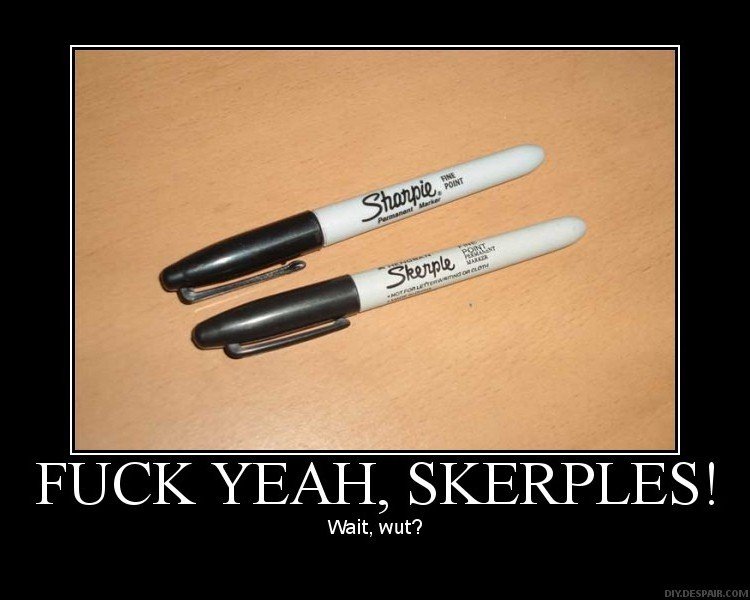
 Work fine so far.