I’m trying to understand which type of situations I can apply or attribute to what Hayek referred to as being the result of “spontaneous order.” It is my understanding these are things that are a result of human action and not human design.The market being an example of such things.
This really interests me because I think that we naturally interpret most, if not all, of the modern world and its components to be a product of human design. I think this is a dangerous presumption to make.
I am working on a piece of fiction with themes involving emergent behavior, synergy and the fallacy of division when applied to governments.This is just a small part of it, but it could be an extremely significant part, if I can use this to tie in two separate themes.
My question is: Can the concept of spontaneous order ever be applied or used to describe certain works of art or expression?
Obviously this couldn’t be true of all works of art, as some are intentional, with purpose and very structured. The type I have in mind is more expressive of a particular moment, such as a spontaneous dance or song that is not intended to achieve a purpose other than the act of expression. Characteristics of said art would be purely original, nonconforming and unrefined.
I realize this may be a stretch, but am curious if anyone could help me understand why this does/doesn’t work.
Thank you
Apologies for the randomness of this post; I realize it all sounds a bit strange.
I don’t think so. Perhaps in some sort of performance art, but order implies hierarchy or organization with a group of rational actors. That is, multiple actors acting in an ordered fashion to accomplish ends, and the creation of this order is a result of voluntary interaction. A structure built from the bottom up, rather than the top down.
the bedrock of all expression , words and the rules of language, have whatever stability and effectiveness they enjoy not through the dictates of a top-down control but through a spontaneous order.
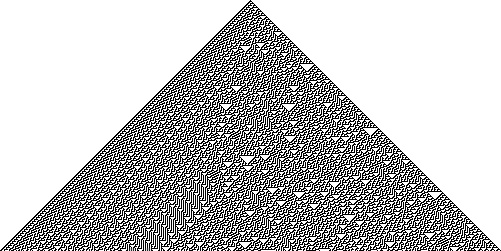
many computer derived artworks use mathematical schemas to generate artwork. when the generated art was not ‘expected’ from the rules assigned to cellular automata i.e. ‘the game of life’ etc, the manifest patterns that form are said to express a spontaneous order.
What I am referring to and making a difference between is design, as a noun, with examples being structures of government or even down to the micro-level of individual firms or storefronts. These are things that designed with intentions to do or achieve some stated goal or purpose and thus are examples of human design.
Human action and this idea of spontaneous order, on the other hand, I am referencing also as a noun, but as an abstract noun.(I hope I am using the right language to distinguish between the two) This would refer to things such markets, the stock market let’s say. There is no czar of the stock market. There is no single intention of the stock market, no stated purpose for its existence. This classifies these types of abstract nouns into emergent processes. Similar examples would be prices, traffic patterns…things that humans do not design, but still are; whether they are bi-products of our designs is irrelevant because they are still classified as unintended consequences and natural occurrences.
I believe Hayek referred to the two as the first being ‘made order’ and the latter as ‘grown order.’
Yes, I don’t think there’s any confusion over the terms we’re using here, but looking back on what LS responded originally:
I guess I don’t understand why you would think “spontaneous order” in the Hayekian sense has any bearing on the arts? The arts, or rather any individual work of art, is a purposeful endeavor undertaken in the pursuit of truth/beauty/perfection/aesthetics/etc.
A work of art is not simply the result of some complex interaction, the consequences of which were not intended, nor envisioned in advance by those who bring them to life.
Of course if we’re talking about “The Arts” rather than individual works of art, then you could make the case. But IMO this is tautology: pretty much all of existence is spontaneous order, it wasn’t designed this way or made this way on purpose, it just is, because it became from history in a very deterministic sort of way. So to say that the collective “Arts” are spontaneous order, IMO is not really telling us anything substantive.
But I am longwinded enough. At the very least, I don’t understand your question.
My answer to your question would be NO! Spontaneous order refers to the unintended consequence of an orderly market society, created without the deliberate intention of any one individual or group, that resulted from many “selfish” individual actors engaged in voluntary exchange. No deliberate design or plan created this order. I don’t think you can point to any individual human action, such as the creation of art or any other purposeful action, and refer to it as spontaneous or unintended. The action of the individual is always deliberate and planned.
I guess this is somewhat difficult to understand without context, but I think a lot of this will fall onto whatever definition one chooses to use for art. Maybe the right word to use isn’t art, maybe it’s expression.
It’s not that I think Hayek’s work has any bearing on the arts. I am curious to see if it is reasonable to draw similar parallels between this notion of spontaneity and grown order with the types of art that are expressive only for the sake of being expressive, those arts that have no purpose, form or consequence but exist only because the artist exists.
The kind of thing I have in mind is a type spontaneous dance or song that has no type of ritual or cultural significance, but just sort of happens as a result of a person or groups of people needing to release some type of artistic or expressive energy. At least this is the only “purpose” an observer or the subjects themselves can explain. I’m curious if this situational definition of purpose meets the kind of purpose or intentionality that Hayek described as drawing a distinction between design and spontaneity, because it seems to me that there is no tangible purpose I, as the observer, or the artist can describe. It’s almost as if the subject is not in control of his/her expression, but it stems from something or somewhere else, such as some type of unconscious bi-product of being a specific person at a specific time.
I just lost a long and detailed reply. Not impressed.
All design has purpose. Not just the things you mentioned.
Sounds like mumbo jumbo.
The stock market has purpose. As I said, all design has purpose.
They are designed. They are the result of spontaneous order. Spontaneous order is design.
Oh my. There is nothing unintended or natural about prices and traffic flows. They don’t occur by accident.
If an artist paints a painting, and someone comes along and says, “Hey Bill, neat pattern there in the middle” that the painter did not intend to paint, then that could be termed accident, that is a by-product of painting, an unintended consequence. It is not an example of spontaneous order.
Spontaneous order is not unintended. It is purposeful, and the result of rational (acting towards an end) human action.
I don’t know enough about Hayek on this to contribute a clarification or confirmation. I am simply extending praxeology out to logical conclusions.
given the context of your latest post, i think what intests you is not spontaneous order, so much but the human capacity to create novelty and discovery of new possibilities. thats what your song and dance puts one in mind of.
spontaneous order, has the word spontaneous in there, but thats thrown you off, its about how any order that you perceive in a free market has no creator responsible, but is emergent on independant behaviours correlating.
it seems like you dont want to explore that, but rather, the entrepenurial spirit of taking risks to explore possibilities and take chances.
perhaps you have ‘cultural entrepreneurs’ in mind.
hmm.. I was afraid this kind of questioning would extend into some type of heated “mumbo jumbo” debate here… Just wanted to ask a question, I am indifferent to whatever the actual answer is. I only wanted to know it. Thanks for all your help.
Hayek’s distinction is arbitrary. For instance, the tyrannies he sympathized with, say parliamentary england or the order created by the american revolution, were classed as ‘spontaneous order’ (slavery included I suppose) while political system which were even more totalitarian would be classed as ‘made order’ / artificial order / whatever.
In theory, spontaneous order is the result of voluntary interaction, but given that Hayek and company have an ambiguous definition of ‘voluntary’ the whole concept of spontaneous order is rather pointless IMO.
There is no heated debate. You’re simply misuing the term spontaneous order to mean things it does not. And of course, claiming that things like prices aren’t arrived at purposefully would mean that man is not a rational actor, and the core of the Austrian school is related to praxeology, which states that man is a rational actor.
This happens a lot. People want an answer, but they don’t want to understand it. We’re trying to help you clarify your ideas (per your request). We are indifferent to what you will use it for.
I’m not sure I ever said I was trying not to understand something.
As for the whole prices argument, I think you would understand that you are indeed wrong about prices being set by design. This is not the case, at least not in the context of a free market. I am a rational actor but I do not choose what price I can go and buy gas for later tonight. Prices are set according to various market interactions that occur without force and without a specific design for how and when they will occur. Prices are an example of a spontaneous order. Spontaneous order has nothing to do with people being rational or irrational, it has to do with people operating as a society either under a stated design, government as an example, or through spontaneous order, the market as an example. If your claim is that prices are set by design, that is set by a system created to distribute prices onto goods and services, then as knowledgeable as you may be about praxeology, you are far-removed the economic process.
The price system is not a conscious invention, it is, in every definition of the term, a spontaneous order. Check it out. I assure you.
Sure you choose what price you will pay. And likewise, the vendor chooses what price they will accept. And when the two of you agree, this is spontaneous order. And order, is a result of design. Order does not happen by accident.
The former is correct, but the latter is not. Prices are not arbitrary. They are very specific and the result of rational action.
Spontaneous order is rational because irrational actors would not be able to order. If they did, it would be by accident. However, we know that all human action is rational, so for the purpose of this discussion, all spontaneous order is indeed a result of rational action.
You are correct that the market is a spontaneous order. And prices are set by the market. So prices, are set by spontaneous order (see the beginning of this response).
The market is a system to distribute prices onto goods and services. That is the entire purpose of the market. To allocate scarce resources voluntarily (without violence).
The price system indeed is a conscious invention. All action is rational. And so, all spontaneous order (the result of action) is as well.
I don’t know if we are talking past each other, but the market is not possible without design, planning or intent.
Indirectly you do. If the cost of that gas is set too high you may choose to purchase somewhere else. If the cost of gas is too high on the market in general you may choose not to drive at all. If everyone did this the gas reserves would grow to excess and the price would drop. So you do to an extent control the price. Consumers determine the price of goods.
The idea of a price is no more spontaneous than any other idea that has emerged. It just happened a long time ago. A caveman learned he could trade excess sticks for his buddy’s excess stone. If it could be said that prices occured spontaneously than the concept of the ipod occurred just as spontaneously. That does not mean that it’s spontaneous emergence did not come without cause or demand for it to exist in the first place. Prices are an invention of man. It just predates our knowledge. When man does this
Prices serve a purpose on a societal level and at an individual level.
the agents that interact, and whose interactions are called ‘the free market’ have personal individual designs, plans and intents.
through their voluntary interactions structures emerge, order is observable. the order is not attributable to any individual or definite set of individuals with a privilidged roll, the order is emergent, a spontaneous product of the independant agents relations.
A thought occurred to me that " spontaneous design" is talking about how a group of people, each seeking a certain personal goal unrelated to anyone else [I want to buy this thing as cheap as possible, or get to place X in my car as fast as possible and don’t care what anyone else does] wind up creating a pattern involving them all no one intended to make.
What would parallel this in the world of art? Maybe having thirty or forty dancers on a crowded stage, each auditioning to be hired and not caring about the other dancers whatever, winding up moving together in some graceful way that places each at center stage for a minute or two to show their thing.
Reminds me of jazz, where each player gets a chance to do his thing as long its somehow loosely connected to the group’s theme.
On the flip side, there’s the concept of unintended consequences, where people try to do one thing, and wind up doing something terrible they never intended. Of course one could argue that that’s just foolishness on their part, not “spontaneous disaster”.
Does a creative person’s deepest talents produce spur of the moment stuff he never consciously dreamed of? Of course, it happens all the time.
Is this related to the spontaneous order that a group produces without meaning to? Seems a bit of a stretch to me. Because “something” inside him wanted to produce it, some deep hidden element of his being. But nobody on any level wanted the spontaneous order created by a group [if and when it happens].
How so? Are you saying that markets are random, and trades are accidental?
I don’t know how many more ways to explain this.
The intentions/plans/designs of two or more actors, when compatible, create spontaneous order. They are self-directed to make the concessions and negotiations to make a trade. The order they create is a price.