Japan is Doomed

For the past couple of days, people have been making a big deal out of the reactor meltdown at Fukushima. Indeed, if worst comes to worst and all hell breaks loose, Tokyo is most definitely going to be evacuated and Japan will never recover.

But I think Japan is doomed for economic reasons. Even assuming the reactor is okay, I don’t think Japan will ever properly recover from this (at least, not in its current form).

As you guys all know, Japan’s economy crashed and remained in that state for the past twenty years. Keynesian attempts at “revival” of the 80s boom failed to do anything except increase government debt. The high levels of saving in Japan prevented inflation from kicking in (which would result in another boom, followed by another bust), as Japanese consuers effectively “hoarded” the new money, keeping prices steady or down. However, saving has been dropping over time due to Japan’s poor economic situation.

Now, we have this earthquake. There is plenty of destruction, and that isn’t even counting the power plant (which is causing very high consumption in fear of radiation poisoning food, water, etc). The Keynesians claim this will cause some prosperity from the boom, but that is concealing a rather deadly issue that few (one person on a site somewhere said Japan is inbound to receive this too, but I don’t remember where. Could someone link it if they know what I am referring to?) seem to be noticing.

Japan hasn’t been getting inflation because of saving, as most new Yen goes to Japanese consumers, which in turn is saved (as I recall, the savings rate is high because it is a symbol of status to own a house, which is very expensive, so people save to buy their own houses), preventing prices from rising. But now, people are spending like crazy, even those who were formerly frugal with their cash, as they fear a disaster from the NPP. So all of the inflation of the past twenty years, all of the manipalution by the BOJ, is coming out into the open.

Yeah, I think you can see where I am going with this. Spending is going to rise incredibly fast, both from consumers buying emergency goods and from the government buying supplies for rebuilding. For a short while, this may appear as amazing growth of the Japanese economy, accompanied by heavy Yen fluctuation but shifting towards a stronger Yen (being pushed back by the idiots running central banks trying to weaken the Yen, which will make things worse) as the Japanese government will be converting foreign currencies to Yen to pay for building.

Then, after the converting is finished, the inflation will come to bear. The Yen’s value will drop like a rock and keep going down. Japan’s exports will fail to help Japan, as the earthquake and rise in value of the Yen will have weakened that sector considerably (not to mention that it isn’t especially powerful these days, anyway). Japan will be the first of the “Great Powers” to be struck down by hyperinflation.

Of course, I would prefer this doesn’t happen, but it sure looks likely. Japan has been inflating for years, while its economy has gone nowhere at all. That inflation has to come up sooner or later, and now is about as good a time as any. Comments? Criticism? Etc?
You convinced me.

I don’t recall there ever being an actual meltdown, but ok.

I agree. The only point of contest, will be if they’ll manage to let Japan slip into stagflation forever, or will they go down in flames taking the global financial system with them. Ironically the Russian offer of settling in the eastern sector, perhaps under some covenant where autonomous Japanese cities pay some portion of their tax income to Russia but are otherwise free to do as they wish, could be the only real hope for a Japanese recovery any time soon.

You need to consider two things. First, the Japanese yen is one of the many currencies which appreciated substantially against the dollar in the past year. One US $ bought you 95 yen in May 2010 but now only buys you 82 yen. That’s a 12+% drop in just one year. The main drop occured, you guessed it, when Bernanke announced QE2. During the same period the euro/yen went from 125 to 115, a measly 8% drop. In January it was much worse (around 107) but the euro rebounded after the Japanese government announced it would buy a massive 20% of the new (and very ill-conceived) “eurobonds”. Why is that? Two reasons.

The first is we are seeing a scramble away from from the US dollar and the euro, the two traditional reserve currencies. The reasons have been discussed extensively and there’s no reason to say more. The second is the BoJ addiction to near zero interest rates has made the yean a favorite instrument of international financial speculation. Speculators can jump from one risky operation to another because they can be sure the yen carry cost will be close to zero. The BoJ hasn’t got the “guts” to raise interest rates and so cripple the yen carry it generated. Last Friday we saw what could happen when the yen reached 76. Bernanke immediately stepped in to save carry traders from a much deserved squeeze. Without too much fanfare of course.

While the BoJ policy has been inflationary as any other central bank this didn’t translate into massive price increases as seen in, say, Europe in the past ten years. The reasons are again two. The first is the mass of yen finds its way mostly abroad either in the speculative ventures, mostly in US dollar denominated assets, or into buying Japanese government bonds. The second is the Japanese real estate market has never recovered from the Bubble Economy period and never will. Values were so insanely high that a correction is still going on today.

Having said that I think you are correct in saying the present situation will be a serious blow to Japan. All that pented up liquidity that’s now into bonds will start trickle in as people start spending more. After the present panic buying season is over, it will be time to rebuild. One particular area of concern in my opinion are agricultural commodities. Japan’s agriculture is one of the most heavily subsidized in the world (it ranks up there with Switzerland, beating even the EU and the US in this dubious championship). Prices are kept artificially high by slapping prohibitive tariffs on such imports as rice and wheat. The radioactive fallout from Fukushima is bound to influence harvests: if tap water in Tokyo is deemed unsafe to drink how about rice growing sixty miles from the accident site? The domestic supply is bound to be restricted despite the Japanese government’s criminal attempts at raising “safe limits” for radioactive exposure. This will translate into higher prices. Of course the Japanese government could do the sensible thing and cut tariffs but when’s the last time you saw a government being sensible? Higher food prices will lead to higher “core” inflation. Also energy will become more expensive as one nuclear power plant is now out of the picture and, probably, more will be deactivated in the coming years. More “core” inflation. Energy prices are one of the biggest concerns right now and many economies are bound to suffer as politicians are failing to maintain a cool head and scrambling to scrap nuclear reactors even in face of excellent safety records (Japan’s nuclear power plants had a very long record of Homer Simpson-level accidents well before Fukushima). This in turn will lead to more dependence on oil… well, you get the picture.

All in all it’s not a nice picture for the good people of Japan.

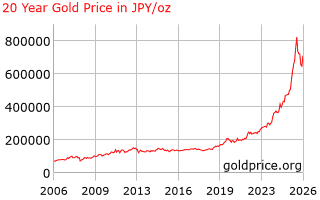
I am not saying that the Greenback or Euro are doing much better. What I am saying is that the Yen is going to go down, from hyperinflation, though whether it will happen at the same time as the Euro or USD can’t really be predicted. Even with most of that money not being spent, check Yen to gold prices:

Also, just found that article I was looking for: http://www.zerohedge.com/article/guest-post-land-setting-sun

Yes, I agree on that. All paper currencies are locked in a race to the bottom. The inflationary genie has been let out of the bottle and that’s the main reason gold is carrying the day, as it always had. Time to get some more now that the Japanese are selling.

The BoJ is now in a tight spot. Domestic investors are getting as much liquidity as they can: they are buying yen everywhere they can find them. The mercantilist mentality of the BoJ will say “inflate” to push down the yen value and both favor domestic exporters and save the yen carry trade. On the other side the BoJ has resisted big inflationary urges ever since the Bubble Economy imploded in 1989. This was mostly politically motivated, to keep consumers’ prices as stable as possible. Compared to the Fed and the ECB they have been cautious (if you can picture such a thing). You are probably right the BoJ will give in and start printing yen, initiating an inflationary spiral that will in turn generate even more volatility. Big Japanese exporters (Toyota, Hitachi, Mitsubishi, Honda etc) have been asking for yen debasement for the past twenty years. In fact I remember when their head honchos said the “optimal level” to favor exports would be a 120 exchange rate with the US dollar. This is the occasion to present the Japanese public with inflation as a “necessary plan”.

Never let a crisis go to waste.

Excellent points, My Buddy. I also always thoroughly enjoy your posts, Kakugo. Very insightful all round.