This is certainly true of today’s courts… it’s all about the superstar sitting on the bench. But how much do you think the current state of affairs (monopoly courts) is shaping your perception of the way things would be in a competitive market in law services? I see no reason why a judge would be any more glorious or vaunted than an engineer or a banker - it would be just another white-collar job.
Unaided. If they cannot, then what use is Charlie except to gang up on one side and say, “Aha! we are more than you, so we win!”
But what reason does either Adam or Ben have to abide by what Charlie says? Just because “Charlie said it”?
I think “make” is an overloaded word… it can imply forcing (“he made him go”) as well as producing (“he made the cabinets”).
But it’s not Charlie who’s doing the producing or by-producing… it’s Adam and Ben. Charlie is just a facilitator. Charlie says things like “Well, in cases like this, people usually divide the apple in half. I recommend that you both agree to divide it in half or you’re going to end up in a fight, that’s what happened when Derek and Eddie refused to divide the apple and look at them now. Do you want to end up like Derek and Eddie?”
I think the security agencies are going to tend to be more legally conservative and more “play by the rules” types than their customers. As Hoppe has pointed out, such agencies will have an incentive to be passive (not start fights, which are expensive) and to provide incentives (as in, lower prices) to their customers to encourage them to play by the rules and keep it cool. So, when a dispute moves up a level, I think it will become even more likely that it will be settled in a customary or “ordinary” way. Depending on the terms of the contract, a security agency might just act in the way you have described, covering a payment for one of its customers and then maybe using its muscle to extract the payment from its customer. Or, it may just drop the customer under breach of contract. Personally, I think this is the most likely scenario since it involves the least risk to the security company. Dropping a trouble-maker from your clientele will make less negative PR than getting involved in a dispute with another security agency and then ending up shooting someone or destroying some property, etc. But we’re engaged in pure speculation here.
It still makes me cringe because this just isn’t how people use the word. If someone says “That’s the law” - even under a customary law system - they mean “you have to do it this way, or you’re going to get in trouble.” If someone says “you’ve broken the law against _______”, even in customary law, they’re saying “everyone who does what you’ve done gets in trouble if they get taken to law, so you’re in big trouble.” But if you say “Ben and Adam made a new law”, you’re implying that the dispute settlement has some kind of normative force to it… everyone after Adam and Ben who gets in a similar dispute over an apple will have to settle it the way Adam and Ben did. Of course, this is not what the settlement means at all. It’s just how Adam and Ben settled the matter. What really counts is what happens afterward… did Adam and Ben live happily ever after, or did they end up in a quarrel again? If they lived happily ever after, that’s evidence that settling a dispute in the way Adam and Ben did is a good idea. If they ended up in a quarrel again, that’s evidence that settling a dispute in the way Adam and Ben did is a bad idea. Arbitrators and lawyers would be professionals whose business it is to be familiar with how disputes in their area of specialty are typically resolved and which kinds of resolutions work well and which are sure to run into trouble down the road. In this way, they facilitate the disputants in coming to a “realistic” terms of settlement that will probably be able to stand the test of time so they don’t end up in a fight again or back in court again.
Strawman of Hoppe. Intersubjectively ascertainable boundaries.
"The answer to the question what makes my body “mine” lies in the obvious fact that this is not merely an assertion but that, for everyone to see, this is indeed the case. Why do we say “this is my body”? For this a twofold requirement exists. On the one hand it must be the case that the body called “mine” must indeed (in an intersubjectively ascertainable way) express or “objectify” my will. Proof of this, as far as my body is concerned, is easy enough to demonstrate: When I announce that I will now lift my arm, turn my head, relax in my chair (or whatever else) and these announcements then become true (are fulfilled), then this shows that the body which does this has been indeed appropriated by my will. If, to the contrary, my announcements showed no systematic relation to my body’s actual behavior, then the proposition “this is my body” would have to be considered as an empty, objectively unfounded assertion; and likewise this proposition would be rejected as incorrect if following my announcement not my arm would rise but always that of Müller, Meier, or Schulze (in which case one would more likely be inclined to consider Müller’s, Meier’s, or Schulze’s body “mine”). On the other hand, apart from demonstrating that my will has been “objectified” in the body called “mine,” it must be demonstrated that my appropriation has priority as compared to the possible appropriation of the same body by another person.
As far as bodies are concerned, it is also easy to prove this. We demonstrate it by showing that it is under my direct control, while every other person can objectify (express) itself in my body only indirectly, i.e., by means of their own bodies, and direct control must obviously have logical-temporal priority (precedence) as compared to any indirect control. The latter simply follows from the fact that any indirect control of a good by a person presupposes the direct control of this person regarding his own body; thus, in order for a scarce good to become justifiably appropriated, the appropriation of one’s directly controlled “own” body must already be presupposed as justified. It thus follows: If the justice of an appropriation by means of direct control must be presupposed by any further-reaching indirect appropriation, and if only I have direct control of my body, then no one except me can ever justifiably own my body (or, put differently, then property in/of my body cannot be transferred onto another person), and every attempt of an indirect control of my body by another person must, unless I have explicitly agreed to it, be regarded as unjust(ified).[7]" [7]Informal translation from Hans-Hermann Hoppe, Eigentum, Anarchie und Staat (Manuscriptum Verlag, 2005, pp. 98-100; originally published in 1985).
No it’s not.
"It is worth mentioning that the ownership right stemming from production finds its natural limitation only when, as in the case of children, the thing produced is itself another actor-producer. According to the natural theory of property, a child, once born, is just as much the owner of his own body as anyone else. Hence, not only can a child expect not to be physically aggressed against but as the owner of his body a child has the right, in particular, to abandon his parents once he is physically able to run away from them and say “no” to their possible attempts to recapture him. Parents only have special rights regarding their child - stemming from their unique status as the child’s producers - insofar as they (and no one else) can rightfully claim to be the child’s trustee as long as the child is physically unable to run away and say “no.”[8]
Hoppe, A Theory of Socialism and Capitalism, n.9 to ch. 2, on p. 212.
Hence you would be within your guardianship / trustee rights → to protect the child from oncoming traffic. You don’t have trustee / guardianship rights over other adults (unless they fall into a coma etc. etc.) and are not able to reason.
But not if the child could verbally express dissent (which I explicitly said he had in the above quote). The child is free to leave at any time in the Rothbardian/Hoppean view. In order for me to hold him back against his wishes, I must restrain him from leaving me in general at least for the duration of holding him back. This would constitute a tort if done against an adult.
I don’t believe that Rothbard/Hoppean theory of property as it relates to the family is properly developed. There’s a lot of room for improvement. I generally agree that children must be able to leave their parents but I don’t think this is the core issue. The core issue is when does the law generally recognize that a child can speak for himself? Until the child is understood by law to be able to speak for himself/herself, some one person must have power-of-attorney regarding the child’s interests - a parent, a grandparent, a godparent, an adoptive-parent or some other kind of guardian. The central question of parenting disputes, then, is really over who has the power-of-attorney until the child is recognized by the law to be able to have no guardian at all, if he wishes.
They went to Charlie because they could not agree a settlement among themselves. They sought his opinion on what would be a just resolution. There would be no point asking him if they weren’t going to abide by his decision. As I said in the video, if one of them does not accept it then they are back to the situation they were in before Charlie arrived. These questions seem elementary… I don’t know what point you’re making.
I think I misinterpreted your original objection. I thought you were objecting to notion of a law being something that gets produced. But I see now that you only object to my statement that it was Charlie doing the producing. I accept that he did not and could not produce a law on his own, but you cannot suggest that he had no role in the production. You distinguished law from order by referring to the division of labor, so it is true that Adam and Ben could not have produced a law without an arbitrator. Charlie played a necessary role; without him, no law would have been produced, but merely a social norm (order). So all three men had a necessary role in the production of the settlement and, as a by-product, a law.
Going back to my video, note that I said “By arbitrating on a conflict, and helping to resolve it peacefully, Charlie has produced a law.” By adding the bolded part, I am implying that it would not be a law unless Adam and Ben accepted the decision, and it became a part of the pattern of customarily acceptable resolutions we call the law.
Maybe future similar disputes will be resolved by referring to Charlie’s successful resolution in the Adam vs Ben case; maybe not. It doesn’t make any difference to the status of Charlie’s resolution as a law.
Am I correct in taking your silence on the matter of strawmanning Hans-Hermann Hoppe’s position as conceded then?
Yes and if the child is proclaiming to be an adult & wants to later press charges constituting a tort against the individual who held him/her back - so be it! The “child” is free to then seek legal action… like any other adult.
And if they are unable to do so - seek legal aid - then that kind of dents their claim of not needing guardianship, does it not? But really this is essentially a lifeboat scenario, not that the philosophy cannot handle it.
It is exactly analogus to that of stopping an adult from committing suicide. Which Walter Block has addressed adequately,
…Before considering the latest Jonah Goldberg criticism of this philosophy (saving a friend from suicide by force), consider, perhaps, an even more difficult case…
You are standing in the path on an onrushing boulder, completely unaware of your fate. In a second, this massive rock will hit you, and you will die. (Let us stipulate the truth of this supposition). Instead, however, I push you out of its path, and into safety. The only trouble is, as a result of it, although I have saved your life, I also broke your arm.
Now, if you are a reasonable sort of person, you will be grateful to me. Instead, you insist upon sticking to the literal letter of libertarian law, and sue me for damages for the injury you have sustained. After all, I did initiate a violent act upon your person, which resulted in an injury. If this is not assault and battery, you argue, then nothing is. How shall the libertarian judge rule?
One possibility is to hold me innocent of this charge. This could be done by adding up the two acts, the life saving and the arm breaking, and deciding that the former is far more important than the latter. So much so that the one ought to be in effect “subtracted” from the other, and since the result would be a “positive” (I contributed more to your life by saving it than I cost you through the injury you sustained), I would be let off scott free. The point here is that I committed not two acts, but only one: saving-your-life-and-injuring-you, and that this complex but single act is not one of initiatory aggression.
A difficulty with this line of reasoning is that you might have been standing in the way of the boulder as part of a suicide attempt. You regarded the situation where you are dead far more highly than the one where you are alive, but debilitated. We may assume you wanted to end your life because of bodily malfunctions like a broken arm, and now I have worsened your welfare, not improved it.
Another problem is that these really are two separate acts. It is certainly possible that I could have pushed you out of death’s way without breaking your arm. To call it two separate acts is really to fudge: this would only be done in order to achieve the common sense result we all presumably want: to find me innocent of bodily harm.
No, the only proper libertarian judgment is that I am indeed guilty of a battery upon your person. My motives may have been exemplary, but my act, strictly speaking, was in violation of your property rights in yourself. I might well be let off with a light sentence, given the extenuating circumstances, but guilty I am.
… With this introduction, I am now ready to consider Jonah Goldberg’s attack on libertarianism… Consider a drunken A, who is standing at the edge of a bridge, ready to jump. B, a friend of hers, forcibly grabs A, and saves her from suicide. According to our analysis, B is guilty of a battery, and even of a (short bout of) kidnapping, given that B follows up his act of life saving by restraining A from further attempts to harm herself until she sobers up. But now what? Suppose that when she wakes up the next morning, cold stone sober, A still wants to kill herself. According to the logic of the argument of the Goldbergs (and Friedmans) of the world, B may restrain her from so doing for the rest of her life. This is the role accorded Goldberg to the state. After all, if it is justified to use violence against a person to save her life, and this works in the short term, why not for the long run? When life is placed at the core of a political philosophy, not the non-aggression axiom, this all follows from the laws of logic.
…
If you really think saving your friend’s life is important because the desire for suicide is only temporary, then you ought to be willing to pay a relatively small penalty if this friend then turns around and sues you for battery, or kidnapping. The problem with the Goldberg variation (sorry, I couldn’t resist) is that he wants a freebie: to initiate violence against an innocent person with no risk of punishment whatsoever.
Not properly developed? Obviously you’re entitled to your opinion, no matter how baseless I think it is - considering Rothbard and Hoppe have already addressed your response, you’ve not added anything new to the discussion / elaborated on how it is undeveloped.
“The core issue is when does the law generally recognize that a child can speak for himself?” - I assume you are speaking metaphorically, because the law is obviously not an entity.
So essentially you are asking what’s the usual frame in which we recognize the ability of children to understand that they are able at that time to be on their own/self-actualizing? The answer to that is when they claim as such. And until then you operate under the impression of trustee / guardianship, whilst they go from the natural progression of child → adult.
The point is that parents (or some other guardian) does have the right in the capacity as guardian to protect the child, so long as the child has yet to develop the maturity and awareness and wherewithall to “divorce” from the situation.
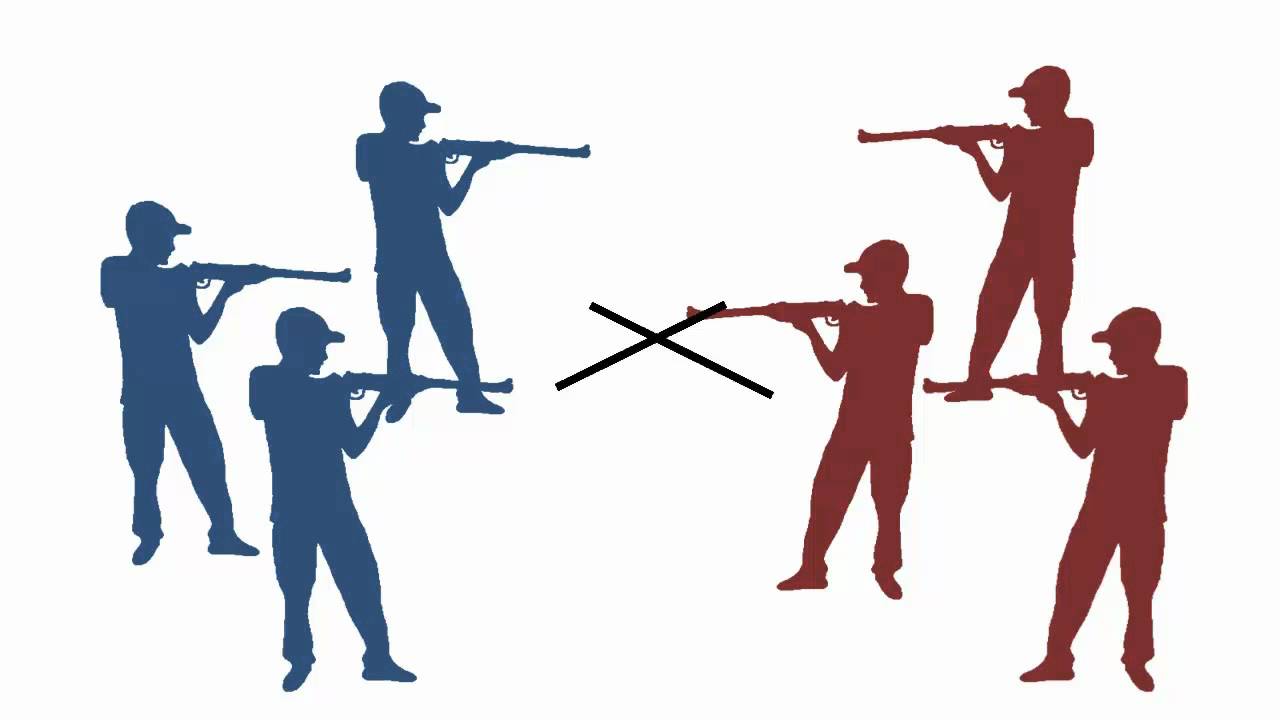
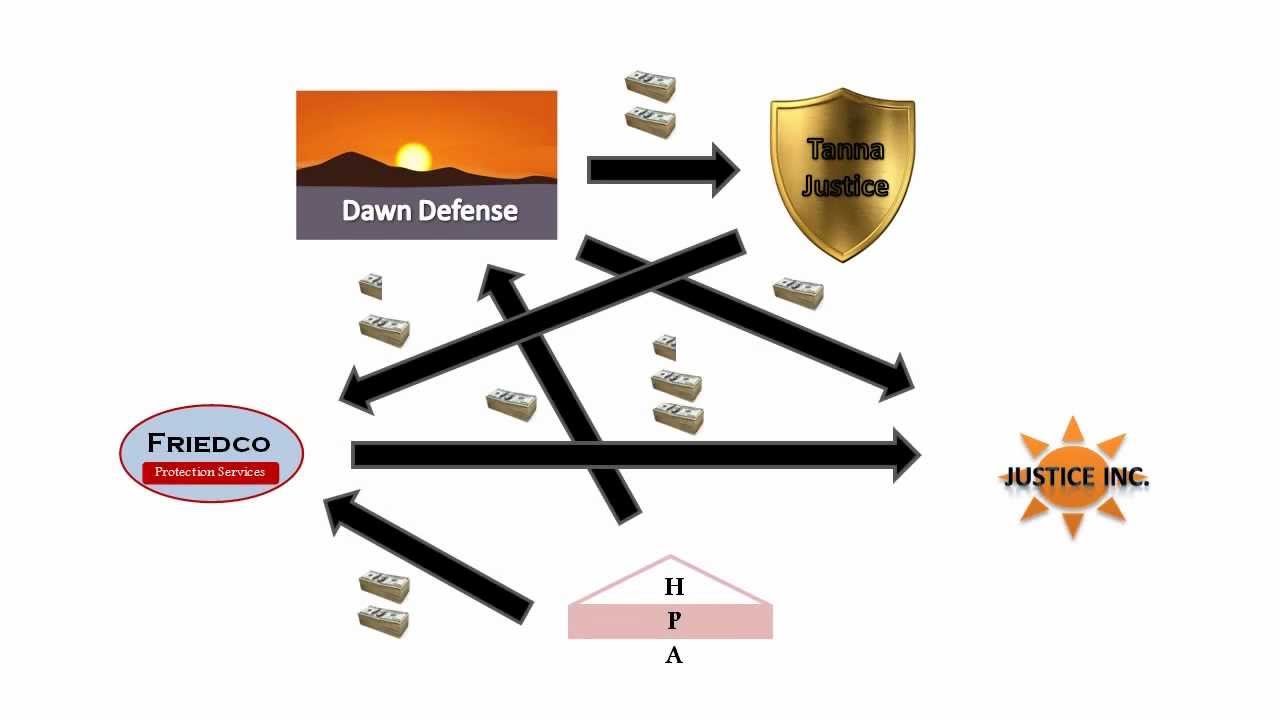
In this part, Alice is mugged, and her protection agency identifies Bill as the mugger. But Bill protests his innocence. Things start to get interesting when Bill’s protection agency stands by him. How will the two protection agencies resolve this conflict?
Just watched it. Very well done. You have presented what is basically David Friedman’s view.
In Hoppe’s view, the insurers are the starting point, not the security agencies.
One of the things that is not addressed here is how individuals are insured for torts they may commit, not just against torts (think auto liability versus full coverage). You suggest that confinement may be a common practice for dealing with this but I’m skeptical that confinement would play much of a role in a free market in law and security. My reason for thinking this is that confinement has typically been limited to detainment of a suspected criminal for the duration of a trial, its only other use prior to the advent of the modern prison has been political… that is, the dungeon (e.g. Guantanamo Bay). It’s just too costly to incarcerate people, even if you make them work (desperate people have no reason to care about their work, so their productivity is atrocious).
Somali Xeer is based on small groups of individuals (can’t remember the name right now, but it’s no more than four or five men in a group) who are co-liable for each other’s torts. A tort committed by one member can be collected from all members of that group. Of course, people are very finnicky about who they allow into their group. One of the great features of this system is that it utilizes the natural human capacity for character-assessment to its fullest. You don’t need criminal records bureaus, etc. etc. when you can just have nosy people using their natural nosiness to nose around in each other’s business. It also puts a human face on the whole system.
Of course, we can’t know whether Xeer has it right (it definitely has some flaws as identified by Michael van Notten) on this account or whether a more clinical, impersonal system would emerge in a free market of law and security. I’m simply noting that there are more possibilities than just the clinical one.
Finally, I will be so impertinent as to request that you make one video that discusses “getting from here to there”. My view: our current legal system is grossly distorted but it’s all we’ve got. So, I think we have to find a way to incorporate free market competition in law (arbitration) and security into the current system. There are two ways I see to go about this. The first is to evolve the current system towards a free market system. Of course, evolving a political monopoly into a free market of competition has never worked in the history of the world but I’m mentioning it for the sake of completeness. This is actually occurring to an extent as the judicial system is being forced to increasingly rely on voluntary arbitration. In the State of Oregon, I know that the juvenile courts are heavily using voluntary arbitration to get kids to work out ways to make amends for their wrongs in negotiation with the victim (e.g. repainting a grafitti’d fence).
The other option is to simply cut the monopoly in law and security (the State) off at the knees. This also has never worked in history (without descent into social chaos). In this scenario, the old legal codes (including statutes not related to sustaining the old law/security monopoly) could be taken as the new starting point for free market law. It’s sort of like saying “From this moment, there is no government. However, since we must have some law, the law that was in effect before remains in effect now until it is overturned in the free market.” I’m not aware of this ever having been tried before.
Thanks.I am a big fan of David Friedman on free market courts as you know. Part 3 will be much more clearly inspired by him.
I don’t see a fundamental difference between their two visions, only their way of explaining it. I don’t really know what you mean by starting point, except in terms of how you start explaining it. As I said at the end, I made a simplification by thinking of Dawn Defense as a combined a) insurance, b)security, c) investigation, d) arbitration and e) law enforcement firm all-in-one. It may not be this way, but I think it makes things easier to explain. Also, we know that firms seek to make things as easy as possible for consumers, and therefore I think it likely that some firm would offer a combined package like this, to save the consumer the hassle of having to pick 5 different firms (3 while in the stressful situation of having just been aggressed against). This consumer-facing firm might then outsource some functions, but the consumer trusts them to pick reliable firms to perform the outsourced functions. I take a consumers eye view in my explanation, starting with what consumers actually demand most - security and the means to justice.
I was going to mention that but I thought it might add unnecessary confusion. Ibelieve this is known as a system of sureties, or performance bonds. I am notconvinced this would be widespread. It is a very important factor in BobMurphy’s vision in Chaos Theory, but I think he takes it too far.
Whatyou’re saying is that Bill might have belonged to some organization that vouched for him. “If Bill commits a tort (intentional or unintentional),we will pay for it”. So in Somalia these organizations are just four or five people? Do you think that is because of a low level of development, and that in a more advanced, peaceful society there might be hundreds or thousandsof people per organization? Or is the point that everyone in the organization knows each other very well?
I am not sure what incentive a ‘good person’ would have to join an organization that vouched for intentional torts, even if they did for unintentional torts (e.g. autoliability) - after all, “I’m not going to mug anyone, why do I need this insurance?” Nor am I sure why any organization would vouch for proven criminals. And if the criminals don’t belong to any surety organization, what good are sureties? Payments over a long-term, with imprisonment if necessary, would still have to be used then.
But maybe Bill would belong to such an organization. However I see this as a possible system over-and-above the basic system of dispute resolution I described. Who would actually pay the punishments, like what the punishments would actually consist of, is secondary to the basic functioning of the system.
Where I disagree with Bob Murphy is that he conflates this surety organization with the security/insurance organization (i.e. the PDA). I think they would be entirely seperate, and must be thought of as logically seperate. Tanna Justice wouldn’t vouch for Bill, in the sense that they are not going to pay his $10,000 punishment on his behalf.
Currently out of scope I’m afraid. Massive complicated topic as well - would probably need a whole series to itself! I think Hoppe-style secessionism is the way to go.
This part looks at a conflict between protection agencies about principles, namely a disagreement about whether the death penalty is a suitable punishment for murderers. It explains how, in a system of competing providers of security and law, consumer preferences for justice are reflected in the policies, decisions and agreements of the protection agencies.
@Graham: great job! Best of luck with these videos, I find stuff like that really useful in bringing people to logical conclusions.
@Clayton: a lot of nice ideas! BTW, kids discredited Rothbardian theory for me, too. That, and also I cannot see how NAP is “natural” - a unique solution to any deontological derivation from observed facts. Too many assumptions many people do not make.
Yes, I have. Hoppe presents ideas in very clear style, and most of them are really interesting and useful, but still I find I need a (maybe small) leap of faith to fully embrace his position.
If you cannot accept NAP from bottom up, it may be also accepted from the top down. As in you don’t need to start with a void and build from there. You can take your current assumptions and use logic to systematically show the inconsistencies in ideology that ultimately lead to the NAP being left standing.
E.g.: Assumptions: 1) Involuntary Taxation good 2) stealing bad
Deconstruction: they are the same thing. Hence, remove taxation.
Assumptions: 1) Regulations good 2) Me hitting neighbor to prevent him from drinking his own piss bad
Deconstruction: they are the same thing. Hence, remove regulations
We take basic human interactions and deconstruct the macro aspect of government to these human interaction basics and show that our instinct to embrace NAP leads us to reject the state.
You do not need to prove the NAP as long as you show that everything else is inconsistent.
I know this is an old post, but I didn’t read it until today. Anyways, I think you’ve hit upon the core reason for the origin of the state. That is, states arose by people extending this presumed parent-child relationship to elder-younger. “Respect your elders (just because)” is still very much alive and well. Over time, this then turned into ruler-ruled and even master-slave.
As you noted, any supposed boundary between who can be legitimately aggressed against - not simply coerced - and who can’t is necessarily arbitrary, even if it rests on prior assumptions. The only alternative is to suppose no boundary at all.
Yeah, this is the Molyneux theory (maybe not original to him but he’s the one I’ve most heard speaking of it). I wonder if, perhaps, cause and effect are reversed in this theory: perhaps parents who live under brutal states are brutal to their children and parents who live under minimal states treat their children more naturally.
I think there can be non-arbitrary boundaries and I think these boundaries can emerge through voluntary law. For example, majority might be determined by the child’s answers to a set of questions asked by a neutral third-party (e.g. a psychologist) whose purpose is to determine the child’s ability to make decisions on his own. My only contention is that armchair philosophy, such as the NAP, is not a realistic guide to determining the law in a voluntary law society.