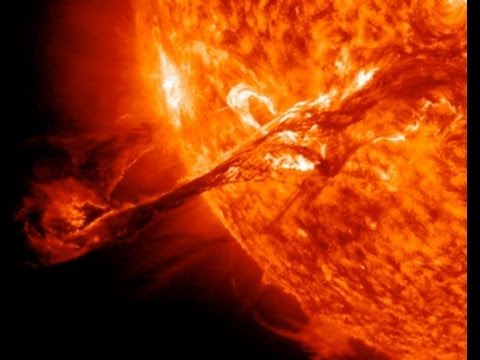
Madame Blavatsky... the Universe as an acting being

@TheFinest: Watched it… definitely a nice production.

I think a lot of the speculation about “physical” versus “spiritual” is quickly dispatched with one word: causality. If it affects you, it’s causal. Whether it’s “solid/material” or “intangible/immaterial” is irrelevant. All that matters is caus-and-effect.

Also, I think a lot of the supposed tension between “science” and “psychic phenomena” is resolved in one term: human ends. I think these drugs shake the presuppositions that we so easily carry around that we exist for the purpose of following commands and obeying orders. When this is shaken, you realize what you really are - a real being of the Universe that stands as a peer with any other. There can be no hierarchy when you partake of the deepest structure of reality in the Universe with anyone else. No priest, no theologian, no doctor, no king, no President, no general can any longer tell you your place in the world. You already know your place in the world and you know their place in the world and you know that it is the same. We all partake of the same reality as peers.

Hence, your own ends are on a par with the ends of any other individual. Collectivism as a justification for plunder simply goes right out the window. But so does materialism in the sense that costly material goods are a precondition to happiness/fulfillment. These are the twin pillars of Western civilization which is why it’s so unsurprising that the Establishment is implacably opposed to the use of these psychedelics.

One of the things that have been consistently reported is the sensation of “other beings” and the feeling of communion or even conversation with these beings. This mitigates against my assertion above that the majority of the causal factors of consciousness reside within the skull. But another term I’ve heard used by more than one person is the feeling that one is a “radio tuner” or “radio receiver”… I wonder if this might not be literally true? The pineal gland has crystals in it and is situated in a position in the skull such that the skull could actually act as a parabolic for EM waves.

So this makes me curious if day trips are characteristically different from night trips. If so, this might not be solely a function of daylight or the absence thereof but of the difference between the EM radiation of the Sun and that of the Moon. We can detect high-frequency RF signals from the planets and other bodies (including Earth)… perhaps the pineal gland is sensitive to these? Experiments with shielding while taking DMT might help answer that question.

One other source of the sensation of talking to entities should also be kept in mind, namely, that these might be “archetypal beings” that really do reside within the skull and are activated by real people when they begin to fill that role. For example, if someone begins to assert a position of dominance over us, there is a set of automatic feelings and sensations that overtake us and “color” our experience with that individual. The vast majority of this has little or nothing to do with what that individual is objectively saying or doing and has mostly to do with a kind of theater being orchestrated within our own heads. The actors in that theater are purely fictional beings with purely fictional intentionalities - threats of punishment, promises of reward, lures and traps - whose purpose is to help us “simulate” or “anticipate/predict/understand” (in a praxeological sense) the behavior of those we interact with. I’m not saying this excludes the possibility of external realities - perhaps mediated through EM waves or something more subtle that the brain can “tune into” but which other scientific instruments cannot detect - only that we need to be aware that there is a distinction between the feeling of intentionality in awake consciousness which is always due to interaction with a real, intentional being and the feeling of intentionality which may occur in an altered state of consciousness where it is not clear precisely what is responsible for this sensation. It could very well be “all in our heads.”

Clayton -
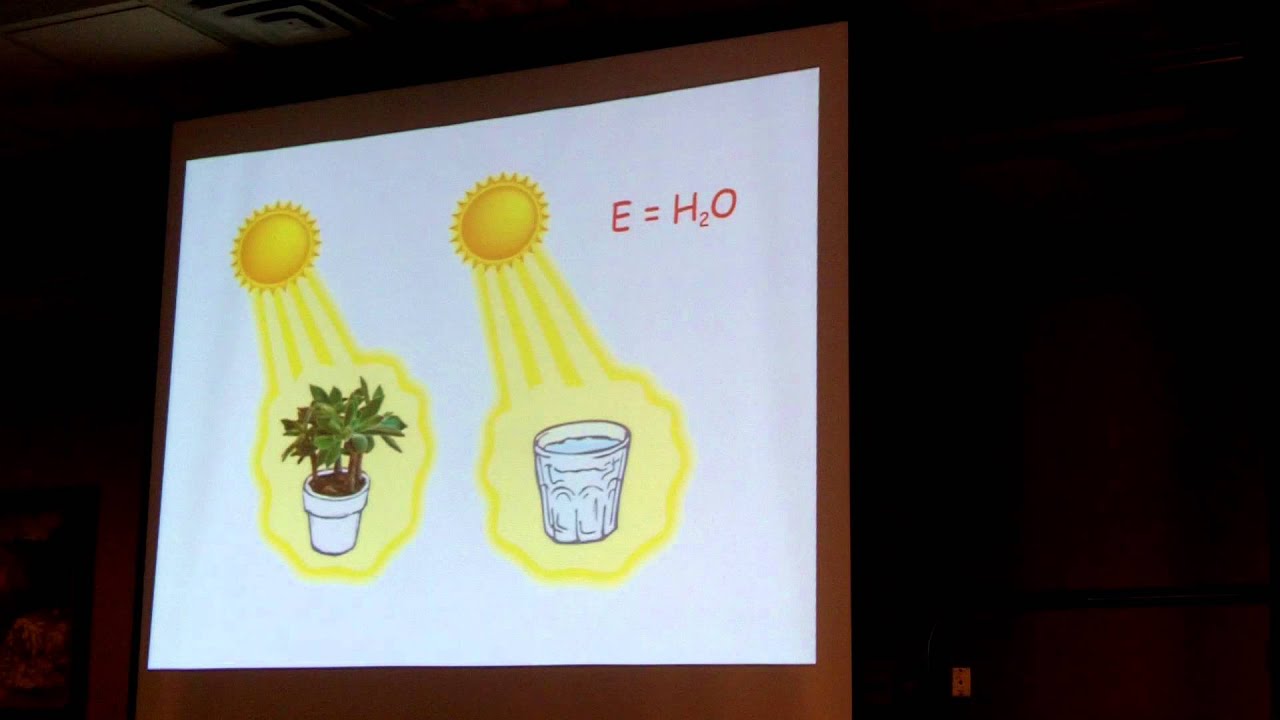
I meant it with a playful tone, so the rest of the sentence was meant to show that. In other words I wasn’t being serious, even though we’ve had some rigorous disagreements I was pointing out how cool the oddness of our point of similarity was over Thunderbolts of the Gods.

Really fascinating lecture courtesy NPA. Whatever the deficiencies of the NPA website, this is real science:

Clayton -

Thank you Clayton! I absolutely loved that lecture. I had always wondered about how a single cloud. This theory they have going is amazing. I want to buy his book but I had trouble understanding what his name was… any chance you were able to make out what it was and what his book was called.

I highly recommend watching that video everyone. As Clayton said, real science my friends. It’s exciting!

@Phi: http://faculty.washington.edu/ghp/new-book/

Clayton -

Clayton -

OK, I’m going to go all Dan Brown on you all…

a) The Last Supper does indeed contain symbolism. But the symbolism is astronomical. Jesus, the center of the painting, represents the Sun. The disciples flanking him on each side are in groups of three… one group for each of the seasons. They are the signs of the Zodiac.

b) Just discovered this painting today. Holy crap. If you think the Last Supper has symbolism, this painting blows it out of the water. I’ll just give my free-flow-of-consciousness thoughts on it.

Notice the keys. The silver key is pointing to the Earth. The gold key is pointing to Jesus (the Sun). The keys to the kingdom of heaven are the Earth and the Sun. Like DaVinci’s painting, the disciples are arranged six on each side, flanking Jesus. They are the signs of the Zodiac.

The temple of Solomon in the background is also a symbol of the Sun. Look at the golden-domed roof. But even more fascinating, the temple has four porticos, pointing in each of the cardinal directions. Spring, Summer, Fall, Winter. Each of these porticos is a season and represents three of the signs. Zoom in on the portico facing the viewer. Note how many men are standing there.

But it doesn’t stop here. Look at the arches on each side of the temple. These are the equinoctial points, the points in Earth’s orbit where we go through the “gate” of equal day/night. But wait a minute. Sun in the center, Earth going around. What is the term for that?? Heliocentrism! In 1480!!! Holy crap!!!111

In case you doubt the meaning of the arches, look even more closely. At the top, you will notice a band of twelve diamonds. Twelve. The Zodiac is the clock that tracks the annual motion of the Sun against the stars. Notice that the arches do not have a single passage. Rather, it is a prominent passage, flanked by two minor passages. The minor passages are the orbit of the Moon about the Earth whose orbit goes through the central passage.

Now we know what the big plaza is. It is the orbital plane.

By the way, this may account for the odd shape of the Christian cross - it depicts the elliptical orbit of the Earth as it goes around the Sun. During Winter (northern hemisphere), we make our closest approach to the Sun (the short leg of the cross), during Spring and Fall, we are at equal distances from the Sun (the equal, horizontal legs of the cross) and during Summer (northern hemisphere), we are at the greatest distance from the Sun (long leg of the cross). In fact, we usually reach aphelion (furthest distance from the Sun) during July 4th/5th. Independence Day. Think about that, “independence”.

OK, that’s all I have for now. There’s a lot more to this painting so I’ll be studying it in the future…

Clayton -

What say you of this one?

I have been wondering how much was known by TPTB before it was known by the masses, and for how long. It seems as if TPTB have been using their better understanding of the universe and “corrupting” knowledge to their favor, and that this has been one of the reasons they have been able to maintain their status.

For example, food. I forget where heard about this, but essentially that, tradionally, grains have been feed to slaves and laborers while the royals ate meats and fats. Rewatch all of those movies involving royalty and in which feats are had. The feast were high in meats/fats and low on grains.

All this leads to the conspiracy that TPTB have been pushing a diet to the masses that weakens them because they know of the effects on the body of a high-grain and low-fat diet.

@The Muff: Nice find. That is clearly a depiction of Sun worship. Here’s Carlin on Sun worship:

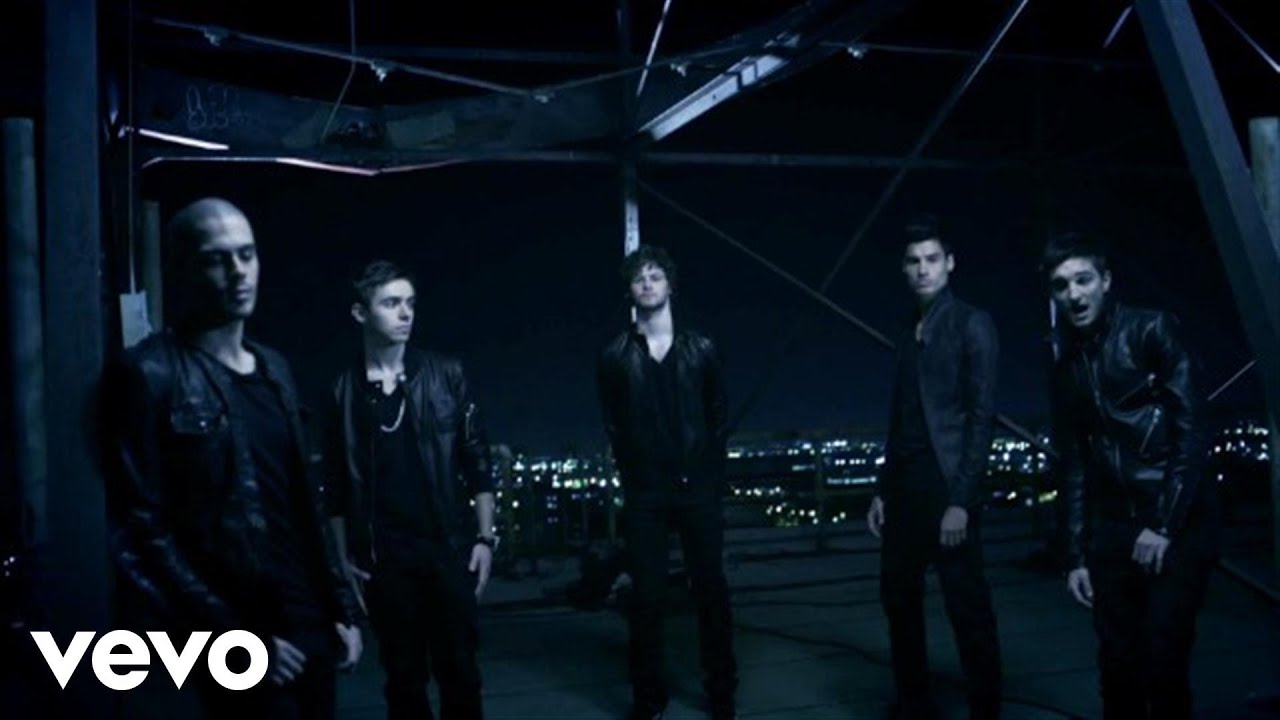
I think the Glad You Came video has a lot more layers in terms of symbolism but looking at this, I might venture a guess that the band members are representing the five lesser lights (the minor planets, Mercury, Venus, Mars, Jupiter, Saturn) who literally “chase” the Sun through the sky. Mercury chases it most tightly, Venus next most tightly and so on.

It also seems to have a proselytic component. The Sun tattoo is being spread by some kind of intangible transmission in the early part and then there’s some gratuitous vampire bites at the end… lol. Anyway, cool that you found another song by these guys with clear astrological overtones.

Clayton -

Pay no attention to the man behind the curtain. There are no conspiracies. History is unfolding just as it is reported to be unfolding in the headlines of the New York Times.

Clayton -

Clayton -

Autostereograms. Anyone else here looked at these before? The first time I ran into these was probably 1995 and it just totally blew my mind. Not only could I not figure out how the hell they worked, I noticed that once the hidden picture is “in focus”, the entire stereogram changes in character. The colors themselves become brighter and almost seem to sparkle or radiate. You can see the difference by bringing the hidden picture in focus, holding it, then snapping back quickly to the bare picture - the colors look dull by comparison.

What the hell is that? The colors are the same yet somehow different. Those who have experimented with psychedelics consistently report colors more brilliant than those of ordinary experience… green that is greener than the greenest green you have ever seen, and so on. The colors in the autostereogram - once in focus - seem that way to me. They almost have an other-worldly sparkle or shine to them. Comments welcome.

Clayton -

Human visual system recognizes shiny surfaces by differences in colors in images coming from left/right eyes (I am not talking about geometrical/perspective diff here, only colors). For completely “Lambertian” surfaces, the colors are identical. For moderately shiny surfaces, the colors depend on an angle to observer, so the left/right images differ moderately (in color). When colors differ wildly for very small differences in angle, the mind interprets this as extremely shiny surfaces.

In autostereograms, there are a lot of microscopic differences between left/right images, so the mind interprets them as shiny.

Source? (Not that I doubt you, just curious to dig around some more). The difference is striking to me - looking at a printed page with an autostereogram on it is more like looking an image on a computer screen. While in focus, the picture appears to be “lit from behind”, as it were. I guess maybe that’s the essence of the effect - the colors appear to be far more brightly lit or “sparkly/shiny” than they are when viewed normally.

Clayton -

Um… The last time I read about this was some 25 years ago, in a Soviet magazine for kids, no less.

I guess it’s quite obvious that slight changes in view angle cause the more pronounced changes in light flow in exactly the places with high reflectance (“shiny”). In other words, “shiny” => “high variance of luminance by viewing angle” => “images for left and right eyes may differ drastically”. This is trivially demonstrated by holding a mirror so that one eye sees in it the sun, while the other sees some dark object.

That the human eye reverses this causal chain for recognition is the usual application of natural selection (or any other idea of getting fit to live). So the mind makes inference “images for left and right eyes differ drastically” => “the surface is shiny”.

Of course, this “binocular” detection is not the only mechanism for detection of shininess - people can easily tell shiny objects from dull based on flat images - they look for pronounced variance in luminance (bright spots, “specularities”) inside borders of the same object, instead of among two images of it.

I would google up something, but my current connection is terrible. I would use keywords “binocular” and “specular reflection” and “detection” or “recognition”. This looks a bit relevant, despite being about computer vision, not humans: http://homepages.inf.ed.ac.uk/rbf/BOOKS/MAYHEW/scan/139-146.pdf.

@Andris: Thanks for the resource, I’ll take a look through that. I guess the part that is most remarkable to me is the artificiality of the effect and how jarringly disjoint the autostereogram is with respect to the rest of the visual field. You can detect this by holding the hidden picture in focus with your eyes but concentrating your mental attention on the rest of your visual field, which looks qualitatively different from the autostereogram.

I also wonder what this can tell us about the nature of conscious experience.

Clayton -

Hold on, I think what you need is actually “binocular lustre” (found it mentioned on http://en.wikipedia.org/wiki/Binocular_rivalry).

A novel (I think) game idea. I’m calling it “Quantum Knights”

Equipment: Standard chess/checkers board. 16 white pieces, 16 black pieces. Pieces shaped like checkers (draughts).

Starting position: Each player arranges all his pieces on the two backmost ranks of the board - two ranks of 8 pieces.

Rules: Play proceeds by turns, beginning with white, one move per turn.

In the initial state, a piece can only move one space directly forward, backward, left or right.

A player can move a piece into any empty square, or a square occupied by the enemy (removing the enemy piece) or he can move into a square occupied by one of his own pieces by “stacking” the moving piece on top of the piece in the destination square.

When pieces are stacked together, their behavior is altered. Two pieces stacked together must move two spaces whenever the whole stack is moved. A stack of three pieces must move three spaces, and so on. However, the stack does not have to move only in one direction, it can make a single 90-degree turn. So, a stack of 3 pieces can move 3 spaces forward, backward, left or right or to any of the squares that a Knight in chess can move to.

Just as pieces can be stacked, they can also be unstacked. The top piece on any stack can be removed from the stack to any of the squares directly forward, backward, left or right of the stack. The top two pieces of a stack can be removed and placed in any of the squares reachable by a stack of two pieces, and so on. The unstacked pieces move like any other… they can move to an empty square, they can move to a square occupied by an enemy piece (removing it from the board) and they can move to a square occupied by a friendly piece and stack again on that.

Stacks should be made no larger than 8 pieces.

Moves are never “blocked” by other pieces - all moves act as a “leap”, like the Knight’s leap in chess.

The game is won by the last person to move (the last person who has any pieces remaining on the board).

Clayton -

I guess it is implied that the whole enemy stack is removed if my stack or piece lands on top of it?

BTW, don’t you want to restrict rules a bit, so that either the whole stack or the topmost piece can be moved, not any part of stack? That would make high stacks less fearsome, otherwise they behave like strategic nukes. Or was the intent to model cold wars?