?
Both, but in fact most of them were neither and instead Berbers.
Dude, North Africa has been a cosmopolitan place and the ancient city of Marrakesh was probably a melting pot of three hundred shades of skin colour.
But my best guess is that they looked fairly close to today’s Lebanese and Spanish people?
PS: Medieval II has an awesome historical battle where you tear down the walls of the fortress of the seemingly invincible Emir of Granada using the guns and cannons hired out from Queen Isabella. Fun!
They were most likely darker than modern Spanish people. I’m pretty white.
Mixed. For example we know the great fleet and army which was defeated under the walls of Constantinople in 718 by Leo III contained a bewildering mixture of people, many of them non-Muslim and non-Arabs. In fact many of the sailors, Egyptian, Syrian and African Christians, deserted to the emperor at the first opportunity. The various local jihad which were called against the Byzantine Empire between the VIII and XI centuries saw armies made up of pretty much under nationality in the Near East and East Africa. Nubian (Sudanese) black mercenaries and adventurers were always well represented, as were during the Crusaders’ wars with Egypt: these Nubians struck so much the Christians with their ferocity and exotic appearance they became the archetypal “Moors”, though other nationality always always outnumbered them by a fair margin.
As time went by “Moors” were replaced by “Turks”, at least in the Eastern Mediterranean. While Turks made up a large part of the fleets which clashed by Venice and ravaged the coasts, many more were Berber pirates and adventurers from every nationality under the sun. Christian renegades were very prominent: the infamous Occhialì or Uccialì who led the left wing of the Turkish fleet at Lepanto was really a Calabrian pirate named Giovanni Galeno who took the name Ulug Ali (hence his Italian name) when he entered Turkish service. These renegades were even more feared and despised than ordinary “Turks”: apart from their betrayal they invariably had very deep knowledge of the areas they sacked and often maintained a network of informants which made them formidable enemies.
The typical idea of the “Moor” probably stems from what us Spaniards call “Moros” (which is Moor, but is now, honestly, derogatory ), which are North African Arabs.
As I understand it, the Moors proper were Aribian(from the Norther parts of Africa), but Europians(especially northern Europians) tended to call anybody with darker skin ‘Moor’
They’re semites, like most all North Africans, some of them Arabic in descent, many no doubt of Phoenician extraction; add to that ten dozen tribes and nations who have lived near or in North Africa and southern Iberia. Money says they were medium brown.
They could easily be quite fair, like the last Algerian Emir who fought against the French.
SirThinkALot, North Africans are not Arabians. Arabians come from Arabia. Arabs had settled in North Africa, but the indigenous Berbers easily remained the major part of the population.
Ricky, the Moors mostly came from Berber stock. Berbers are definitely not Semites.
Berbers are probably from Libya, so there is a decent chance they are semitic; even ignoring the influx of Phoenicians.
Not really: http://en.wikipedia.org/wiki/Genetic_history_of_North_Africa. The Berber language is, of course, very distantly related to the Semitic languages.
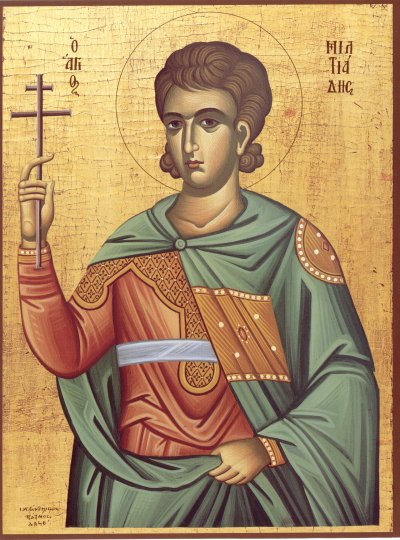
Augustine?
That is Pope Miltiades
I was all ready to make a crack about how he wouldn’t fit on the page, but that’s Aquinas.
Oh yeah, it helps if you read the writing…
lol, if it mskes you feel any better I almost put the same thing down. Fortunatly I read your post 1st before I did so.
Heh: 4th century Christian Berber is clearly Augustine…unless it says Miltiades right next to it. I have to say I have very little knowledge of Roman-era popes.
“Here is a Berber from the 4th century:”
He is clearly very swarthy. So, it is safe to say berbers were swarthy.