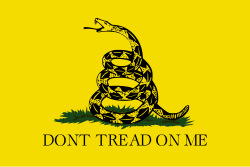
A boy and his mother are walking around the neighborhood for exercise. As they are walking, the boy is startled when he sees a rattlesnake on the side of the road, with it’s head sticking up looking like it’s waiting to strike any passing pedestrian. The mother notices it too, and they both quickly move to the nearest home, where they tell their neighbor about it. The neighbor rapidly gets the shotgun and kills the rattlesnake.
Obviously, killing a rattlesnake does not violate anybody’s rights, but lets pretend for a second that by killing the rattlesnake, you are violating the rattlesnake’s rights. The rattlesnake however did not harm anybody.
Were the actions of the neighbor with the shotgun just or unjust?
I guess you didn’t get what I was trying to ask, so let me try again. If somebody next door to me owns anthrax, and is constantly running around the front of my house on the neighborhood road with it in a glass jar, would aggression in this case be necessary in order to prevent them from shattering the jar and poisoning me?
I did nothing new. People use scenarios all the time.
But, Tom Cruise aside, what you’re telling me is that aggression is still evil even when it’s used to counter an obvious threat? And I’m not trying to sound like Michele Bachmann on Iran or anything like that.
Both of your examples are atrocious (shoot the guy carrying a glass jar of anthrax while he is in front of my house lol) so I will answer the third question.
When you say “aggression” I’m going to assume that you mean “the initiation of violence” and I will say that initiating violence is only moral when it is preventative, as opposed to reciprocal or retaliatory. The only time one may use violence on another human being is to prevent unilateral initation of violence.
They were reasonably entertaining examples. Please not the cat again. Aggression against cats doesnt exist, its a misnomer. Its like voluntary slave or intelligent socialist.
a rattlesnake is shaking its tail because it’s scared and warning people to stay away, people can stay away from the rattlesnake, it won’t chase after them, there are many ways to avoid a rattlesnake without using lethal methods. snake handlers can be called to deal with the snake in non lethal methods as well.
I think an implicit, even unintentional, threat CAN be a proper reason to initiate force, or violate anothers property. I’m not sure though exactly where the line should be drawn determining when it is proper. Similar to what Malachi said above I would say it is proper as a preventative measure in response to a reasonable threat of harm. This definitely needs some delimiting principles wrapped around it though because it could be construed to allow almost anything.
A couple more examples:
My neighbor forgot to put on his parking brake and his car is going to crash through his house (violating his property rights to save his property)
Look, those fireworks in my neighbors garage , right next to the lit propane heater are pointed directly at my house.
“Don’t worry I’m not going to shoot you, Im just standing on my property pointing this loaded gun at you for fun”
Someone is pointing his gun at me saying that he is going to kill me. Let’s say, he even shoots once and misses, or he has a history of shooting at me.
It is not crazy or immoral to take the gun away.
Now imagine that the gun actually belongs to his sister. But he borrows it from her whenever he wants, and she is powerless to resist him.
Again, it’s not unreasonable not to give the gun back to her.
So, we can see that there may be cases when preventive aggression can be done in self-defense even against a non-aggressor’s property.
here is where i am getting stuck on the question of knowing who owns what.
if someone walks on your property, but does not know it’s your property, seeing you pull a gun out will trigger a preventative agression reasponse perhaps. with no honest way for the person to know that is was tresspassing, shoot first ask questions later seems more agressive than neccicary.
then there is the difference between commands of " get off my land" and “i’m going to shoot you”. the first one can lead to a more rational discussion and understanding while the second one seems do or die even if one were to remove oneself from the situation. so in that sense i figure ability to escape though nonviolent means must be a factor here.
Put another way, no. The neighbor’s actions in killing the rattlesnake were not justified. The rattlesnake would have been justified in striking the neighbor, killing him.
(and how pray tell does a little boy determine that a rattlesnake “looks like it will strike anyone”? Maybe it was a mating dance and you killed Mrs. Rattler’s new husband?
Yeah, I’m pretty sure under common law there would be no case against you for those actions. That’s why it helps to know what we’re actually meant to be talking about - personal actions/morality or law? I.e. what we would do in the situation vs. what we think would or should exist as a legal rule.