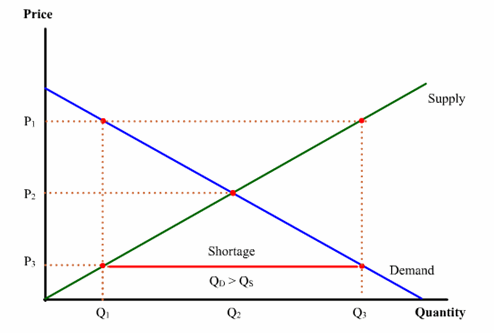
The problem you may be having is that the word “shortage” in economics means something different than the colloquial usage. A shortage is this situation:
http://livingeconomics.org/images/glossary/shortage.gif
At price P3, we have a shortage. It can only happen if there is a price ceiling which prevents prices from rising to bring us to P2, which is equilibrium.
What you are referring to is scarcity, and the difficulties regarding that. I’m sure that you believe that the free market is what best handles the problem of scarcity in other markets, but you (likely) have a problem thinking of essential goods (such as water) in the same way as basketballs. Remember, though, that everyone makes choices and tradeoffs. If the price of water rises, then people will reduce consumption in other things to pay for water - this is the case simply due to the fact that water is so essential to live. Likely, if necessary and possible, people will not only forgo current consumption of other goods via shifting their current buying habits, but would also be willing to reduce future consumption in order to stay alive - namely, they would be willing to go into debt in order to buy water if needed (and possible, which is an issue of the availability of credit and their individual reputation regarding the repayment of loans).
This means that the use of water for drinking will be very highly valued in a time of intense scarcity. Since the market always directs resources to the highest valued uses, this means that unless a rich person is so rich as to not only be able to afford extra water but also prefers to wash his car over the large sum of money he has to pay for it, or gives up by not selling it, then he will not wash his car. If someone is that rich or values a clean car so highly, then it would be done, and we cannot rightly object to it from a utility standpoint because we cannot make interpersonal comparisons of utility. However, it is most likely that water will be directed towards mostly drinking purposes in times of extreme scarcity.
Now, as to a situation of such extreme scarcity that not everyone can possibly be provided for in terms of drinking water, it makes no sense for any egalitarianism about the distribution of water. After all, why should those who have saved and been the most productive be less worthy vis a vis those who haven’t?
The one thing that is also important to remember, always, is that the free market reduces scarcity in all cases. It is what will make these disasters short-lived or more mild. The government slows down recovery and often makes the disaster worse.