I just started reading America’s Great Depression and came across this:
“Following this, the Hoover-Roosevelt New Deal policies managed to bring about a permanent and massive depression, from which we were only rescued by the advent of World War II.”
Intro to the 4th edition ^
Am I missing something here? Why is Rothbard saying WW2 rescued us from the Depression?
Dave might be the guy to answer this, since he’s reading that same text as we speak, but my guess is it’s not that the Depression was ended by the war, it’s that the war put an end to the New Deal.
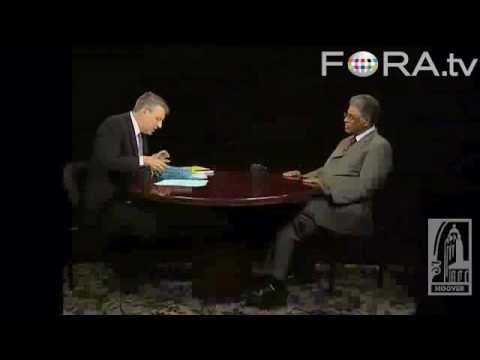
The video nicely explains that the economy began getting better but then took a turn for the worse, supposedly because of interventionist policies.
While I’d like this to be true, I wonder whether there isn’t some point mainstream historians will make: was there another shock that may have caused the downturn of the economy? Is Sowell’s explanation a case of causation or correlation?
I think it was Robert Higgs who did the work in 1992 exposing WW2 for what it was. Until then, I am guessing, most everyone, including Rothbard, just accepted the standard statistics at face value.
They wish there was, but don’t seem to have been able to find one. If you check these resources you’ll find links that will tell you some of what was being said at the time. The Great Depression by Lionel Robbins was published in the heat of the Depression in 1934, so that may help as well. Also check this lecture…
“Until then, I am guessing, most everyone, including Rothbard, just accepted the standard statistics at face value.”
I wonder why he didn’t assume by default that spending and destruction doesn’t grow economies or end depressions. I don’t understand why he wouldn’t apply Austrian theory here.
We’re getting into the world of speculation here, but perhaps he thought it’s a temporary boost that works for a while, malinvesting in war.
If you look at the article by higgs, the stats are very impressive. Unemployment gone, GDP growth etc.
Don’t forget the obvious: the war left most of the other industrial economies in a pretty bad state, giving America - the only one left standing - a sizeable advantage in terms of market power; increased international purchasing power represented by strong terms of trade (which have steadily fallen since then). If the Federal Government decided to give some stimulus to General Motors by nuking Toyota, Honda, Daihatsu, Nissan, Suzuki, Mazda, Mitsubishi, Subaru, Isuzu, Kawasaki, Yamaha, and bombing Audi, BMW, Mercedes-Benz, Porsche and Volkswagen to rubble with artillery, then GM’s sales would skyrocket. Its employees and owners would enjoy much higher profits, due to having a temporary near-monopoly on the international automobile market; they could charge monopoly prices in the same way as large oil-producers can. The welfare of the rest of the world would fall significantly, but the welfare of General Motors, its staff and owners, would increase. Imagine this effect on a national scale, and you see how America benefited from WW2, in a superficial sense. There are two ways to get a competitive advantage (market power): provide a better/cheaper product than your competitors, or use violence against them. If you look at nations as firms, then a ‘successful’ war (in the sense that none of the nation’s wealth/capital is destroyed, only the “enemy’s”) is a way of gaining competitive advantage through violence. I’m aware that looking at nations as firms is a vast oversimplification, but it’s useful for discussing international purchasing power.
From this article:
http://www.npr.org/templates/story/story.php?storyId=100018973
"Like lots of fellow Keynesians, Blinder says Keynes’ theory played out in the 1930s, with government spending pulling America out of the Depression. That’s become the standard line in school textbooks. But Keynesians say it wasn’t so simple as President Franklin Delano Roosevelt getting inspired by Keynes and spending his way out of the crisis.
Yes, Roosevelt expanded government spending, with an alphabet soup of programs. But he never spent as much money as Keynes said he should have. He also did all sorts of things that Keynes opposed, like raising taxes and trying to balance the budget. Keynes said those steps would cancel out any positive effect from spending. Roosevelt bothered Keynes so much that the economist sent him at least one scolding letter.
Then, finally, geopolitical events took over, and World War II forced Roosevelt to spend as much money as Keynes wanted."
Is this simply finding excuses or could it be correct?
MadMiser, I like the idea you are posing.
This is just a detail, but be careful:
they could charge monopoly prices in the same way as large oil-producers can
This ties together fact and non-fact: while Standard Oil was at a point a very very large company, it hardly grew up in a free market, and there is solid evidence that it also did not engage in predatory pricing.
Rationing, shortages and millions of servicemen living in foxholes getting shot and tens of thousands more dead or injured is not an example of a recovery.
The United States emerged from recession/depression when government downsized in the aftermath of WWII. In fact, Keynesians claimed that the reduction in government expenditures due to the end of the war would spur a return to economic malaise.
Guess what, they were wrong. America boomed at home at the end of WWII even before the rest of the world became a captured market for American goods and services.
Do you have any links showing that this is what Keynesians predicted? It would be really nice to cite them and then cite history.
Whoopsies. It was on my list of things to read…
Speaking of which, this may help. (Although it may also hurt, by making listing things too easy)…
http://ReadItLaterList.com/
Ah, sorry, I wasn’t referring to large oil producing companies, rather oil producing countries; should have made that clearer. Also, by ‘monopoly prices’, I mean prices higher than would otherwise exist in a perfect market. In terms of conventional firm theory, in the long run it’s impossible to make an economic profit without some form of monopoly (or at least market power), as if there is completely free entry into the market then competition will eventually push the price down to the cost of production (the cost of extraction and transport, in the case of natural resources). There isn’t free entry into the oil market, because a nation must first have oil reserves to enter it, meaning that there is not enough competition to push the price down to the cost of extraction, and so oil producing nations can extract an economic profit. Like Saudia Arabia, for instance: effectively a planned economy, but much richer than an equivalent planned economy without oil would be. Or, look at Norway: GDP per capita there is something like $5k-$10k greater than in the neighbouring Scandinavian countries. Why? Norway is rich in natural resources.
Australia is another good example. At current exchange rates, it’s GDP per capita is around $10k more than America’s, and an Australian minimum wage worker makes as much as American earning the median wage (yet the unemployment rate is only 5.1%). Why? Because it’s rich in natural resources that are currently in high demand from Asia, China in particular, and can charge ‘monopoly prices’ (prices higher than cost of production), since there’s nowhere else China and India could shop to meet the entirety of their resource needs. Its neighbour New Zealand, on the other hand, whilst having a freer economy than Australia (second lowest overall tax burden in the OECD, flexible labour market, fully legalised prostitution, etc) has a GDP per capita $15k-$20k less than Australia’s. Why? Because New Zealand lacks Australia’s natural resources. So, I’m suggesting that America’s industrial base after the WW2 gave it an advantage in the same way being rich in natural resources gives a country an advantage, but as the countries destroyed in the war gradually rebuilt their nations and industry, America’s advantage in being the sole manufacturing power (and hence able to charge ‘monopoly prices’) was eroded.
I must note, however, that Australia has a housing (and stock?) bubble similar to that of the USA in 2006. This might distort the long-term reality somewhat.
Very true. However, if you look at Australian interest rates http://rd.shoparound.com.au/files/images/Interest_Rates_History.jpg, the Reserve Bank has generally kept them much higher than Benanke/Greenspan’s, so in the sense that a bubble is due to artificially low interest rates, Australia’s bubble wouldn’t be as severe as the USA’s. Also, Australian house prices have been relatively stangnant over the past year or so, in some areas even falling in real terms, so the hope is that they’ll remain stagnant while real incomes rise, until they no longer represent a bubble (a bit far fetched, admittedly, haha!).
Yeah, the cause of the Australian bubble is different to the cause of the American bubble. Primarily it is a result of the taxation system which incentivises speculation in housing (due to negative gearing) against other, potentially productive, investments. Another factor in this is the government provided first home buyer grants and similar easy credit schemes for first home buyers.
I feel that house prices will fall dramatically before income can rise in real-terms to come anywhere close to actual supply/demand as it will appear - especially due to certain political interventions that are on the horizon (if you’re Australian I’m sure you know what I’m referring to). This would have a huge impact on the banks, which are, of course, guaranteed by government. I think the government response would be very similar to that in the USA (namely, tax-payer funded bailouts), especially if there is a significant fall in house prices before the current government is thrown out. Hopefully house prices fall slowly enough that the government cannot use a crisis as an excuse for further intervention - but I’m sure the governments both federal and state will try their hardest to keep the bubble going.
Hmm. Maybe they’d open the housing market to Asian buyers again? They shut them out to keep the market from ‘overheating’, but if the bubble started to burst, then the easiest way for the state to preserve the bubble would be to fully open up the housing market. Then, Australia could import the Chinese property bubble, haha!
A good Mises Daily on (a the name suggests) why WW2 didn’t end the great depression: http://mises.org/daily/5069/World-War-II-Did-Not-End-the-Great-Depression