I have been bombarded with the nonsense that job creation is stimulated with tax cuts. Can this thread be a list of links about the role the rich have on job growth?
First you have to define what you mean by ‘rich’. In general the point is that the state stifling the opportunities for production created by private investment through its crowding out of resources and taxing its subjects results in a lesser degree of prosperity than would exist otherwise, including opportunities for productive employment (as opposed to the busy-work of state created ‘jobs’).
The top 1%
You realize the top 1% is going to include people who make anywhere from about $400,000 - over $1,000,000,000 a year, right?
Do you think that is a fair characterization of the “rich” in this country?
No, but it is the percent that is frequently used with the increase taxes rhetoric.
Is $400,000 not enough to make you rich?
Compared to what?
Just because someone has a nominal $400K in income doesn’t necessarily make them rich. Consider a man who works for 5 years on a project that finally pays off in one year. In that year, he’s “rich”, but when averaged out over the 5 years, he was actually only earning about $80K per year, which is definitely not rich.
Clayton -
Although I don’t really understand the question/tone in the OP because you seem to both call it nonsense and ask for cases where it has happened. But at any rate. Tax cuts certainly will create jobs in the short run so long as there are no cuts in government spending/increases in uncertainty as a result. Until prices adjust upwards then fewer taxes mean more money is spent by people and is therefore an effective increase in demand for goods and services without an immediately corresponding increase in input prices. This means that it will almost certainly increase employment, all else equal. I don’t think that many libertarians quite realize that tax cuts, for the above reasons which are in no way contradictory to Austrian opinions of the subject, have always been one of the three main weapons in the Keynesian arsenal.
As for decreasing taxes on the rich, this is more positive as the rich almost always spend a larger amount of their money on investments. More money for them, lower interest rates. Lower interest rates, higher long term growth and standard of living.
I mistyped the title, I meant to say “Tax Hikes Create Jobs”. In the American economy, the federal reserve determines the interest rate, so it doesn’t create long term economic growth if the rich is allowed to keep more of their income. I guess what I am asking is do the rich create jobs and can I have some links to illustrate it better.
It’s just an oversimplification to say “the rich create jobs” - the only reason we even need to say something like that is that the statists say we need to “tax the rich to create jobs”. How silly that is when the rich already create jobs.
The non-rich also create jobs through demand and investment (stock shares, joint investment, small businesses). “The rich create jobs” just plays to the “economies of scale” meme that suggests that capitalism is synonymous with scale and growth and, therefore, unsustainable. The cause of variation in wealth holdings that result from peaceful (voluntary, non-aggressive) exchange is not capitalism, it is variation in circumstance, including the propensity of individuals (and their ancestors) to accumulate wealth. The revolt against this variation is a revolt against nature.
Clayton -
Exluding the moral and ethical argument for a moment, if the wealthier Americans and middle class Americans both create jobs, what would you tell a statist advocating the redistrubution of wealth from the upper class to the middle class arguing that it would create more job growth?
I’m not even sure what kind of taxes we’re talking about here. Corporate taxes? Capital gains taxes? Income taxes?
These taxes all punish different types of behavior and take money from different points in the process so I think they need to be thought about differently in terms of their effects on job creation.
One does not find it hard to imagine how letting a business keep more money could lead to job growth in that business. But then it could go for other things as well. That money could go to reinvestment in the company or it could be paid out in dividends to its stockholders.
If you take money from individuals and then give it to people to do some form of job then yeah you’ve spurred job growth but it hasn’t come at no cost. You’ve just screwed with the capital formation process. You’ve eliminated money that might’ve been saved for further consumption or gone to a potentially more productive venture.
Cause and effect you see. Nothing is free.
In addition to the other points raised here, we have to distinguish between parasitic and productive jobs. Sure, if you tax Mr A and use the money to pay Mr B a salary, you may argue that you have created a job.
But the job is a govt job, and/or a job that would admittedly would not exist if not for the tax money creating it. Which means it is a parasitic job. The fellow getting the tax money, Mr B, is doing something nobody wanted him to do, if they were free to choose. After all, nobody was hiring him, right?
Of course there is also the other problem. Every job created by taxes for Mr B means there is no money in the hands of the taxed to hire Mr C to do what they need to get done. A Tax wipes out a productive job to create a parasitic job.
Now one may make the argument, foolish at it is, that absent a tax, the rich would just squirrel their money away, hiding it under their mattresses forever, so that all that money won’t be used to create any jobs, parasitic or otherwise. But such an argument is of course the height of folly. I’m too carb coma-ed right now to explain why, but if anyone expresses an interest , I’ll get to it later.
saw this video today… kinda fits this thread
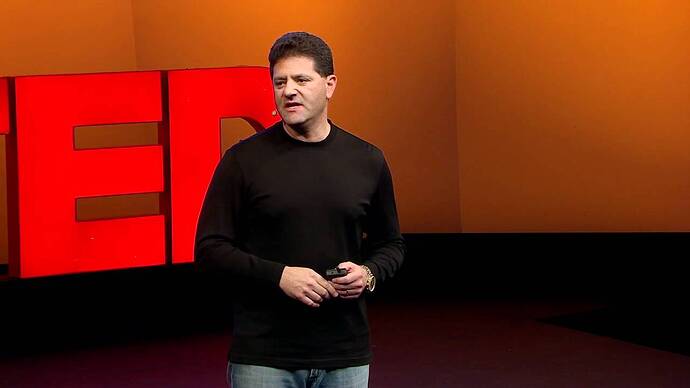
- The middle class are the job creators
This has the unfortunate attribute of being partly true. What he misses is that the entire economy is an interconnected web of relationships, all of which without exception, are responsible for the ultimate outcome. So, the rich, the poor and the middle class are what creates jobs.
- Deification of capitalists
Simply not true. Capitalism is villified. It is true that every particular rich man (capitalist or not) is followed around by an entourage of money-worshippers and since he claims to be rich, it’s no surprise if he thinks that we all feel the same way as his groupies.
- Taxing the rich “to create jobs for the middle class” is a great deal for the middle class and the rich
“I own three cars, not three thousand” despite the fact that he makes hundreds or thousands of times as much money as the average American. He can’t “pick up the slack” in demand.
There is no slack in demand. His contribution to demand along with all of our contributions to demand is the demand. We don’t need him to demand more cars because he has more money. In fact, quite the opposite. By sitting on his piles of cash, he is making us all richer.
- The underlying fallacy of the entire talk is the zero-sum fallacy. By having thousands of times as much money as other people, he has “gobbled up” more of the money pie. By his own admission, he does not spend it on consumer goods, so he’s not crowding out consumers. We could seize his assets and those of everyone in his income bracket and above and redistribute it and everyone else would benefit a little from that but the primary effect is that the prices of things would rise in response to the conversion of money held in cash balances to money spent for consumer goods.
If he’s just burying the money, I already pointed out how he’s doing us all a favor.
If he’s investing the money, well, we all know what that means: jobs!
- Each person who transacts with a rich man (voluntarily) has already benefitted to the extent he intended to be - there are no “imbalances” in the system that need to be rectified. In fact, it is this guy who is guilty of geocentrism - he blatantly confuses is and ought in the first few sentences of the lecture when he says that people who don’t think that taxes should be raised on the wealthy is in the same category as an astronomer who holds a geocentric model of astronomy. Srsly?
Sorry, no checkmate here, just amateur hour.
*sigh
Clayton -
Great response, Clayton. This is what I was looking for.
What kinds of investments in the middle class consumer is he talking about?
LOL
He uses the chart from this recent thread. Come to think of it…It looks like this video is where the guy got it from.
Yeah…it’s kind of funny how he literally mentions the “feedback loop” between customers and business twice in the 5 minute speech…yet insists (also more than once) that it is the customers that create the jobs.
Right. And this asshole has figured the way to get the best of both worlds…being rich while vilifying the rich. Notice the standing ovation he gets at the end of his anti-capitalism, pro-“tax the rich” speech. Same reason leftists love Buffett. And Michael Moore. It doesn’t matter who you are (as in, you can be exactly the kind of person that they are against), and as long as you stand beside them and vilify rich people (like yourself), you’re their hero.
In fact, you’re even more of a hero because you’re like a white man denouncing racism against blacks, or a man arguing for higher wages for women.
Yeah when he said that the first thought in my mind was “why does he need to buy anything? Why can’t he just give the money directly to the people without jobs? Wouldn’t that cut out a lot middle men?” His entire premise is “I can’t buy enough stuff to warrant more businesses hiring more of you unemployed people to make more products and thus get you a paycheck.” Well hell. A) why does he need to buy anything…he could hire these people himself…to work at one of his businesses, or to count grains of sand on the beach. B) why do these people have to “work” at all? If there isn’t a real market demand for whatever they would be “hired” to do, why doesn’t he just save them (and himself) the time and just give them the money?
That’s one way to look at it. I was thinking more along the lines of Keynesian aggregate demand. We need more demand to make the economy grow. He even says “only consumers can set in motion this virtuous cycle of increasing demand and hiring.”
My question to him is…where does the demand come from? In economics the term “demand” implies a means to acquire the good. This generally means money. “Demand” without a means to acquire is just “desire” or “want”. It doesn’t count. So this guy claims “demand” is what essentially drives economic growth…but what he really means is “human wants” are what drive growth. But earlier in the talk, he actually admits that “if there was no one around who could afford to buy what we had to sell, all those companies and all those jobs would have evaporated.”
ORLY! Ya don’t (JB) Say!
What kills me is that someone could be (apparently) so good at working within the market process, and create so much wealth, and yet have such a distorted (and ultimately opposite) understanding of how it all happened.
P.S.
I was wondering why this video was posted on an SPA and couldn’t seem to be found in the official TED channels…apparently there’s a reason…