I happened to come across it while browsing the Mises search engine. I thought it was excellent. It is only one chapter of a tentative book called “In Defense of Logic”. I emailed Yates to see if the book is still being planned.
There was an intriguing experiment discussed about a person named Sokal. It’s not the main story, but was telling. He performed a hoax against a supposedly highly acclaimed Social Science academic journal. He pushed all the pop-philosophy buttons and got an article published that he said was completely wrong and if anybody knew quantum mechanics (and had the objective sense to actually critique the facts and rational, also, one of his references was a known New Ager that has nothing to do with science at all, and more) they would have realized how false the content was.
It reminded me of the Piltdown Man hoax that mislead people for ca. 40 years, but I don’t know how deep that hoax went to prove a particular point as Sokal’s was planned to show how, as he put it, the Emperor has no clothes. I don’t think Piltdown Man hoax was planned to dupe the scientific community to prove how fraudulent science at the time was (but Solak’s was for the social sciences). I believe, but not sure, that the Piltdown hoax was an effort to fudge results to fit a particular person’s theory - so it wasn’t for any pursuit of truth.
The Sokal hoax is a pretty famous incident – famous enough to rate its own Wikipedia page. You can find the hoax paper here. A prophylactic aspirin might be a good idea if you plan to read it. Googling “sokal affair” or “sokal hoax” will probably get you more hits than you can pursue in one lifetime.
I downloaded a copy of that sample chapter long ago: the timestamp on the file is June of 2002. I can’t find anything more regarding the book, so it could be a dead project. Yates used to be very active over at lewrockwell.com, but I think the last article he posted there was in 2005. The “Columnists” page no longer lists him. His blog hasn’t been updated since 2007. Maybe he dropped out of the movement. Anyone know?
Edit: wilderness, if you liked the Yates chapter enough to check out other pieces by him, I found his LRC archive page. I was right: his last piece for LRC was from 2005.
Wow, that’s crazy. I just wrote a similar paper titled, An inquiry into the meaning of truth, where I basically say the same shit as Sokal. The fact that Aristotle’s principle of non contradiction isn’t just flatly accepted by the so-called “philosophical community” proves how backward and confused “intellectuals” really are.
Basically Sokal had a friend that was a programmer help him with the project and created what is known as a Post-Modern paper generator. It takes strings and words, splicing them together to create what seems like a typical PoMo paper. But I will remind everyone that Sokal is an ex-sandanista(sp?) so he’s a dyed in the wool socialist for sure, but I do admire his stance on not blending the social and natural sciences.
Mmmm, I’m not so sure about that. I think the computer that generated Sokal’s paper was the wetware between his own ears. I hadn’t ever heard that he used a paper generator to construct the hoax paper. Could you be mixing that up with SCIgen or similar incidents?
Sokal’s Lingua Francapaper exposing his hoax is posted on his website. For what it’s worth, it doesn’t mention a paper generator. His description of the hoax paper sure makes it sound like he constructed it himself.
He taught summer courses in math for two years at the National Autonomous University of Nicaragua during the Sandinista regime. That doesn’t necessarily make him a Sandinista. But wikipedia gives this as a quote (unfortunately not sourced) from Sokal: “But why did I do it? I confess that I’m an unabashed Old Leftist who never quite understood how deconstruction was supposed to help the working class. And I’m a stodgy old scientist who believes, naively, that there exists an external world, that there exist objective truths about that world, and that my job is to discover some of them.” Sokal’s motive for the hoax was to protect the Left from idiot leftists who would discredit the movement in his eyes.
Baawa and I are pretty diligent about keeping that ratio very low. Forum bot software that can generate relevant conversation is still in the experimental phase. But in general, there are thousands of content websites out there, on every topic from health care, to interior design, that have content that was machine generated from a template.
It truly is the matrix.
Maybe that is why I don’t trust very much presented on TV. And that is why Sokal doesn’t surprise me.
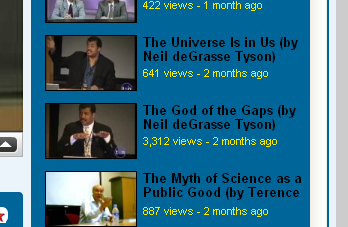
@Wilderness, I forget what the video is, but I want to say it was one of the Neil de Grasse videos on Nielsio’s YouTube channel, where he talks about how science is a community of trust, and hmm… maybe it wasn’t Neil de Grasse. Maybe it was another video on that channel.
Anyway, science is based on trust, and peer review is not so much a critical examination of the presentation, but that the researcher meets the standard expected of a scientist. So as a trust based system is completely exploitable.
thanks for the link. yeah scientists are human like everybody else. it does have it’s intellectual pitfalls - or as I brought up to show this is not anything new - the Piltdown hoax. And that lasted 40 years. But science still does have it’s individuality. It still does take it’s risk. But how much of science is subverted, not by it’s own community of curious individuals, but by the State to pick and choose what science does? Undoubtedly a lot. As Yates pointed out in that first chapter, one of the buttons Sokal pushed to get the article published was he knew the social science community is more about opinion, multiculturalism, and politics, rather than logic. It is a direct, explicit attack on logic (universal principles; a prior), and so he threw into the article a some political comments to attract their attention and with that and other inserts they took the bait - without much critical thought. He called the paper “pop-philosophy”. Flashy, interesting, but wrong.