I perceive two different orientations within philosophical discussion. The first - and I think one of the primary preoccupations of much of philosophy - is an orientation toward being right, particularly in the sense of winning arguments. In this orientation, philosophy is about being irrefutable. Another orientation toward philosophy has to do with getting to personal truth, that is, “making sense of the world.”
The two are obviously related to a degree since you cannot make much sense of the world if you’re completely factually wrong on everything. But I think this is an overly black-and-white view of the nature of truth-seeking; the human mind already has a formidable repertoire of factual knowledge about the world, some of it in-born and some of it acquired through the experiences we all go through. So philosophical investigation is really dealing with truths “on the margin”, so to speak.
I think the “being right”-orientation toward philosophy takes an overly extreme view of the nature of being wrong - “If you don’t get this right, everything else you think will be arbitrary or even false.” The fact is that people hold all kinds of factually wrong information in their heads and still get through life just fine. This is true even of specialists who do what works even when they do not really understand why it works or perhaps even hold beliefs that contradict the operations they are performing, in the final analysis. In other words, the human mind is a very fault-tolerant environment and the parameters in which most of us work most of the time are also very fault tolerant.
Where the being-right-orientation is particularly pronounced is in the area of ontology. “What exists” as a matter of ultimate fact, that is, a theory of ontological fact that will never be disproven by our descendants. The “making sense of the world” approach leads to a gentler approach to ontology - “What exists as a matter of practical significance, particularly as it relates to causality?”
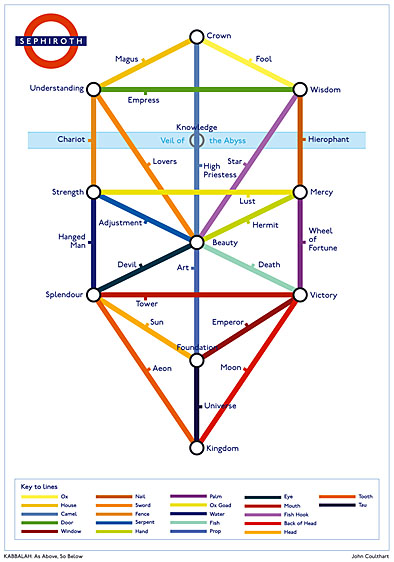
The use of models and metaphors can be a method of getting to the truth.
Morality (can be thought of as the philosophy of decision-making) is primarily a matter of the mind because deliberative decisions are reached in the mind. The majority of the factors that contribute to even our non-deliberative decisions also reside within the brain. In order to construct a morality, then, we need some kind of anatomy or map of the mind itself. Some kind of theory of how the mind - in the most general possible sense - works.
By contrast to psychology, anatomy is a fairly straightforward science and allows medicine to make “natural” divisions within the subject. Skeleton, muscles, nerves, vital organs, etc. etc. The mind, however, is quite different. First, you can’t dissect a mind because a mind only exists while the individual is alive and awake. Second, there is an “observer effect” in attempting to analyze the mind - you change the very conditions of the mind by trying to observe it. Even with “objective” third-party observation, you can’t recreate the natural conditions in which the mind operates. An fMRI is hardly a non-intrusive device.
Trying to develop an anatomy of the mind is like trying to do medical anatomy without being able to cut inside to see the structural and causal relations. We can see the net effect of the causal factors in the mind, but we can only hypothesize regarding the buried causal factors.
However, there is at least one useful metaphor for the mind that throws significant light on the operation of the mind and which has its basis in the physical anatomy of the brain: a neural-net computer. In fact, it isn’t even a metaphor, the brain just is a neural-net computer but we do not know if that fact alone is the sufficient cause of the mind and conscious experience (and it seems unlikely that this is the case). So, we are in a position of being able to say that the mind is a computer in the same sense that an arm is a lever. The arm is not a hydraulic, even though a hydraulic is a kind of lever. Similarly, the mind is not a web server, even though a web-server is a kind of computer.
Even though this is a very general kind of information about the mind, it is still much more specific and much less arbitrary than what was known before. We can establish limits to the capabilities of the computational (discursive) aspect of the mind. We can form hypotheses regarding the computational organization of the mind based on certain high-level facts that must apply to any computational system (e.g. Amdahl’s Law). It has also thrown light on psychology itself as the evolutionary picture of the brain as an agglomeration of dedicated, special-purpose modules has helped focus psychological methodology. Culturally universal behavior is evidence of the existence of a special-purpose module responsible for this behavior.
This brings me back to the idea of using the cardinal virtues as a “mnemonic map” or model of the nature of human decision-making. I think the idea of a “cover set” of virtues gives a hint toward a more scientific approach to discovering something like a science of decision-making (scientific morality).
Language is one example of a behavior of the human mind. It is a “skin” - an output of the mind that is more or less objective and can be easily observed. An extremely large list of virtues and vices can easily be constructed with nothing more than a dictionary and some free time on a Sunday afternoon. Such a list is useful in that it gives an inventory of virtues which can then be taxonomized. In combination with some of the techniques of evolutionary psychology, it is conceivable that a fairly robust positive moral theory could be constructed.
This approach is not complete because language is not the only behavior of human minds. Nevertheless, the general idea of how to proceed is contained within this approach and is extensible. A great deal of morality and decision-making actually has to do with “the unspoken” (unspeakable). Nevertheless, evolutionary psychologists have had tremendous success in analyzing even these aspects of human nature.
Summary: An anatomy of the mind whose orientation is to “make sense of the mind” rather than “being irrefutable” and whose aim is to analyze the basis of human decision-making (morality) can form a foundation for a positive morality. At least one avenue of approach is to analyze human language itself and to construct a taxonomy of human virtue-words (praise-words) or vice-words (infamy-words) and then attempt to find a “smallest cover set” - a list of cardinal virtues. By restricting ourselves to the set of virtue-words and vice-words that are culturally universal, we can deal with the universal aspects of human nature.
Clayton -