Did they support more tyranny, different tyranny, or no tyranny compared to the monarchy and aristocracy?
Did it change France for the better? If so, in what ways?
What are some good writings on it?
Did they support more tyranny, different tyranny, or no tyranny compared to the monarchy and aristocracy?
Did it change France for the better? If so, in what ways?
What are some good writings on it?
The French Revolution was one of the biggest catastrophe’s in modern history behind only WWI/ The Russian Revolution.
All the Mao, WWII, Euro Unions, and crazy nationalisms and “activism” is merely the after effects of such things.
For polemical writings against the revolution read Burke’s “Reflections”, or even de Maistre for some interesting views.
If you want more unbiased and scholarly history specify what you want. A typical College level 2 volume History of W. European Textbook would probably be a good starting point. No need to go the extra mile or for “tunnel vision” or “hetrodox” perspectives if you know next to nothing about the subject
The French Revolution undoubtedly unleashed a tyranny unknown before it. It was essentially the culmination of collectivist ideas and served to cement these collectivist ideas in French society. The revolutionaries attempted to create an absurd utopia, with predictably terrible and ridiculous results (see Edmund Burke). The combination of the collectivist ideas and the dictatorship of Napoleon set the stage for the conscription of the general populace to spread across Europe - the levee en masse which changed warfare and its relation to society ever since. From then on wars were not disputes between kings, but between whole peoples. This collectivist recasting of war, and the arms-race that resulted from France’s mobilisation of the general populace, led directly to the total wars of the 20th century and the identarian politics that continue to this day.
Remember that the monarchy returned in 1815, but by then the ideological damage had already been done. From then on France would be a collectivist society. The French Revolution is essentially the beginning of the modern age of barbarism.
NB - only 8% of those killed by the guillotine were aristocrats - in contrast 32% of those killed were peasants.
A good rule of thumb for modern history:
If it has the name “Revolution” attached to an event think of it as an intellectual class coup / fashion parade gone awry to rabble rouse to put the intellectual class on top and self aggrandize and congratulate itself with the media it already owned anyway.
“NB - only 8% of those killed by the guillotine were aristocrats - in contrast 32% of those killed were peasants.”
Who were the other 60%?
Who were the other 60%?
Practice.
Clergy, bourgeoisie, deserting soldiers, and other workers (by peasant I meant agricultural workers).
Did they support more tyranny, different tyranny, or no tyranny compared to the monarchy and aristocracy?
Did it change France for the better? If so, in what ways?
What are some good writings on it?
I agree with what others have already posted: namely, that the signficance of the French Revolution was that it actualized and unleashed collectivist tendencies that have led directly to the totalitarian statism of the modern age.
I think of the American Revolution and the French Revolution as near-perfect expressions of the two competing political philosophies of the modern age, liberalism and socialism respectively. For those of you who adhere to the conspiratorial interpretation of history, you might consider the French Revolution as an orchestrated response to the American Revolution: a counter-revolution against liberalism. The influence of the Bavarian Illuminati in the Jacobin phase of the French Revolution is well documented, and of course there’s good reason to believe that that same cabal of power elites are in operation today. I think of the entire movement toward socialism (from the French Revolution, to the collapse of the conservative order established at Vienna, to the Great War and the Bolshevik Revolution, to what is still in motion today which the interwar intellectuals called the “New World Order” and the “scientific dictatorship”) as a single more or less orchestrated and planned reaction against liberalism - i.e. a reaction by the power elite to stop liberalization and build a new and more secure basis for their most illiberal rule.
End Rant.
P.S. a good book on the French Revolution is “Citizens” by Simon Schama.
The French Revolution abolished serfdom in France, that’s a pretty significant change for the better. It involved both positive and negative aspects.
Was it on the whole a change for the better or worse is largely a matter of subjective preference. Does one assign more value to the freedoms gained in it, or to the freedoms lost to it? There can not be a universal libertarian answer, only an individual one.
The important thing as a libertarian is not to reject, or to accept the French Revolution, but to do it for the right reasons. If rejected it should be so for the freedoms lost, and if accepted it should be for the freedoms won.
Most of the time the French Revolution was (or is) opposed and clung to (by non-libertarians) for all the wrong reasons. Cherished for many of its negative aspects, and rejected for many of its positive ones.
Ultimately the main problem with the French Revolution has never been so much its own negative aspects (the effects of which were after all confined to a small time and place), but more so the celebration of its worst aspects as positive values by huge number of movements and intellectualls afterwards. This has been far more consequential on a global scale.
And before that it was what, individualist society??
As opposed to what, the pre-modern age of barbarism?
The traditional interpretation of the French Revolution, that it was a struggle by the rising capitalist bourgeoisie against the feudal aristocracy of the old regime, is Marxist nonsense. France was already on a path to liberalization before 1789; think Turgot et al. The high aristocracy had adopted liberalism and the first phase of the revolution was led by those liberal aristocrats and was liberal in character, much like the American revolution - it was an extension of what was already underway before 1789. But the second phase of the revolution, where new leadership takes over and moves in a decidedly illiberal direction, can be seen as a counter-revolution, fueled by mass-opposition to economic liberalization. The ranks of the Jacobins were filled with small-time craftsmen and others who would lose in the transition to economic liberalism. This popular resistance to liberalism wasn’t anything new, it had limited the efforts by folks like Turgot pre-1789. For example, when they attempted (on several different occasions) to liberalize the grain market, there were riots and attacks on “speculators” who sold bread above whatever the masses thought was a “just price.”
So the French revolution was really two revolutions I would say. First an American-style revolution led by liberal-minded aristocrats, and secondly a counter-revolution led by demagogues who exploited the popular antipathy toward liberalization. Libertarians should abhor the second revolution, because it did unleash the modern State, and we should regret that the first revolution didn’t succeed. The French Revolution is also a case study in how democratic and liberal tendencies do not generally make good bedfellows. As soon as the revolution became “popular” it lost its liberal character and heads started dropping into buckets.
I think the crux of the matter is that, taken as a whole, the French Revolution lacked a significant anti-state component, something noted by Tocqueville, who once commented that, through all the changes witnessed from 1789, the one institution that remained, and in fact grew stronger, was the state and its administrative bureacracy.
The premise underlying the revolution was for “republicans” to grab ahold of the state which was created by the monarchs and their ministers such as Richelieu, Mazarin, and Colbert and attempt to use it for liberal purposes. This will always fail and is the reason 19th century Europe witnessed increasing centralization even as liberal ideas became more popular. The American radicals generally understood the state as the greatest obstacle to liberty, not as its source.
The state’s proclivity to grow and engage in war was seen in full form during the Napoleonic era, and spurred centralization in Germany, where it gave further fuel to the state’s takeover of educational systems, which is a major reason why, by the turn of the twentieth century, liberalism was all but dead there, something Mises lamented in Omnipotent Government.
The state is Tolkien’s ring. It cannot be used for good.
Thanks for the replies everyone: ) I think that the intentions of the french revolutionaries were probably about the same as Louis XVI regarding the power of the state.
Once agian, I suggest you get a decent 2 volume college text on “History of modern W Europe” to start. These books will show plenty of primary sources from all sides of the debate, and will be the best springboard you can ask for, if you choose to get more in depth in your search.
I suggested Burke and de Maistre as primary reactionary views because I think they are the best and most important of the opposition writing during the time of the revolution.
I can’t resist, I have to jump in.
Disclaimer: I am known to have a bent towards the conspiracy theoretic…
I do not believe that revolutions “just happen.” In the past, a revolution was always some kind of coup, led by a powerful Lord who was able to rally enough backing from the nobility to mount what can be thought of as a mutiny against the King, if you will. If you read Machiavelli’s The Prince, you will see that in some cases, the King has the people on his side and is fighting against the nobility. In other cases, the rebel Lord has the people on his side and is fighting against the King and the more well-established nobility. Either way, there’s always a clear answer to the question, cui bono?
The French Revolution was actually the second revolution which is cast as a kind of “people’s revolt” or “leaderless revolution” by historians. The first? The American Secession, aka the American Revolution.
I take it as an operating axiom that Freemasonry - particularly since the mid-18th century - is an outsourced proxy of the Jesuit order - except, perhaps, in England where the Anglican church/British crown probably uses them in a similar way.
There can be no doubt about the influence of Freemasonry among the American colonists - our first President was a Freemason.
John Robison put forward the case that the Bavarian Illuminati created under the Jesuit Adam Weishaupt, had infiltrated the Freemasons and had it as their stated objective to topple the governments of Europe, the very reason that the Bavarian government outlawed the Illuminati. Robison further argued that it was the Illuminati who were behind the French Revolution.
If Robison is right, this gives us the answer to our question: The Pope in Rome. Because it is the Pope’s operational arm (the Jesuits) who have their fingerprints all over the Bavarian Illuminati and Freemasonry (at least on the continent and in the US).
This leads directly to a more disturbing observation about the genuineness of the American secession. Was it, in fact, a “people’s revolution” a “leaderless revolution” as it is billed out or, instead, was it a practice run for the Jesuits before they pulled the pin on the grenade they had laid in France?
Going further, there is a definite pattern to the march to world government - incessant, cosmically bloody wars billed out as driven by ideology or xenophobia or nationalism or anti-semitism or racism or any other of a million -isms… but all with one common attribute: these are “people’s wars” and they are fought not with the primary aim to gain territory for a King or nobility, but as an inevitable expression of the over-zealousness of the mad masses divided by “anarchic” national borders that are not subject to a “rational” world government.
The rhetoric surrounding both the lead-up and the aftermath World War I is the most obvious example. Even before the Great War, we had innumerable “sage men” warning that if we didn’t get a world government, we were going to have a terrible, global conflagration as the result of rampant nationalism and xenophobia. And, sure enough, we had a war. During the war, they kept selling it as “the war to end all wars.” How was it going to end all wars? Well, we found out after the War… we were to have a “League of Nations” which would tie all nations together into a single, maniacal compact.
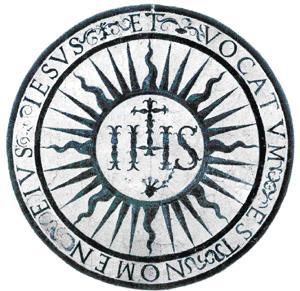
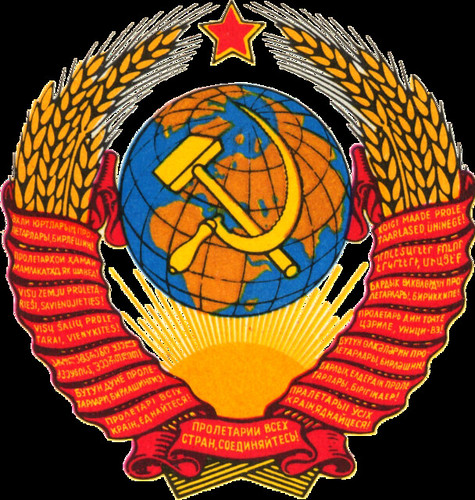
But the Great War failed. It wasn’t bloody enough, it didn’t leave a deep enough scar on the popular imagination. So, we needed a second World War, even bigger than the first. And so we had it. And out of that we got the United Nations. Do you know how many segments the globe in the UN logo is divided into? That’s right, the same number as the flames surrounding the Jesuit solar emblem which also happens to be the same as the number of degrees in Freemasonry. Go figure.
The demolition of the beautiful Cathedral of Christ the Savior in Moscow in order to make way for the laughable Palace of the Soviets monolith is symbolic of the true nature of the Russian Revolution.
In part, this is a result of a fundamental yet common misunderstanding of the nature of European royal families - they are not and never have been tied to a single territory. Thrones were gained, lost, married in and out and revolved from hand to hand according to the vagaries of battle and family alliances.
The monarchs who “got it” morphed themselves like Rome had done long before - the monarchy suddenly become a “quaint relic” of a “bygone era” and was nothing more than a “ceremonial museum piece” whose continued existence was merely formal, as a matter of national history and pride. These are the monarchies that exist today, such as Britain, Norway, Sweden, Denmark (and, yes, even Spain).
I believe the best way to think about all these revolutions and wars since the late 18th century is that those who instigate and perpetrate them are a kind of club or clique and you’re either in that club or you’re fodder for their wars, doesn’t matter who you are (royalty, nobility, wealthy industrialist in your country of origin, whatever). The roles of secret societies is vastly exaggerated… to the extent they are involved merely by virtue of their membership they are, at most, foot-soldiers. The term “Illuminati” is laughable and doubtless was used only for its suitabability to attracting the kind of people Weishaupt was trying to recruit at that time and place.
Underneath all the layers of disinformation and bullshit is the simplest truth of all: nothing ever changes. Wars are fought by those in power both to scare the shit out of their subjects (keep them loyal) and - to the extent they are able - to maneuver for more territorial power vis-a-vis their true rivals. In other words, just because somebody has the label “King” or “President” doesn’t mean they hold real power. They may just be a figurehead or placeholder for someone pulling the strings behind the scenes (as famously stated by Prime Minister D’Israeli).
So, when you see a propaganda photo of Roosevelt, Churchill and Stalin and another of Hitler, Mussolini and Hirohito, you can be sure that these are just the poster-boys. They’re the team captains, the guys we’re supposed to be rooting for or against. This is “history for the masses”, history reduced to a series of Red versus Blue football matches fought with guns, tanks and bombs.
Membership in “the Club” is not even determined by your family lineage, it is determined by what Machiavelli called virtu - roughly translatable as power. Those in the Club are privy to the Big Lies. Every nation has its own Big Lies, its revisions of its own history. But the Big Lies concerning all these revolutions and wars are held in common between different nations, between different power groups. To a large extent, their power is rooted in the Big Lies. This is why membership is so coveted. Once you’re in the club, you have the keys to the kingdom; you know which threats are real and which are not. Back in the middle ages, the commoner may have feared God’s wrath and eternal punishment in Hell but the King did not because he knew the Pope was full of shit. That’s a pretty big advantage, don’t you think?
This is what all the crap about the New World Order / CFR / Bilderberg / etc. is really all about. All these buzzwords like “New World Order” are thrown out there to keep people busy worrying about non-threats… like a New World Order. In an era where the US President can securely teleconference with his Generals regarding nuclear war over a remote, encrypted video-link, do you really think the psychopaths that attend Bilderberg need to physically meet in one location? Of course not. The meeting may have served a real purpose while they were planning the Euro, but that has long gone - today, the purpose of the meeting is to keep people who are looking for a conspiracy talking about something other than the real conspiracy.
OK, I had no intention of writing all this when I started. </incoherent rambling>
Clayton -
The U.N. logo was designed by its founder, Alger Hiss, who based it on the Soviet coat of arms which says “Workers of the world unite”. I don’t know what emblem you are talking about. I didn’t find anything that looks like that in google for “jesuit solar emblem”. It’s just the Soviet emblem without the Russian themes.
The Illuminati was a short lived secret society with the goal of overthrowing the European governments and the Church. A. Weishaupt combined the Oath of Loyalty of the Jesuits with the heirarchical order of Masonry. The addition was the information that was retained at the top and not known at the bottom.
The Jacobins took Weishaupt’s model and added the sexual twist (think de Sade) of intimating one’s secrets upon entry that way you will follow what the upper class says or they will exploit what they know about you.
Masonic lodges have always been a hub for mafia’s, intelligence agencies, diplomats, etc. They also carry down the symbolic philosophy of antiquity. Much of masonry is a combination of Graeco-Egyptian-Druidic-Roman symbolic philosophy. The Rosicrucians are similar with Early Judaism/Kabbalism/Gnostic Christianity, they are likely the group of people that wrote the Shakespearean works. They thought of Francis Bacon as "neo-Prometheus’. R.C. Christian is the name given by the donor of the Georgia Guidestones; a likely reference to the mythical inspiration of Christian Rosenkreuz. This points to them (or a homage to the thought of them) as being the hidden hand behind population control and environmental integrity.
Masons have been very very influential. Lodges are power hubs. The tease about alchemy, enlightenment, but they do not teach anything specific. Symbolic philosophy is basically a constant Rorschach test; tarot, cabbalah, etc. are examples of this. ‘Deus ex machina; ut supra sic ut infra’ is the only real tenet I’ve been able to pickup. Masonry preserves these traditions. However, the obvious psychological manipulation that can take place does, in fact, take place.
Some people are adepts and keen on the “game” while others are pawns placed and culled when necessary.
Masonic lodges played roles in both the American and French revolutions, the lead up to WWI, and Op Gladio. All intelligence/mafia related. It is where top elements go for “gentlemen’s agreements.”
Phrases like ‘NWO, illuminati, TPTB, the Establishment, Miitary/Industrial Complex, etc.’ all euphemise the ruling class. But, like words often do, the terms divide perspective. And that is why they are used.
I’m currently reading The Secret Teachings of All Ages. Every now and then, I feel like he goes all Dungeons-n-Dragons occult-nerd but there’s a lot of good stuff in there, particularly regarding the breakdown of the old “schools of thought” and its discoordinating effects on modern thinking (I wrote a post on my Blavatsky thread inspired, in part, by this).
Clayton -
Longer than lifespan conspiracies seem highly unlikely due to the lack of return on investment for the people that begin them. I can see the huge volume of communist agents creating World War 2, UN and IMF for ideological reasons. I’m sure they served as useful idiots for some war profiteers. But, I can’t see one world government being based on any kind of financial motive. It just takes too long.