Did that mean, will pay to everyone but an american, under the breton-woods disaster?
To the inflationists remind them, hey wouldn’t it be neat if everyone was a millionaire. Guess what there are country’s where that is the case, most of them are also starving.
I dig the critique, and find myself missing nathyn.
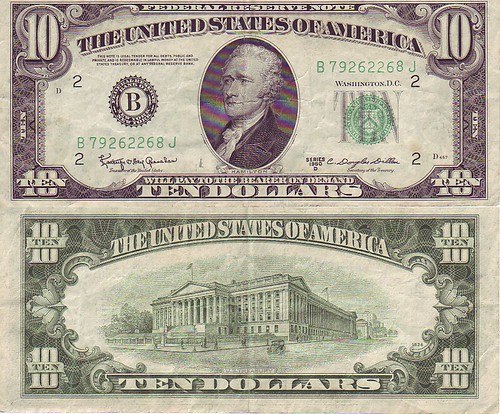
I was hoping to troll for a numismatic. Does anybody have a good link for the treasury seals and their colours? I heard the red seals are greenbacks, is that true? I’m sure y’all have seen the Wilson:
Here I was thinking my foul script was beggining to get better. Thanks for lettin’ me know that I am stinky at communicating, I would like to get better.
Maybe I should have just said the dollar is so weak it will soon reach penny status. Thanks Harksaw, that is what I was thinking, and it is funny how americans got bamboozled with bad money.
And the blue seals are silver certificates, they say it’s backed by the treasury.
Also, I hope this article helps those interested. It’s from the Numismatic News.
My bank note has a blue (brown, yellow, red) seal?
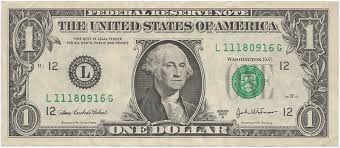
Since Series of 1966, the federal government of the has only printed and issued for circulation notes with the Treasury seal in green - They are Federal Reserve Notes.
Since 1928, bank notes of the United States have been printed in this small size format. Prior to series of 1966, there were several different types of these small size notes, depending on the issuing authority or the type of backing of the currency, these have different colors to the Treasury Seal. No mater what color seal, all of these notes are still legal tender for their face value.
National Currency, called by collectors National Bank notes, have brown seals. These were issued in the small size format with a series date of 1929, and come in two types depending on the format of the serial number and bank charter number. Although printed by the federal government, were issued into circulation by local banks that held a federal charter, naming them as National Banks. The note issue was backed by government bonds which the named bank bought. Although dated 1929, they were released by banks until the early 1930s. Many towns still have a National Bank, and if they are old enough, may have issued a bank note with their name on it.
Yellow seal notes are called Gold Certificates. The only ones available to collectors in the small size format are series 1928 (a series 1934 was prepared, but not released). Until 1933, when the was taken off the gold standard, there was a dollar worth of gold held by the government for every dollar gold certificate in circulation.
Blue seal notes were made until series 1963 and these notes are called Silver Certificates. At one time there was a dollar worth of silver held by the federal government for each silver certificate in circulation.
Red seal notes are labeled United States Notes at the top, and are often called Legal Tender notes by collectors. These were printed with series dates ending with 1966. The note issue was backed by bonds.
During World War II, the US military personel serving in North Africa were paid with Silver Certificates which had yellow seal. Those notes above $5. which circulated in Hawaii were Federal Reserve notes with brown seals. They also used $1 Silver Certificates with a brown seal. This was done in case large amounts of currency were confiscated by enemy forces. The Federal Goverment would have invalidated the issue thus causing no financial gain by the enemy. From 1946 thru 1973 American troops serving overseas were paid in Military Payment Certificates, which have been discussed in a previous posting.
I’m not going to say sorry for the nasty grammar, I will try in the future to be more clear. Thanks for your help.
Then again, there is that old axiom “Don’t throw pearls to swine” Clearly Jon is not swine.
In the UK we have, in tiny writing, the same statement on our notes, “! promise to pay the bearer on temand the sum of”. Hardly anyone gives it a second glance or know what it means. It originally meant that “I promise to pay the bearer on demand one pound of Sterling Silver.”
Silver is about $18 or £9 an ounce! So the Pound Note is about 150th the value of what it was when those words meant what they said. In fact the Pound is worth so little that the Pound Note has been withdrawn and is replaced by a Pound Coin.
The Pound Coin looks as though it is made of gold, which is ironic in that the pound referred to a pound of Silver. The Pound Coin is actually made of Copper, Nickel and Zinc.
Gresham’s Law is a problem in a bimetalic system only if the government dictates what the relationship should be between the two metals. Then, the overvalued one remains in circulation and the undervalued one disappears.