The physical needs? Aren’t those actually measurable? No need for an opinion or decree right?
What about “security”, how would you measure this?
The physical needs? Aren’t those actually measurable? No need for an opinion or decree right?
What about “security”, how would you measure this?
I don’t know about simple, all I know is that it is technologically possible.
XD, self-cleaning toilets always come up.
How about some of those being standard issue for new homes?
points to
No. Consumer sovereignty determines production.
Everyone has different needs. Some people want to eat more, some people less.
Because you think they shouldn’t eat as much as they do is a personal problem.
XD, self-cleaning toilets always come up.
How about some of those being standard issue for new homes?
Those bathrooms cost up to 500000$, and anyone having ever used one would never want one in their house. Even a single self washing toilet cost around 50000$.
And no, eliminating money would not magically make those products more affordable.
I thought abundance meant “so much as to not have to produce or worry about it”.
And it’s not a strawman, because TVP FAQ says “Technically The Venus Project is feasible today.” It is either a great exaggeration to draw people in to the cause, or an outright lie. I go with lie, no doubt.
GL attaining abundance of everything with vacuum robots and jacke fresco as your central planner.
I watched the trailer and decided to debate the VP/ZG community on youtube. After I completely demolished their positions, and exposed their arguments as entirely fallacious, they removed my comments and banned me. I should have expected this; they must, out of necessity, shut down debate and silence all opposition. Their arguments are simply too fragile. This is just a warning to those who wish to engage in debate with this crowd. It’s a waste of time; they’re completely lost.
The Venus Project: Moving Forward Into The Fallacies Of The Past
Esuric ur too good to be debating on youtube LOL
maybe the ban was a favor.
Stupidity is timeless.
I would love to see how they come up with automated landscaping.
I’d like to see how they come up with automated system software debugging 
Self-debugging software? That is called AI.
I’d like to know how they would come up with automated Graphic Design, or any other creative job.
Esuric, are your videos still up? I would love to see them.
I’d love to see calculation problem solved..  once and for all.
I’m confused:
How do you expect to be able to ‘transform’ these resources into power plants, electric cars, etc, without the use of capital goods?:
“Sure we dont have enough cranes, trucks, bulldozers, or the capicity to construct them, but we have pleanty of steel, concrete, etc”
Or are you suggesting that theres enough resources to build these capital goods and these consumer goods?
Sorry for my ignorance, could you give me a definition of capital goods?
this http://en.wikipedia.org/wiki/Capital_good ?
If so, the suggestion is that we either already have the capital goods, or have the resources to build them and the consumer goods.
The simplest definition is ‘goods used in the production of other goods and/or services.’ Ie. factory machinery, mining equipment, oil rigs, computers used to track inventory, trucks used to transport goods from one place to another, etc. Even somthing as simple as a hammer is a capital good used in the production of a bookcase.
Although its worth pointing out that most capital goods require other capital goods to be produced themselves. Ex. a hammer requires metal which must be mined out of the ground using mining equipment, which were produced in a factory somewhere, and probably taken by train to the mine.
some of you might wanna refer this
sam harris, science can answer moral question
http://www.youtube.com/watch?v=Hj9oB4zpHww
Excerpt from ZMF and Jacque Fresco’s word :
[size=40]Selfish adults ‘damage childhood’[/size]
By Mark Easton
BBC News Home Editor
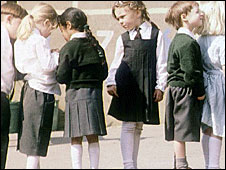
The aggressive pursuit of personal success by adults is now the greatest threat to British children, a major independent report on childhood says.
The report says children’s lives are “more difficult than in the past”
It calls for a sea-change in social attitudes and policies to counter the damage done to children by society.
Family break-up, unprincipled advertising, too much competition in education and income inequality are mentioned as big contributing factors.
A panel of independent experts carried out the study over three years.
The report, called The Good Childhood Inquiry and commissioned by the Children’s Society, concludes that children’s lives in Britain have become “more difficult than in the past”, adding that “more young people are anxious and troubled”.
According to the panel, “excessive individualism” is to blame for many of the problems children face and needs to be replaced by a value system where people seek satisfaction more from helping others rather than pursuing private advantage.
What makes a good childhood?
A spokesman for the Department for Children Schools and Families said: “We know there are still risks and challenges ahead for children and parents and that there is more for us all to do”.
‘Tone deaf’
The inquiry has a long list of recommendations including:
• abolishing Sats tests and league tables in English schools
• a ban on all advertising aimed at the under 12s and no TV commercials for alcohol or unhealthy food before the 9pm watershed
• stopping building on any open space where children play
• a high-quality youth centre for every 5,000 young people
“Individual freedom and self-determination bring many blessings,” writes the report’s principal author, Labour peer Lord Richard Layard.
“But in Britain… the balance has tilted too far,” he says.
Another contributor, the Archbishop of Canterbury Rowan Williams, suggests society has become “tone-deaf to the real requirements of children… in a climate where the mixture of sentimentalism and panic makes discussion of children’s issues so difficult”.
The panel, made up of 11 experts including eight university professors, says its conclusions are evidence based.
But some of its findings on family life in Britain are bound to be controversial.
Working mothers
It cites research suggesting that three times as many three year olds living with lone parents or a step-parent have behavioural problems compared with those living with married parents.
“Children with separate, single or step parents are 50% more likely to fail at school, have low esteem, be unpopular with other children and have behavioural difficulties, anxiety or depression,” it argues.
“Child-rearing is one of the most challenging tasks in life and ideally it requires two people,” the report concludes.
It also suggests that having many more working mothers has contributed to the damage done to children.
“Most women now work and their new economic independence contributes to levels of family break-up which are higher in the UK than in any other Western European country.”
The panel has a series of recommendations aimed at improving the quality of family life experienced by children:
• a civil birth ceremony conducted by a registrar in which parents publicly accept the responsibilities of parenthood
• free parenting classes available around the time of birth
• free psychological and family support if relationships struggle
• rules making it easier for parents to stay at home to rear their children
Chief Executive of the Children’s Society, Bob Reitemeyer, commissioned the research which included more than 30,000 submissions from organisations and children.
“Essentially the report brings a taboo into the open which is that we have to confront our selfish and individualistic culture,” he said.
“We need to realise that we are collectively responsible for the welfare of all children and that together we can make childhood better.”
The Secretary of State for Children, Schools and Families, Ed Balls, is studying the report.
The report says parents should have free parenting classes
Although government may be sympathetic to some of the inquiry’s conclusions, it is unlikely it will implement its radical proposals in the near future.
The government statement said: "The report mirrors the ambitious plan for improving children’s lives and outcomes we set out in our Children’s Plan, which aims to give every child the best chance in life, and we are pleased that the review acknowledges the positive impact that the Children’s Plan is already having on children’s lives.
"We know there are still risks and challenges ahead for children and parents and that there is more for us all to do.
“But as the report points out, in many ways our children have never lived so well - children are more educated, less sick, and more tolerant, and the government is working hard to invest, help and support children and their families to make Britain the best place in the world to grow up.”
Dave Meslin : The antidote to apathy
http://www.youtube.com/watch?v=V_N0_Q-dueA
[size=40]Nature vs. Nurture[/size]
Are We Really Born That Way?
By Kimberly Powell, About.com Guide
Jul 19 2010
You got your green eyes from your mother, and your freckles from your father. But where did you get your thrill-seeking personality and talent for singing? Did you learn these from your parents or was it predetermined by your genes? While it’s clear that physical characteristics are hereditary, the genetic waters get a bit more murky when it comes to an individual’s behavior, intelligence, and personality. Ultimately, the old argument of nature vs. nurture has never really been won. We do not yet know how much of what we are is determined by our DNA and how much by our life experience. But we do know that both play a part.
What is Nature vs Nurture?
It has been reported that the use of the terms “nature” and “nurture” as a convenient catch-phrase for the roles of heredity and environment in human development can be traced back to 13th century France. Some scientists think that people behave as they do according to genetic predispositions or even “animal instincts.” This is known as the “nature” theory of human behavior. Other scientists believe that people think and behave in certain ways because they are taught to do so. This is known as the “nurture” theory of human behavior.
Fast-growing understanding of the human genome has recently made it clear that both sides are partly right. Nature endows us with inborn abilities and traits; nurture takes these genetic tendencies and molds them as we learn and mature. End of story, right? Nope. The “nature vs nurture” debate still rages on, as scientist fight over how much of who we are is shaped by genes and how much by the environment.
The Nature Theory - Heredity
Scientists have known for years that traits such as eye color and hair color are determined by specific genes encoded in each human cell. The Nature Theory takes things a step further to say that more abstract traits such as intelligence, personality, aggression, and sexual orientation are also encoded in an individual’s DNA.
The search for “behavioral” genes is the source of constant debate. Many fear that genetic arguments might be used to excuse criminal acts or justify divorce.
The most debated issue pertaining to the nature theory is the exsistence of a “gay gene,” pointing to a genetic component to sexual orientation.
An April, 1998 article in LIFE Magazine, “Were You Born That Way” by George Howe Colt, claimed that “new studies show it’s mostly in your genes.”
If genetics didn’t play a part, then fraternal twins, reared under the same conditions, would be alike, regardless of differences in their genes. But, while studies show they do more closely resemble each other than do non-twin brothers and sisters, they also show these same striking similarities when reared apart - as in similar studies done with identical twins.
The Nurture Theory - Environment
While not discounting that genetic tendencies may exist, supporters of the nurture theory believe they ultimately don’t matter - that our behavioral aspects originate only from the environmental factors of our upbringing. Studies on infant and child temperament have revealed the most crucial evidence for nurture theories.
American psychologist John Watson, best known for his controversial experiments with a young orphan named Albert, demonstrated that the acquisition of a phobia could be explained by classical conditioning. A strong proponent of environmental learning, he said:
Give me a dozen healthy infants, well-formed, and my own specified world to bring them up in and I’ll guarantee to take any one at random and train him to become any type of specialist I might select…regardless of his talents, penchants, tendencies, abilities, vocations and race of his ancestors.
Harvard psychologist B. F. Skinner’s early experiments produced pigeons that could dance, do figure eights, and play tennis. Today known as the father of behavioral science, he eventually went on to prove that human behavior could be conditioned in much the same way as animals.
A study in New Scientist suggests that sense of humor is a learned trait, influenced by family and cultural environment, and not genetically determined.
If environment didn’t play a part in determining an individual’s traits and behaviors, then identical twins should, theoretically, be exactly the same in all respects, even if reared apart. But a number of studies show that they are never exactly alike, even though they are remarkably similar in most respects.
So, was the way we behave engrained in us before we were born? Or has it developed over time in response to our experiences? Researchers on all sides of the nature vs nurture debate agree that the link between a gene and a behavior is not the same as cause and effect. While a gene may increase the likelihood that you’ll behave in a particular way, it does not make people do things. [color=#FF0000]Which means that we still get to choose who we’ll be when we grow up.[/color]
reference : http://genealogy.about.com/cs/geneticgenealogy/a/nature_nurture.htm
Part 2: other relevant information
[size=40]You Never Really Own Anything[/size]
Ownership. Property. This is mine. This is yours. Do you think you own anything? You don’t. Ownership is an illusion. So is property. Why? Because all the things you use are only used by you temporarily before they are passed on or thrown away. Be it food, clothing, cars, property, furniture, cell phones, air, water. You never say to anyone ‘Don’t breath here! This air is mine!’. Of course not. Air is still free. Water is also in a large degree free, but is becoming more and more privatized. Food, clothing, cars and land has become utterly privatized. Still. You don’t, and never will own anything of it.
You use it.
You don’t own it.
At best, all you can say about something you think you own is that ‘this is in my possession now and as long as I am using it’. That is the most ‘ownership’ there is. Everything that you ‘own’ is only ‘yours’ temporarily. It is only borrowed or rented. Your food goes into you and comes out again. So does the water. Even your body is on loan. When you die it goes back into the circulation. Ownership is an illusion. Still, it’s an illusion bought by humanity. But it is no more than an agreement that say’s that ‘ok, we will have a system here that gives some the right to claim vast resources of the planet for themselves, while others suffer’.
There’s no ownership in nature. There’s only coexistence, with every part fulfilling their task, and every part being fulfilled in doing so. In a moneyless society and resource based economy this is how we will look at ownership, since this is the only ‘ownership’ there is and ever will be. Having a paper that say’s you own something doesn’t make it more ‘yours’ in the big scheme of things. Whatever you ‘own’ can be lost in the blink of an eye.
Today ownership is almost equal to accessibility. The more you own, the more access you have to things in life. The more land you own, the more cars you own, the more houses you own, etc. The problem is that you are only one person and cannot possibly make 100% use of all the things you own. Even if you only own one car and a guitar. You will never be able to use whatever you own all the time.
If, however, you didn’t own anything, but had access to virtually everything this planet and humanity can offer, you would ‘own’ more than the richest people on this planet will ever own. I’ll say this again, because this is the most important thing there is to grasp when it comes to concept of non-ownership:
If you didn’t own anything, but had access to virtually everything this planet, and humanity, can offer, you would own more than the richest people on this planet will ever own. The whole planet would be yours to use. Of course, this means that all borders and visas would have to go too.
In a resource based economy everyone will have access to virtually everything on this planet. Today we think that if this was the case, everyone would rush to the same places and go for the same things, because that is what is seemingly happening today. ‘Everyone’ seem to run after the same things. And sometimes, yes, some things are more popular than others. But we must remember that a lot of this is due to advertising and promotion seeking a certain behavior among the population fulfilling the profit motive of the capitalistic system.
One example of a moneyless system in today’s society is the library. Sometimes you have to wait for books to come back, yes, but more than often the books you want to borrow are there for you. If the whole world was like the library, you might have to wait a while going to a certain beach or holiday resort if it was full for the time being. But, there would be lot’s and lot’s of other places to visit in the mean time, just like there would be lot’s of other interesting books to read while you were waiting for the one you wanted. Maybe you’d find other, even more interesting books to read, and places to visit, in the mean time.
The idea of ownership builds on the notion of scarcity. The thought that there is not enough of places and books for every one of us. Therefore, it is best to hoard as much as we can while we can. If we don’t, we risk being without, not having access and having to live a poor life.
Not owning anything could be the best experience humanity has ever had. It would result in the most abundant lifestyle anyone on this planet could ever dream of. Not owning anything is a notion built on the opposite of scarcity. It is a thought that when we share, everyone will have many times more than what we would ever have if we were to own everything we wanted. This includes the richest of the richest people on this planet. No one, I repeat, n o o n e, can own the whole planet. Even though someone certainly tries to do just that, it will never happen. In any case no one would ever be able to use the whole planet for themselves only. You can’t swim on all the seas, climb all the mountains or eat all the food.
Some people try to own as much as possible, thinking this will bring the best lifestyle for them, not realizing that sharing will bring more to everyone, even them. Of course, we can not all have our own private jet or private beach. But we would have access to more jet’s and beaches than we could ever use in a world with no ownership.
So, since we don’t own anything anyway, since ownership is nothing more than an illusion bringing lack to the world, why not simply abandon it. Of course, this is not something that is done over night. Many people are ready for it, even rich people. But just as many people are afraid of it and far from ready. For it to happen this thought has to manifest itself throughout the population and take root. Humanity have to break free from the thought of money, property and ownership and open it’s eyes to the new virtually unlimited possibilities a moneyless society and a resource based economy can offer.
http://www.theresourcebasedeconomy.com/2010/12/you-never-really-own-anything/
“We of this mighty western Republic have to grapple with the dangers that spring from popular self-government tried on a scale incomparably vaster than ever before in the history of mankind, and from an abounding material prosperity greater also than anything which the world has hitherto seen.
As regards to the first set of dangers, it behooves us to remember that men can never escape being governed. Either they must govern themselves or they must submit to being governed by others. If from lawlessness or fickleness, from folly or self-indulgence, they refuse to govern themselves then most assuredly in the end they will have to be governed from the outside. They can prevent the need of government from without only by showing they possess the power of government from within. A sovereign cannot make excuses for his failures; a sovereign must accept the responsibility for the exercise of power that inheres in him; and where, as is true in our Republic,
the people are sovereign, then the people must show a sober understanding and a sane and steadfast purpose if they are to preserve that orderly liberty upon which as a foundation every republic must rest.”
-President Theodore Roosevelt; Opening of the Jamestown Exposition; Norfolk, VA, April 26, 1907
It is my intent and will that all who read this understand what it means. Because if you are able to understand it, then you can finally move forward in understanding why things today are exactly why they are. This is very important. We must recognize our defect and rejection of that which the government has provided to us. To understand that the governments of this world, though seemingly, corrupt and out of control, is merely a reflection of the people in which it has to govern. That we are the problem. I’m the problem and you are the problem. We have refused to govern ourselves. Due to that refusal we are left with the best that the government can literally provide.
We as a dependent of the government are a disruption and a burden because we refuse to govern ourselves. They have stepped in to try to control us, to keep us from hurting ourselves and one another so that some semblance of society might still exist. It’s not pretty and not what people think they want but it is what it is because that appears to be exactly what we want.
Like I said before, the government is merely (merely; meaning ONLY) a reflection of the people in which it governs. The more out of control the people who have submitted themselves to it, the more out of control the government appears to be out of control to control it. It’s actually pretty simple. Cause and effect. We are the cause by the choices we make and the government, in all of it’s choices, are the effect. We the people make this so. We are the problem.
On the other hand, if we were to stop looking to the government for our every need, for currency, for trade, for everything commercial, to deliberate fairness and equality, there would be none who find themselves holding the short end of the stick. For there would be no stick that any would want to hold.
Every government of this world will be united. Know that. Their cause will be to subdue all of those who are the problem. Know that. They will rule with a “rod of iron”. They will either force us to all grow up by making us understand that we indeed are the problem or they will have to simply put an end to those that will not except the responsibility for their own actions, intents and understandings.
For those of you who think that government has enslaved you, by whatever means, know that you did agree to be governed, by and through your personal acts and actions. Do not be fooled. It is you that is the problem and your unwillingness to accept that responsibility is the problem at hand.
They’ll get you by your claim of ownership. Understand that they have taken steps to relieve you of ownership. Most governments accomplished this in the 1930’s. By doing so, they have made it possible for you to live your life here, now, in abundance. Yet because your intent is to own that what you cannot possibly own, you have caused scarcity instead of abundance. They see you fighting for the right of ownership. Those who fight to own something that cannot be owned is merely keeping others from the benefit of that which they make claim to. That is not love. That is not community. That is not being your brothers keeper. That is not you looking out for the best interest of others. That is not being in service to others.
All in all, ownership of any kind today is selfish, thoughtless and the source and cause of every single problem you can point your finger at. Bar none. Ownership is the problem. A man’s claim of ownership is a man claiming to be owned. We were sent here to be in the world, not to be of the world. To make a claim of ownership, you are being claimed by that which you claim and are therefore of the world and no longer merely in it.
“The powers that be” know this to be the truth of the matter. They understand that simple fact of ownership. You say they want claim and ownership of everything and I say that is a lie. They make no claim of ownership, the only ones making a claim of ownership are those pointing their finger at
these “powers that be” and saying, “they are trying to own everything.” When in fact they are merely controlling it.
Who said, “Own nothing and control everything”? That was a very wise man. That was someone who understands what destruction ownership causes. That is a man trying to show others the right way. Those who misunderstand the logic of non ownership are lost in illusions of grandeur and that is the product of the illusion of ownership.
You truly own nothing. Your claim of ownership is causing the hungry to starve, the thief to steal and the murderer to kill. You who claim ownership of anything and everything, even your own family and loved ones, you are killing them and their future, in a world of abundance that already exists.
If you claim ownership, you are the problem. If you refuse to understand that you are the cause of the problems that you see in the world today, your experience will not only be unpleasant for you but for your prodigy also. Everything you try to hold in the form of ownership, you WILL lose, including but not limited to your life.
Do read this more than once. Understand what it says. Ask for help in understanding if you don’t understand. Do not let this opportunity slip away into eternity.
Those of you who wish to continue by arguing for the “right of claim and ownership” don’t bother to respond. I’m not here to change your mind for you, I’m here to assist you to change your own mind, if change is what you seek. I have no time nor energy to reason with you and your intent of continued claim of ownership. Let your will be done in that instance. Mine is “fair warning”. The “powers that be” also, have given you fair warning. Do you really think I came up with all of this on my own?
A final word taken from the last line of the Declaration of Independence, do understand it… …“with a firm reliance on the protection of divine Providence, we mutually pledge to each other our Lives, our Fortunes and our sacred Honor.” Notice: No claim of ownership, it’s ALL been pledged.
Know thy self, for your only enemy is the one within.
jimmy