So to my surprise Ron Paul actually managed to get through his “Audit the Fed” bill after advocating it, or something like it, his entire career. Whether or not this will actually become law is still up in the air, but how do you guys feel about it? Does anyone actually care since the Austrian objection is to the entirety of central banking and credit expansion, something which will undoubtedly continue or maybe even increase as a result of the bill?
I feel as though the entire thing is a waste of time. I’m glad that the Fed’s getting a little bit more attention, as is Ron Paul, but the fact is that this simply removes one more objection against the Fed (the lack of oversight from DEMOCRACY!!!111) while doing little to actually limit the implicit damage that the federal reserve can do. It could theoretically prevent a certain amount of handshaking between the fed and big banks, but I see just as much if not more potential for the fed to come under the influence of political pressure by politicians who don’t even have the qualification of having some economic knowledge. Giving the fed over to the politicians could well be worse than keeping it independent, and there’s not too much of a gap between auditing the fed and doing just that.
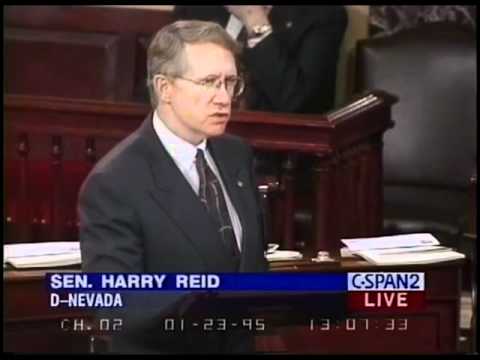
But as for the bill itself, as Paul stated in the interview after it passed the House, Creepy Reid has vowed to not allow it up for a vote in the Senate (probably because it would pass). So yes, it probably won’t become law anytime soon, but I disagree about it being a “waste of time.”
As you admitted, the Fed is getting more attention (I would argue a lot more attention) than at any other time in history, and it’s basically all due to the efforts of this one man. And I consider this just one of his achievements. It’s why people like Walter Block have said, Paul’s done more for libertarianism than all of his critics, put together.
This is all incredible progress, and it’s incredibly easy to try and discount it by pointing out the fact that it’s not anywhere near a solid victory. But just as it’s important to remember this is a long process, it’s also important to remember how far we’ve come and recognize the achievements for what they are. You really get a sense of appreciation for this when you talk to the old guys like Rockwell and Block…how they never even imagined success like this. And to think, the majority of people on their side are young whippersnappers so idealistic that they don’t even consider things like this a victory at all…they don’t even realize that the very fact that there are so many of them, and that they care so much — is a large victory in itself…as it’s an illustration of great progress. Which is also what I think this 327-98 vote is. An illustration of great progress.
I mostly agree with what you’re saying, about it possibly leading to more justification because of democratic oversight. I suppose it could lead to more data that could be used to make the link between the FED’s actions and the business cycle more apparent. But the caveat here is, I believe, that it would seem highly unlikely to reveal much. Meaning, the FED will “clean up” it’s books and records to cover-up their actions and remove any appearance of causation as it pertains to their actions and the boom and the bust. If this is the result, you’re right that it will seem to legitimize the central banking in the eyes of the masses, unfortunately. This could lead to less people being interested in the FED in the future, and the Krugman’s will have yet more (incorrect) “evidence” that central banking is good and Austrian economics is debunked.
And in this worst case scenario, all libertarians will be seen as ‘conspiracy theorists’ and no better than Truthers, since nothing obviously went wrong at all by the Fed’s hands, no siree!
The fact is though that it’s very hard to actually link the business cycle and credit expansion, especially in instances like the current recession which was caused less by credit expansion and a lot more because of moral hazard caused by government action.
At any rate, you can run a circus around empricial evidence involving bank and money statistics without ever getting to the heart of the matter. If they find anything wrong in the fed’s books or aggregious in its actions then they’ll just use the oppurtunity to, well, nationalize the Federal Reserve Bank of the United States!
I definitely have to agree with JJ, though, that is major progress. The amount of support for this bill had to be ENORMOUS to get that 327-98. Ron Paul definitely has done much to push people towards at least questioning central planning, let alone how many he’s inspired to learn about free market economics (just the think of all the books he has sold where he references and recommends authors like Rothbard, Mises, Tom Woods Jr., Hayek, etc.)
its a victory, even if there is still a lot more work to be done.
…As well as reveal a lot more about the true nature of the Fed, and make more obvious what it’s really doing. Even with the millions of moronic sheeple out there, something like trillions of dollars going to foreign governments and banks doesn’t resonate well…and a lot of people start demanding more answers. The little that we have found out so far (thanks to FOIA requests/lawsuits by mainstream orgs like Bloomberg News) I think is a large part of the reason this bill is as popular as it is.
Paul knows what he’s doing. It’s the same thing with his focus on returning to the Constitution. Simply calling for an audit, and that the government should abide by the Constitution…these are not radical or even controversial positions. But look at how many people they’ve enlightened…and rattled. Paul has still been called a “radical” at every turn…and all he’s done is advocate these kinds of simple, very reasonable things. He’s called a “radical” because it’s quite obvious the “radical” change that would occur if these simply, very non-radical prescriptions were followed…and it makes a lot of powers that be uneasy.
I suppose that possibility always exists, but I don’t find it very likely. If that were going to happen, why do we already have information from them on the trillions they lent out to foreign banks during the crisis? Why do we already have info about their bailing out Qaddafi? Why didn’t they “clean that up”?
I think it’s a bit more difficult to hide that kind of activity than you think.
But it isn’t necessarily a victory, and it could go against the ultimate goals of everyone who opposes central banking. I’m not scoffing at the extent of how far the movement has come, merely that this might not be any sort of lasting success.
Ron Paul’s major contributions have come from his presidential campaigns, I’m not at all convinced that this will do anything in the long run. Let’s say that the fed is charged with criminal activity, well then what? It will be nothing more than an excuse to put both banks and the federal reserve under a greater amount of government control.
I’ve noticed this about many of Paul’s political positions.
If we get an audit of the FED, the Congress will simply take more control. If our only choices are a private central bank and a Congressional central bank. let’s go with the private one (I like Schiff’s pragmatism when he says to just move back to the 1913 FED charter).
If we get the Congress to declare war, wars will be far more destructive.
As opposed to the banks running the government…
Without massive infiltration of the policy making channels by people who think like Paul, nothing will change.
Almost my thoughts exactly Neo. It’s worse than a waste of time. People on the webz are getting all hyped up over this, but all it does is allow steam to be released from the pot, when what we want is for the lid to get blown off. I think it probably will happen soon that the Fed will become nationalized because its quasi-private status is simply unpalatable to the current of the american democratic constituency. The same story as has ever been, in things pertaining to political economy: dissent slowly builds, established powers recognize rapidly growing awareness of their abuses, then throw the dog a bone and call it democracy, yet they still sit pretty.
What does anyone think this is going to do? They’ve given the FRB all the time they need to make the necessary preparations for this audit. The best case scenario in my humble opinion is that this bill gets martyred at the altar of a democrat heavy senate. If it passed, the FRB would pass with stripes and then progressives could pelt eggs at libertarians for their kooky quasi-religious fringe beliefs. To stay on top you have to roll with the punches and to assume that the world’s powerful banking class doesn’t know how to play ball is an unacceptable assumption.
The belief that change can occur from the inside is only conducive to the corruption of the change which one seeks. The best that those on the inside can do , such as Ron Paul who has done excellently, is initiate a new generation of motivated curious people.
then I don’t see your point. I basically said Paul himself implied the bill would be DOA in the Senate. I don’t see how you’re not beating a straw man here.
I suppose you’re quite right about that. I was pretty shocked that when the partial audit revealed the some $16T in foreign bailouts. Shocked, in that, I couldn’t believe they didn’t (or couldn’t) do more to cover that up. It was a little funny (and perhaps, a little disheartening) how several of the people I work with, when that report came out, didn’t seem to care too much. I went and told a few coworkers, self-described conservatives and liberals, and they had little reaction. It was as if they were either ignorant of the implications or desensitized to corruption of that kind. However, I’m sure some people were aroused enough to take to learning further about just what those implications were as we’ll as what exactly is central banking. Again, thanks to the efforts of Ron Paul, and the support he generates and the minds he inspires.
If my point isn’t perfectly obvious by now, I don’t know how else to say it. The bill itself may make things worse than they already are. I was also under the impression that we were talking about the bill itself, not the chances of it failing or not, unless you’re saying that the entire point of the bill, somewhat like Paul’s campaign, was never actually intended to succeed, but merely draw the public’s attention to certain issues.
I just dread that this could become a potential libertarian Kristallnacht as has been described in this thread, as the MSM and FRB twists the findings into an orgy of tortured doublespeak to ‘vindicate’ themselves.
The system we’re stuck in won’t allow for liberty. If this had happened a year ago when I thought Dr. Paul was going to be our next President, I would’ve been happily excited. However, it is now apparent that Dr. Paul will not be President and that we have two men competing to crash society.
I’m probably not ever going to live in a free society because I’m sure I’ll die during the necessary transittional chaos. I just turned 25 and I’ll be surprised if I’m alive and healthy by the time I turn 30.
Couldn’t a full audit undermine virtually every aspect of “market confidence”? Bernanke always says it will. Zero confidence means super high rates. People don’t care beacuse it will crush the American lifestyle.
A full audit could force the political class to back away from the deals that they are involved in and then make it seem as if they are going to fix things by nationalizing the central bank. But, nothing will change in operation of credit facilitation by the Congress. In fact, it may make it so that the money the FED uses to discount bank loands gets eaten up by Congress one way or another.