Under the strict liability maxim, how will murderers of loners get punished? It seems they won’t get punished, because nobody has precedent for prosecution. I don’t see a satisfactory answer to this in the article and it seems that the rest of the article hinges on the strict liability maxim.
In “libertarian law” what are the ways this is addressed?
Also interesting again in the same article, unanswered is the following scenario.
Imagine A shoots B and claims it is legitimate self defense (as defined in the article). Then B claims that he was acting in legitimate self defense. Seems like the Zimmerman/Martin problem. What does beyond a reasonable doubt mean here? We know A shot B. In the case where A is prosecuted, does A have to prove that it was self-defense or does B have to prove it wasn’t.
The solution I like to this is to convict the person that has the least amount of evidence on their side (forget the term for this). Rothbard argues that this principle should never be used, even for small disputes, according to the article reasonable doubt must be used in all cases.
If we adopt a “beyond reasonable doubt” approach it seems we have to assume that A is a murderer beyond reasonable doubt until A proves the self defense case. Either way, we must know what constitutes self defense.
I see no solution to this, unless the “reasonable man” maxim is included. What is a reasonable threat to allow self-defense? In the article Rothbard discards this maxim as historical folly, arguing that it is subjective, leads to problems and we don’t need it. Anyone with legal knowledge that can fill in what Rothbard didn’t mention in the article?
Isn’t the “reasonable man” maxim as subjective as the definition of the space around your head or the land that you are homesteading? It is very important to me to set some things straigh, I’d appreciate any feedback.
I’m not a Rothbardian on law though my views mostly coincide on any practical point - you can read my position in detail here.
First of all, there will always be crimes which go unpunished even if you designed a social order whose sole goal was to ensure that no crime goes unpunished (Oh wait, that’s America circa 2012).
Second, standing is a matter of precedence (in my view, even if this is contra Rothbard) - that is, no one has a right to sue if the victim or the victim’s family chooses not to sue. They have right of refusal. By not suing, they are essentially rendering null any other claims on the aggressor. The argument is simple: “Bob is suing me for damages, claiming that I hurt Alice. Yet Alice is not even a witness for Bob on this account, let alone has she sued me herself. If anyone were to sue me for hurting Alice, it would be Alice herself. Since Alice is not suing me, clearly I have not harmed Alice in any way that concerns law.” Case closed.
If no one is there to claim precedence (a victim or victim’s family), then there is nothing preventing a lawsuit by any interested party. For example, let’s say there is a charity called Homeless Angels that investigates murders of homeless people and brings their perpetrators to law. The defendant cannot dismiss the suit pro forma along the above line of argument because it simply does not apply - the victim is dead and, by virtue of the fact that he is homeless, there is probably no family who could sue on his behalf. In this case, why shouldn’t any interested party be able to investigate and file suit on the matter? The monetary award (if any) should go to the party that took an interest in the matter since - by taking action - they have homesteaded it.
The essential question is who initiated the aggression. This is the origin of the Hollywood mythos of the Western gunslinger throwing a gun at the feet of his intended victim and challenging him to “pick it up.” The idea is that the gunslinger is trying to paper over his intended murder by being able to call a witness to testify that the now dead man “went for his gun first”.
In most cases, this is a fairly simple problem to solve using witness testimony, etc. However, the nitty-gritty details of the corner cases can become complex and may not be solvable by law in sufficiently gray areas.
The term you’re looking for is preponderance of evidence. It’s a really horrible principle because it implies that evidence is like some kind of massive substance which can be weighed on two sides of a scale. Of course, this idea only makes sense in a statist monopoly court where “the Judge” sits on a judgment throne like God Himself and “weighs the souls” of the parties. In private law society, the arbitrator is just a contractor, someone hired to assist the disputants in settling their dispute. The impetus for settlement comes from the disputants themselves, not from “the Judge.” The sole criterion of reasonableness or evidentiary finality is the assent of the parties themselves to a settlement.
This still goes back to the Judge-on-the-Throne-Weighing-Souls theory of law.
Thanks for the response, I remember now the “interested party” argument, I am convinced on that question. But not on the other one.
This is a bit rhetorical here. That’s not the issue at all and these won’t be corner cases if you don’t set the precendent correct. The issue is when B(shot) prosecutes A(shooter), we have to use “beyond a reasonable doubt”. This assumes a “null” hypothesis. Since we know A shot B, that means we have to assume (I) A is guilty or we have to assume (II) A was acting in self-defense. However there is another trial happening where A is suing B for initiating force/assault. In case #2 we have to assume B is innocent, which is the same as assuming A is guilty. We know either A or B initiated force, do you think B and A can be innocent the same time? This is a contradiction, so we must assume A is guilty and B is innocent until A proves the self-defense claim. You understand that this occurs before any witness or evidence is brought in, unless you accept preponderance of evidence as a way to determine what is the null hypothesis.
Well this is how subjective probability works, so it isn’t a flawed way of reasoning about events. I understand that legal disputes should not be resolved this way, but when there are two counter-suits going on at the same time, there is no other way of resolving this, because of the null hypothesis problem I alluded to above.
The judge has to do this. That’s what everyone has to do on a daily basis, you have to judge people on preponderance of proof to make good decisions. There is not reason the market can’t select people that are good at this to be judges. Obviously only in cases where there is a problem with “reasonable doubt”.
Here’s something to think about, though, in any murder shooting case the murderer shooter can claim self-defense. Currently any government court has to use preponderance of evidence to figure out who should be the accused.
I’m interested in why you skipped the crux of my argument that a dispute between two parties is settled solely by the parties themselves perhaps with the aid of an arbitrator (what “judges” in government monopoly courts currently do today). The “standard of proof” is just whatever the parties themselves consider a satisfactory standard on which to settle the dispute.
I can’t imagine there being two lawsuits over the same event in a private law society because there is no advantage to having two separate arbitrations of the same dispute. I think you’re (unwittingly) trying to ask is “what would happen in a private law society if a private law society was like our current monopoly law society?” The fundamental difference is that disputants settle their disputes because they want to, not because the state or a judge is compelling them to.
No, he doesn’t. The disputants do. The arbitrator (there are no judges in a private law society!) is more of a neutral third-party who helps referee the discussion between the disputants and provides advice on what are convincing or unconvincing arguments based on his expertise in case law and best legal practices and what are reasonable or unreasonable terms of settlement based on the stipulated facts of the case.
Try re-framing the question without using the word “judge” and, instead, think of how the dispute will be settled if there are no judges but only arbitrators.
I skipped it because I believe it was mearly rhetoric, “settled solely by the parties themselves” and “disputes are settled voluntarily” sound a bit like catch-phrases. You are mistaken in your interpretation of these things. The parties agree at a previous date to an arbitration procedure in case there is a conflict. After the fact, when there is a conflict, one of the parties may want to deny the procedure, but that’s too bad. If A says self-defense and doesn’t want a trial, A is still brought into the procedure. If both A and B agreed to be arbitrated by a referee or the defense agency which they both subscribe to, then we are discussing what rules the agency must abide by when deciding who is in the wrong.
Just because you can’t imagine it is not reason to denounce it. I will expand my scenario in the next reply. I am not basing my example on any of our current situations, nothing that I said hinges on that. The only thing I assume is that there are two parties and that there is a referee(s) that will need to decide using some legal procedure. I am merely discussing what legal procedures should be allowed.
They don’t necessarily. If they agree to abide by a decision by a “neutral third party” at a previous date. Then the “neutral third party”, which is some kind of arbitrator has the right by contract to make a decision about who was at fault. I think this is how most people imagine a legal system, including Rothbard whose thesis I am currently assuming and discussing. If I am wrong correct me.
Note that even if one of them pays a defense agency, then that agency will have to be an arbitrator in a dispute. If there is a conflict of agencies, then according to Block we will have a third-party agency or a common go-to guy that will referee a dispute. In any case someone will be refereeing a dispute the minute B takes on A for shooting him.
This is mearly your definition of “judge”. All I’ve said up till now doesn’t hinge on whether judge means referee or whatever. I am implicitly assuming that there is a voluntary institution with an arbitrator(s) of some sort, which I call a judge. Just because “judge” has a different connotation doesn’t mean I am wrong in using the word. I am not trying to play word games here. If I reframe the question the only thing that may change is your intuition, but the logic of the argument will remain the same, there is no point in this then.
If no one is there to claim precedence (a victim or victim’s family), then there is nothing preventing a lawsuit by any interested party. For example, let’s say there is a charity called Homeless Angels that investigates murders of homeless people and brings their perpetrators to law. The defendant cannot dismiss the suit pro forma along the above line of argument because it simply does not apply - the victim is dead and, by virtue of the fact that he is homeless, there is probably no family who could sue on his behalf. In this case, why shouldn’t any interested party be able to investigate and file suit on the matter? The monetary award (if any) should go to the party that took an interest in the matter since - by taking action - they have homesteaded it.
I agree with this view: if the victim is dead and has no heirs, then anyone should be able to pursue the aggressor for restitution on their own behalf, just as Clayton described.
I didn’t see this posted in this thread yet, so I’ll do it now. Clayton has written two excellent posts titled What Law Is and A Praxeological Account of Law. I suggest you read them because you will understand where he is coming from better.
Just as language is what arises from humans trying to communicate with each other, law is what arises from humans trying to settle disputes nonviolently. If you and I have a dispute, there are only two ways it can be settled, through mutual settlement or by violence. Common law and customary law are what arise from a decentralized system of law. There need not be any binding arbitration for either of these to produce law. Statutory law is what arises when there is a monopoly on the legitimate use of force in any given area. When Clayton refers to arbitration, he is referring to the process of mediation, where two or more participants use a mediator to find a mutually agreeable solution to their dispute. Mediation even exists in the modern world despite there being statutory law. In other words, despite having a state, there are people who are willing to settle disputes without a binding solution already! So I would not dismiss his statements as people do actually settle disputes voluntarily - often without mediation.
Ditto to you. Just because you cannot imagine people settling disputes voluntarily is not a reason to denounce it. And, as I previously stated, people already settle disputes voluntarily in a wide range of disputes.
It is possible for people to agree to abide by a decision made by a neutral third party, but this does not mean they will do so. A dispute is resolved only when all parties have decided it is resolved. This is true even today, in Statist America. For example, a murderer is not punished to the extent that the family of the victim would be satisfied. A member of the family then kills the murderer. Only then is the dispute resolved. This kind of thing does happen, perhaps not commonly with murder, but vindictive ex-spouses keying their ex’s car, or something to that effect.
No. Clayton is not defining judge in a different way then you. A judge is someone whose decision is final. A mediator is someone who helps two people reach a mutally agreeable solution. Clayton is using arbitrator in the sense of mediator. So, he is asking you to to imagine how disputes would be settled if there were no judges but arbitrators (mediators).
This may, in fact, be the way in which a private-law society would organize itself, though I think the historical record is not in favor of this view. Even granting this view that the majority of disputes will be handled by some kind of pre-existing contractual law, those disputes where there is no contractual agreement act as the “exceptions that set the rules”. It is in the realm of disputes without any prior agreements where the toughest legal problems reside. The resolutions to these most difficult legal problems set the “baseline” or “failure mode” of the entire legal system.
That is, the sorts of contractual agreements that can come into being at all will be determined by what happens in disputes where there are no pre-existing legal arrangements. People will only bother to form contractual agreements if they expect that failure to do so will result in some kind of undesirable “common law” situation in the event of a dispute. If the customary law is sufficient (people expect to get a “fair” treatment from the customary law), then there is no benefit to the costly business of drafting up complex contracts that attempt to foresee every eventuality.
In my view, customary law is the root foundation of all other forms of law, including even statutes and governments - statutes matter precisely to the extent that they thwart or overturn customary law.
Seems I need to state my counter-example to Rothbard’s thesis that we have to do away with (i) “preponderance of evidence” and the (ii) “reasonable man” maxim. The counter-example is basically an abstraction of the Zimmerman/Martin problem, so that should prove its existence.
Suppose A shoots B
Assume there are free-market defense agencies. Suppose B goes to his defense agency.
Then B’s defense agency gets hold of A and starts an arbitration process. Hence there will be a group of people that have to apply legal principles to determine if A owes B anything in damages. Call this group of people “jury” (“jury” is not the current idea of jury, but any group of arbitrators applying principles to determine is A owes B). “How much damages” may be decided separately, I am not interested in that here.
Suppose A also has a defense agency. Note that it doesn’t matter whether A’s defense agency is the same one or another one, because there will still be a “jury” at some point.
Now the jury must decide whether to throw out the legal principles (i) and (ii).
Since B brought the trial. We have to assume A is innocent until it can be shown beyong reasonable doubt that A is guilty. Accoding to libertarian ideas “guilty” means that A violated B’s property, but the action was not in self-defense.
By assumption, by admittance by A, we already know that A shot B, so there was a physical invasion. So the “jury” only has to devise a procedure by which to determine is A’s action was "not in self-defense". Here by Rothbard they must use “beyond a reasonable doubt”.
The “jury” must also come by a definition of “self-defense”, which will necessarily be subjective. How will this be decided? I suspect that any decision about this definition will necessary be equivalent to a “reasonable man” assumption.
Suppose there are no witnesses and evidence is sparse. Then A must be found “not guilty”.
Suppose A bring a case against B. We have to reason that A cannot use the first ruling to contend that B is guilty. B will be found innocent.
If I made a mistake somewhere correct me.
Some comments:
Why is this a more favorable outcome than convicting one of them? If you answer “we don’t want to use force against an innocent person”, that disregards the property rights/damage done to the victim. Obviously if one has to be convicted then (i) must be used.
Nobody convicted opens up the possibility of increasing unpunished murders, since A can always claim self-defense.
Notice that in cases where A does not counter-sue B, A will get judged by “reasonable doubt”. So what’s wrong with using (i) in this case.
Here I disregard the problem with the subjectivity of “beyond a reasonable doubt”. All decisions made by humans, in particular decisions of arbitration, are made on the basis of subjective likelihoods with regard to some kind of loss/utility associated with each decision. “beyond a reasonable doubt” is just a version of this where we have really high loss associated with punishing innocent people, but it is still not infinite, because that would mean never convicting, so we might punish someone innocent sometimes.
I don’t see how (ii) can be avoided in any legal framework. Even if we use past precendents, their collection with define in a non-specific way what “reasonable actions/expectations” are. If you have a solution to this I’m really interested.
You are not being fair here. I never said disputes can’t be settled voluntarily. I merely have a counter-example where I assume that there is at least that case where they can’t be settled voluntarily. If one party rejects the decision of the mediator we will have violence of some sort.
Then he was pointing out the obvious and so am I. Because people are not angels (this is praxeological truth) sometimes you need a “judge” and a mediator is useless. Can we discuss that case?
@Hefty: Stated that way, my response is this is an “entrepreneurial problem” - we just need a market of defense agencies and free market mediators to find out what should happen. In my view, trying to decide from the armchair what the defense agencies and mediators should do is no different than trying to determine what the market structure of car manufacturing should be from the armchair. They should do what is profitable and the market process will reveal what are the correct arrangements.
The most cogent presentations on this subject (what I like to call the Friedmanite view of private law society) are Graham Wright’s videos:
I don’t need to assume a contractual agreement between A and B and I am not using that in any way. The only contractual agreements I assume are between a) A and A’s defense agency for protection, b) B and B’s defense agency for protection and c) A’s and B’s defense agencies and the arbitrator. If you like c) can be a voluntary arrangement between A’s and B’s defenses and a mediator. It doesn’t really matter.
I know that’s one setup that may or may not happen, but that’s the example. Legal principles we are trying to refute or justify should apply equally to this scenario.
Just want to disagree here, though. It is not a question of leaving it to the market. If that was an ok answer why not just leave everything legal, political and ethical to “the market”. You could just say that in the beginning, let the market discuss Rothbard’s article. We are the market here. We are the legal entrepreneurs/engineers that are deciding. We can discuss the way a gold standard or banking should work and what the consequences are.
To get you to address the question if you are still interested. I am asking the question of what if we were running these defense agencies and that case came up, what should we do and how should we answer the questions that come up.
Thanks for engaging in this, I’ve gotten a lot of awesome ideas on legal stuff so far
Perhaps, though from your dismissive attitude towards Clayton it seemed like you could not imagine a society with mediators as the primary means of settling disputes. But I believe you have not yet read the links I provided, because of the statement in bold. The mediator does not make a decision. The mediator helps the parties involved reach a mutually agreeable decision. And, as I stated earlier, the only two possibilities in a dispute are 1) mutually agreeable solution and 2) violence. I am fully aware that there would be violence of some sort, and I believe that in some cases it is necessary. The only reason a murderer would agree to mediation is to avoid death. The family of the victim may not always believe in capital punishment. They may prefer having the murderer give them a large amount of wealth instead. But, some families may not settle for anything less than the death of the murderer.
I don’t believe it was that obvious, because from your response it seemed you missed what he was saying. But, in the case of a mediator being useless, that is because the parties involved cannot reach a mutually agreeable solution. In that case, there is open conflict until they reach a solution or one dies. There is no need for a judge to force a decision, especially if there is no monopoly on the legitimate use of force. For, if there is not state, the judge cannot create a binding decision. If the mediator cannot help, then the dispute becomes open conflict. There are some cases where this is appropriate, in my opinion. Such cases can be murder, rape, child molestation, attempted murder, etc.
Also, I cannot remember what thread it was, but I believe Clayton talked a little about dueling as a form of resolution. It has been legal in the past, though it has not been legal for quite some time. While it may not seem civil, I believe that it may be an appropriate solution in some cases.
No, we’re not. You cannot just open your own adjudication/mediation company and start hearing criminal cases. The State has monopolized almost every nook and cranny of the market in the production of dispute-resolution services.
Without investment, revenue, market prices, etc. no, we’re not entrepreneurs and we’re not deciding anything, we’re just blowing hot air. We say “it ought to be this way” or “no, it ought to be that way” but all that backs up either assertion is hot air. The market is the only process for discovering what is the objectively correct solution to the demands of consumers in any market - law, security, banking and regional defense included.
In other words, Mises’s calculation argument applies to every market, not just some markets. Central planning of law discoordinates the demands of consumers from the supply of producers of dispute-resolution services - it results in the same state of affairs as any monopolized market: outrageous prices and abysmal service. The service is so abysmal that it’s actually the customer’s duty to serve the producer rather than the other way around.
Ok, I agree that a mediator does not make a decision, replace “If one party rejects the decision” with "If one party rejects what the mediator is doing" . There could even be no mediator, A and B get together, have a drink and forget the whole thing. You’re right, I can’t imagine a society that will always work this way.
Those are not the only two ways, there is a third where there is some violence, but it is based on enforcement of contracts which were voluntary. I gave an example of that here. This is just a semantic issue, but you can’t ignore this because you are trying to deduce something from your dichotomy.
They (A) might, but after the procedure I described if (A) continues the conflict, both A’s and B’s defense agencies will step in to stop (A). A’s only option will be to get a rogue agency that doesn’t respect other agencies’ decisions. Such rogue agencies will have to fight everyone else though. So really there is not a big chance of A trying to go on with this in a violent way.
I understood what both of you are saying, but according to my best intellectual facilities, you are not adressing the point, you are trying to refute what I am saying with reasoning that hinges on flawed assumption and you are ignoring my construction and trying to refute it on the basis that it doesn’t exist or that I didn’t use the appropriate words, i.e it doesn’t make sense. There are so many problems here.
“In that case, there is open conflict until they reach a solution or one dies.” In my example this is not the case.
“There is no need for a judge to force a decision, especially if there is no monopoly on the legitimate use of force” As I explained, You don’t have a monopoly on force, but you still have an arbitration process based on mutual agreement that sticks.
The only conclusion I can get from this discussion is that you don’t believe in the way defense agencies are proposed to work or my interpretation of it. Is that true? Regardless this is very off topic, I just have a simple example, can you assume that the example is constructed ok and answer the question about the legal principles?
I really don’t mean to be dismissive of anyone (or for that matter, disrespectful in any way). I just want someone to address the case I came up with because it is a real thing.
I think a formal duel was an outstanding means of settling a dispute, and could still be today. Its also interesting to note that the ascension and decline of dueling among the nobility/aristocracy was strongly correlated with the weakness of the monarch. When the kings were powerful, it was more customary for them to settle the disputes among their subordinates, but when the kings were weak, the individuals in question solved disputes more or less themselves. There also existed judicial combats, which took the form of a duel, although the king would officiate in some respects. The Jarnac-Chastajuleaux (however its spelled, search “coup de jarnac”) combat is an easily accessible example, where Chastahooligan was defeated by Jarnac, the combat being the result of an insult, and approved by the king.
what I find interesting from a libertarian perspective is the efficiency of the process. Robert and Allen have a dispute. Robert and Allen agree to settle their dispute with violence. They (and other interested parties, all consenting adults) go to a secluded area. They perform combat according to specific rules, which if followed, in the worst case scenario might result in 4 deaths (both principals and both seconds). As likely as not, they would reach a settlement with perhaps one injury, or one death, and the loss of a day. Lawyers and courts cost money, and you already lose a day’s wages, so basically the only advantage you have is that, you are less likely to have a physical confrontation on that day. But people do get assaulted in courthouses, from time to time, and you have to subject yourself to being disarmed and taken by surprise. And you have to pay a bunch of people to show up, and run things according to their preferences rather than your own. We cant say a lot about the different duelling codes that existed in 19th century southern united states, probably because the women of the families burned those books as soon as they could get away with it, but we do know there were several. And so Robert and Allen could choose from a variety of forms of combat, if they wished.
Again you are arguing that I shouldn’t be talking about law and you shouldn’t be addressing the problem because of some contrived reason. Mises’ calculation problem is about assigning values and costs to factors or production and producing things effectively, it is about economic calculation. It doesn’t apply to ethical principles, each individual can arrive at the correct ethical principles alone through reason. Legal rules and procedures obviously should be ethical.
If you think we shouldn’t be discussing ethical or legal principles, then you have, in particular, refuted all of the work on ethics done by Rothbard and others associated at mises. Ethical questions can be pondered and answered based on theoretical constructs. I have a theoretical construct that happens to be real and all I’m asking is for a quick discussion of it.
Contracts convey intent, not title. So if someone decides to “enforce a contract” with violence, well that is a violent dispute resolution process, regardless of whether the individual does it or they hire a proxy. And there would more than likely be proxy murderer services available, regardless of the social acceptability of those options. You can get the job done now for 3 stacks if you know who to ask (not me).
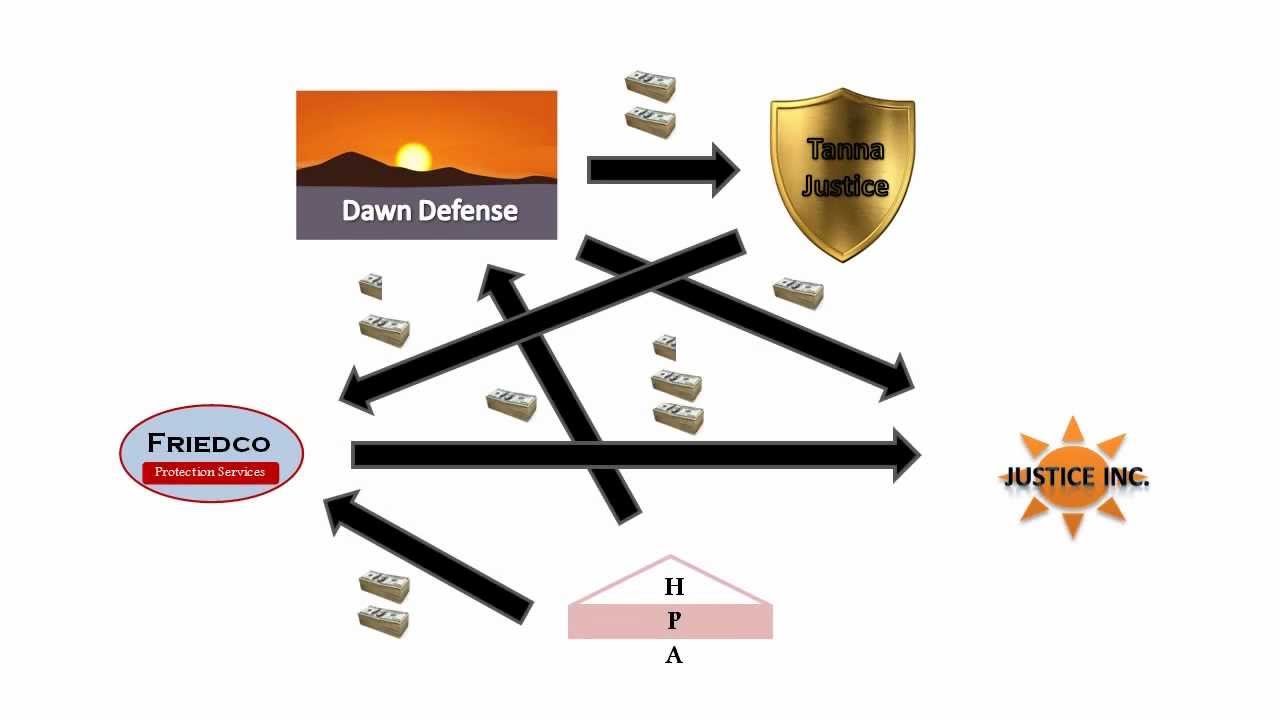
as for the agreements between defense agencies, I think those would mostly consist of debt instruments that were passed back and forth, so that defense agencies with a lot of felonious clients would go bankrupt, and the rest would mostly trade favors. Felonious clients would be cut loose or fed to the sharks.