Dave, the regression theorem is apodictically certain and applies to all money, including bitcoin. your refusal to understand this is willful noncognitivism.
Market cap has pased $300m, still in its infancy in those terms, so still a good buy if you are willing to risk that it has a long-term future! Gonna be one hell of a payoff if it ends up supplanting fiat currencies the world over.
How is market cap being determined, kind of like a stock? Is it just number of bitcoins times current price in dollars?
I’m still new to the crypto-currency concept. Very fascinating, but not worth my time to get really involved at this point. When Amazon accepts it as a form of payment, you’ll know the day of reckoning has come.
Dave, the regression theorem is apodictically certain and applies to all money,
Yes.
including bitcoin.
Yes, it applies to bitcoin, proving [with apodictic certainty] that bitcoin cannot be money, ever.
your refusal to understand this is willful noncognitivism.
Have you even read my articles on bitcoin?
Financial “guidance” regarding virtual currencies has been announced by the US FinCEN. This mostly affects Bitcoin exchanges.
http://www.bitcoinmoney.com/post/45771686409/news-roundup-fincens-guidance-re-virtual-currencies
youre upside-down and backwards. if you cared about the truth in this context it would be worthwhile to explain it to you again.
yes, you appear to have forgotten (or wish to have forgotten) my refutation of such, which was the last word on the subject in our exchanges. you admitted that you had no answer and scurried off to your hovel.
“How is market cap being determined, kind of like a stock? Is it just number of bitcoins times current price in dollars?”
Yes, and today it pased $650m, high of $62 settling back down to $58 and subsequently rising to $59+ right now.
Can you trade fractions of a bitcoin? I imagine you can. How small of a percentage?
http://lmgtfy.com/?q=Can+you+trade+fractions+of+a+bitcoin%3F&l=1 says 0.000001% BTC is currently smallest possible.
Would bitcoin raise in value if multitudes of people decided to purchase it in times of high inflation?
“Would bitcoin raise in value if multitudes of people decided to purchase it in times of high inflation?”
Yes. It would raise in value simply if there was inflation, since its supply is limited and your unit of account is inflating, changing the relative ratio and thus forcing a value gain of the supply-limited asset. But if it also drove people into the currency to escape inflation it would accelerate the value increase.
“Can you trade fractions of a bitcoin? I imagine you can. How small of a percentage?”
The smallest unit currently is 100 millionth of one bitcoin, also known as ‘one satoshi.’ This is actually the unit of account the program uses, as in it equates 1 bitcoin as 100m fractions of a bitcoin, and does all accounting in 100 millionth units, then displays the fraction of 1 bitcoin to make it human-readable.
If deflation ever took off such that 100 millionths was of significant value, the system could be then patched to offer infinite division; one such proposal uses Tonal bitcoin units. Thus, it’s expected bitcoin could be used for all future needs of humanity, regardless of GPD or deflation.
In addition to the previous answer, in the affirmative, I’d like to add that it’s unlikely that Bitcoin is likely to produce a bubble scenario any time soon. Local currencies are inherently weaker as a form of money than Bitcoin, and so they will likely always lose value over time compared to it. However, a bubble could be artificially created if government regulations made it too difficult for people to use it; then the ratio of Bitcoins to Fiat Currency that people would want to hold would be much much lower, causing a point at which a Bitcoin bubble would form and pop at some later date.
“If deflation ever took off such that 100 millionths was of significant value, the system could be then patched to offer infinite division; one such proposal uses Tonal bitcoin units. Thus, it’s expected bitcoin could be used for all future needs of humanity, regardless of GPD or deflation.”
Looks like they had amazing foresight in the development of this currency. I’m going to investigate the protocol a little more closely now since it has piqued my interest. However, getting average joe to understand that “deflation” in a sound money economy is not a bad thing is an entirely different story.
@Anemome - thank you for answering my question. I am quite new at this bitcoin stuff, and I am thinking about purchasing some. I was looking at Mtgox Exchange, do you think that’s reputable and trustworthy? It appears to be the biggest one out there, with the most exchangeable currencies.
Do they have bitcoin ATM cards that can be used around the world (like schwab?)? I am quite a newbie…
Here come the regulations..
Via the Wall Street Journal:
“The U.S. is applying money-laundering rules to “virtual currencies,” amid growing concern that new forms of cash bought on the Internet are being used to fund illicit activities.”
“…new bookkeeping requirements and mandatory reporting for transactions of more than $10,000.”
"The arm of the Treasury Department that fights money laundering said Monday that the standard federal banking rules aimed at suspicious dollar transfers also apply to firms that issue or exchange money that isn’t linked to any government and exists only online. "
http://online.wsj.com/article/SB10001424127887324373204578374611351125202.html?mod=djemalertNEWS
Np 
Because of US gov regulations, it’s becoming very difficult to open a bank account in a foreign country. Because of this, Mt. Gox, a japanese exchange, has ‘sold’ all its North American customers to a Silicon Valley startup called Coinlab, partnering with them, providing back-end support.
Coinlab is set to open up in April, and will quickly become the world’s largest bitcoin exchange. It will probably be the easiest place to buy bitcoin at that point.
If you want to buy bitcoin immediately, you can open an account at Bitfloor and wire money into that account via Bank of America. I personally have used Coinlab–they’re good, also a new Silicon Valley company (Y-Combinator no less), but they’ve been going through a database upgrade to handle high demand last several days. But news is that’s set to end soon. So, I’d recommaned getting started on Coinbase, and then transition to Coinlab when they get up and running next month. But if you had to buy tomorrow, easiest way is probably Bitfloor, but I have not used them.
There’s also bitinstant, but I’ve heard a lot of people having problems with them, orders taking days, various procedural headaches, so I’d stick to Bitfloor and Coinbase.
Not yet. The first bitcoin ATM was only recently unveiled. It takes dollars and sends bitcoin to your address–it’s not quite an ATM, more like a bitcoin vending machine, money only goes one way.
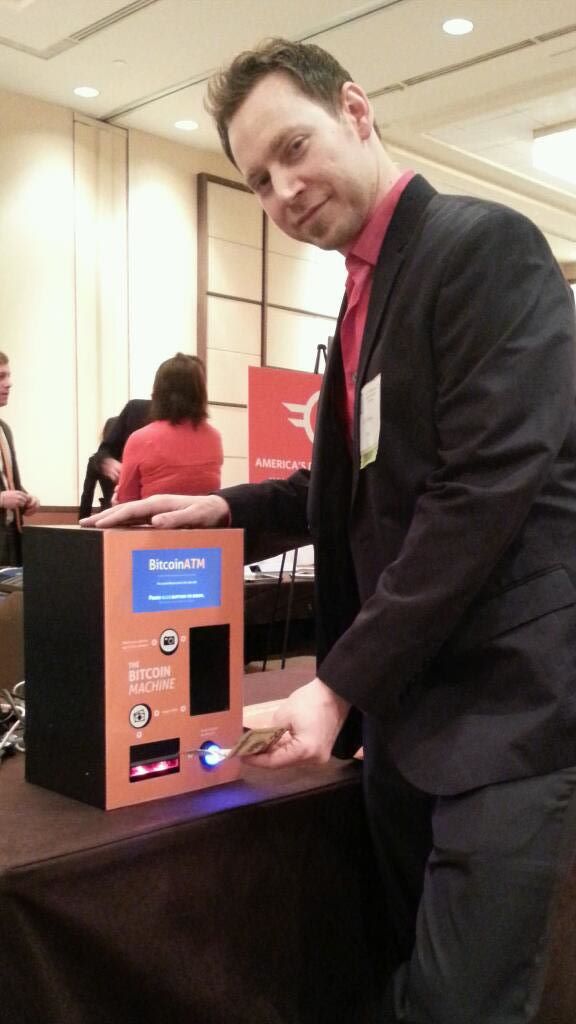
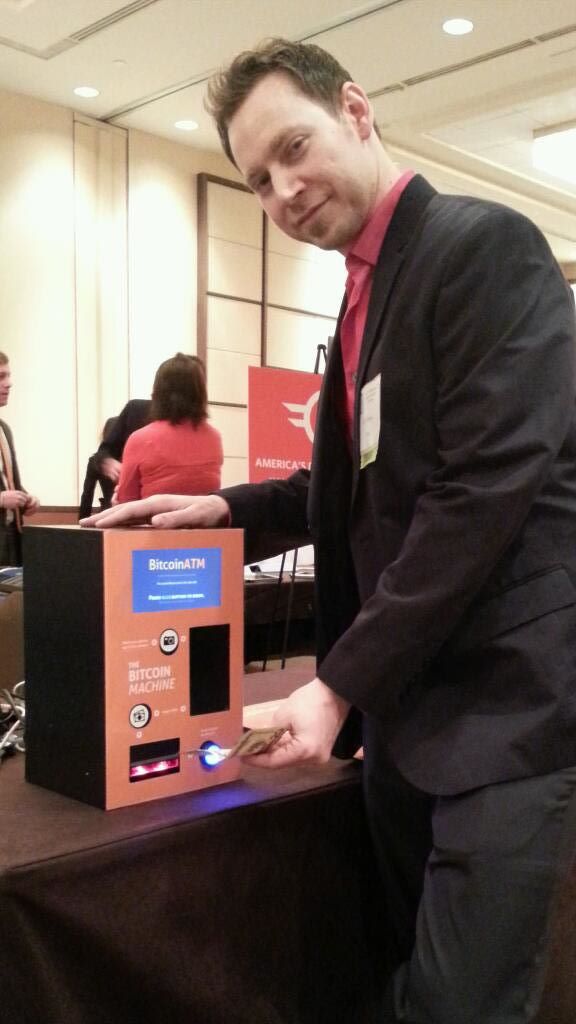
Kim Dotcom has proposed efforts at bitcoin-funded credit cards and the like. It’s probably easier to spend and keep bitcoin on a smartphone with a bitcoin app and spend via NFC and QR codes than to use a credit card.
If you want to get money out of bitcoin back into dollars you will used the same exchange or place you originally bought them. Ie: Coinbase will buy your coins, or Coinlab, etc.
Yes, actually the FinCen ruling was received favorably, and probably one of the reasons for at least part of the recent price rise. Obviously the Feds can go jump in the river as I’m concerned, but lots of non-libertarian people gained confidence in bitcoin with gov sanction essentially, and they’re saying this opens the way for more Silicon Valley companies to jump in, for various investment groups to start creating bitcoin funds and make purchases, etc., with some confidence that a position by the US gov has now been established that isn’t wholly negative towards it. It’s not been criminalized at least.
I get it, other people were wary of what the government was going to do to bitcoin (uncertainty) so they were holding back. Now that they have seen its first real action and that it’s not drastic, they’re more comfortable putting resources into it and knowing that it won’t get wiped out by the government.
BTW, there were 256 posts in this thread before I made this one.
BTW, there were 256 posts in this thread before I made this one.
What does that mean, no more editing of posts?
*edit: nope, still works.
Robert Wenzel thinks along the same lines as me -
Note: More is still also listing the bungalow in terms of his countries fiat currency, Canadian dollars. Bitcoins can only be considered money when people are comfortable to price products in terms of bitcoins and nothing else. That is, they think in terms of bitcoins as a reference and not translate it into their native fiat currency before making transactions. Bitcoins would also have to be accepted by a broad base of the populous in a given area, since money is the most liquid commodity. Bitcoins are not there yet.
Will this ever occur? It is not known. The more the government oppresses the people by limiting transactions, such as street drug transactions, the more people will seek out the relative anonymity of bitcoins. If enough transactions occur with bitcoins, people are apt to start thinking strictly in terms of bitcoins in their exchanges, without translating back to a native fiat currency—at that point, if that ever occurs, bitcoins should be considered money. At present, bitcoins should be considered a combination fluctuating price receipt for money, price inflation hedge and interesting speculation on a climb in their value as bitcoins become more popular.
Note governments will attempt to fight the popularity of bitcoins with the rudimentary interventionist tools they have. The Treasury, for example, has announced that money laundering laws apply to exchanges who convert dollars to bitcoins.
A Critique of Patrik Korda’s ‘Bitcoin Bubble 2.0’
By Peter Šurda
"Korda’s first argument is that because it is easy to create a new cryptocurency, they will compete each other out of the market, kinda “race to the bottom”, ending up with a hyperinflation and a collapse. However, he does not seem to understand the network effect, one of the most important aspects of money…
If I said that everyone can create their own language, therefore without barriers to entry, everyone would end up with their own language and the ability to communicate would collapse, you’d surely think that I’m a moron…"