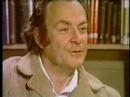
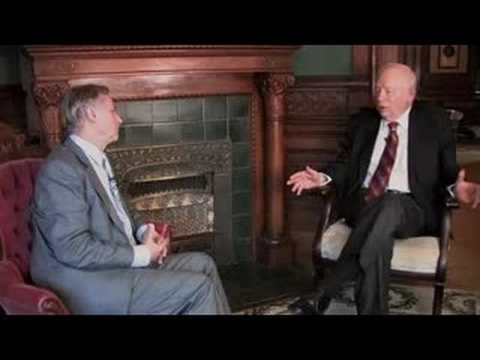
You know the whole gang. Richard Feynman. Richard Dawkins. Carl Sagan. Steven Weinberg. Any names of other heavyweights in this group I am missing?
Despite being an atheist, I have always been annoyed by the impudent internet atheist, and just the way someone may get annoyed at Ron Paul from a Ron Paul fan, one may get annoyed at perhaps Sagan and Dawkins because of their fans.
But when you come to think of it, religious people talking about science may end up saying stupid things and scientific people talking about things other than science may also end up saying stupid things. It is often mentioned that Steven Weinberg suggests that Israel has given equal rights to Palestinians, for example. It’s like an economist talking about morality, a subject that is out of the scope of his hyperspecialized field, (except maybe in discussing how honest behaviour has consequences in different societies.)
Now, I can not imagine why the once quiet, unknown scientists have slowly started becoming public televised celebrities in our age with fame outside their students in universities, and I don’t know what a scientist’s motivation is when he wants to talk about existential questions. But if you ignore their slight ridicule of religion, you’ll find Messrs. Feynman, Sagan, and others are extremely interesting people to hear. Feynman discovered various mathematical formulas independently as a small child, ate complicated equations for breakfast, and so on.
I don’t remember as much knee-jerk reaction to Sagan or Feynman as there is to Dawkins.
I think I remember even National Review, which normally holds to more-conservative-than-thou Catholicism, listed Feynman’s lectures on physics as one of the top 100 books of the century. Even while listing ridiculous books such as Darwin’s Black Box, Buckley’s own God and Man at Yale, and the Starr Report (as “a study in human depravity”).
My thinking is that they each wrote entertaining and enlightening books about science. Which is why they are known. They can write intelligently and also sell books. Most intellectuals only write books to get tenure and don’t care if anyone even reads their books.
They have to face two fronts. Jealous academics and ‘intellectuals’; most of whom are self-serving relativists rather than contributors to public knowledge. And those who zero in on the conclusions (as verse their methodology) like atheism. Both of which are not the problem of the authors, but the conditioning and confirmation bias of their armchair opposition. There is also a sort of anti-market bias in pomo as well as many religious people. Hence, why many will make ridiculous assertions like that Dawkins is not accepted in ‘real academia’… that he is some McDonalds version of science. And real science doesn’t have any conclusions at all that are so ‘certain’. Which is silly.
I do think that if you read some of Dawkins’ work, you could either skip many biology courses at university. Or be very well prepared for a degree in something related to it. And the works are very in depth, but also easy to understand. Selfish Gene, Blind Watchmaker, Ancestor’s Tale, Greatest Show on Earth – you’d be pretty up to date on what people are learning at university.
Carl Sagan I think inspired people to think scientifically. Because he made thinking about the bigger implications of science and things like astronomy seem like poetry. Especially the Cosmos series in which he effortlessly tackles some of the most difficult subjects. I remember that this was imprinted on my own mind when I was a kid and watched this video series and combed through the book.
as an ex-member of internet atheist community (I mean, I no longer enjoy watching mockery of religious people, but I still laugh at some things they do), I can say, that Carl Sagan is the most innocent in all of them. He was more concerned with science as methodology in exploring the universe, not morals or politics. I may be wrong, but anyway, Dawkins is the most “militant” and funniest at the same time
Sagan, Dawkins, and Feynman (mostly Sagan) are three of my, I suppose one could say, “heroes.” Sagan is one for his amazing ability to stay respectful to an opposing view (such as those of religion) while still offering seemingly devastating critiques of the ideas. Recently I started to finally watch all the episodes of Cosmos, along with some interviews his wife Ann Druyan gave, and now Contact: A Novel and The Demon-Haunted World: Science as a Candle in the Dark are sitting on my bookshelf.
Dawkins is one as well mainly because he is able to be so uncompromising, funny, and devastating. He can be militant at times (mostly in his writing and occasionally during lectures), but his militancy is far better than that of Christopher Hitchens’ militancy. I have The Ancestor’s Tale via audiobook on my iPod.
Feynman is another since he was an exceptionally eloquent speaker. I have “The Feynman Lectures” on physics on my computer and I hope to get through them all one day. The way he expresses ideas is just great.
And really, I could care less about the political views of these three. Dawkins seems to be a social democrat or socialist of sorts, Feynman worked on the Manhatten Project for Christ’s sake, and I’m not sure where Sagan stood, but he was against nuclear weapons (which is a point in his favor, IMO). I’m far more interested in their work in the scientific fields rather than whatever political views they held.
Dawkins is quite militant with his atheism. I felt like he was trying to punch me or something when I was reading The God Delusion. Books like Finding Darwin’s God have always been preferable to me.
I have a pretty positive sentiment towards all of the individuals listed above. None of them are extremely “philosophically literate”, a charge that many in the theological community hurl at them, but they don’t have to be necessarily in order to critique religion and the supernatural. You also don’t have to be a logical positivist to appreciate science either, something a lot of philosophical Christians pay lip service to but rarely appreciate.
I did an autobiographical project on Sagan. It was the first I heard of him. He was a Democrat, but he also understood the importance of freedom. He smoked pot regularly, and when he found out that his conversation with a Russian scientist was being spied on by the American government, he stopped talking about the science.
I completely forgot those books existed, and it seems I now have more books to read.
It’s not that typical scientist voice, which you hear from Dawkins and Weinberg. It’s rather a manly voice of someone you’d expect is a construction worker or steel mill worker. Someone who is not just an ivory tower academic, but one who can punch you in the face.
Somebody once said of Sagan, “He didn’t believe in God, but believed there were extraterrestrials somewhere in space.” What do you folks say about this criticism?
Feynman once remarked that as a child he saw a picture of the Pope in a newspaper and wondered why one man was so special that he was standing and why the rest were not so special that they were bowing, even though the Pope had to eat, drink, and breathe like the rest of them.
Yet, Feynman could do college level mathematics as a young boy and had encyclopedic knowledge of various other scientific fields, before he even started work on Quantum Electro Dynamics. Would he say there was nothing special about him as a person and that he was a mere two-legged beast like every other thing on the planet? Should we then conclude that everyone of us could have tapped the inspiration to do the same things he did, without having a father like Feynman’s?
It’s like what Joe Sobran said: “How come man is the only creature to discover and talk about the theory of evolution?” Why can’t other carbon life-forms like animals do it?
I’d say it’s a kind of faith, but it’s based on the amount of planets in the universe (and I think scientists have discovered a few more sextillion stars lol!). At least aliens would be material, something that can’t be said about proposed Gods.
He was a bit of an odd one when it came to extraterrestials. Still, it was due in part to his work that most of the ideas of aliens in our solar system have been disproven. So he had faith in something that was scientifically verifiably false, and it was proven false. He changed his opinion over time on extraterrestials.
Whereas, when looking at religious faith, the ideas cannot be disproven. So he could have faith in any idea he wanted. He choose to have faith in the idea there was no God.
extraterrestrials are at least imaginable; omniscient gods are not. and neither are any of the physical models of modern physics for that matter.
feynman was a showman posing as a scientist. there is a reason scientists are more outspoken these days; it’s because science has been taken over by state funding and status games. it’s a popularity contest hiding under the euphamism of peer review, where mathematics is used as tool to scare away would-be inquirers rather than for elucidation.
you see what has happened…humans didn’t evolve away from the need to believe in mystical nonsense, we simply started fulfilling that need with science, primarily physics and cosmology. absent market forces this was bound to happen.
The difference between the Pope and Feyman is that Feyman earned his status whereas the Pope is claiming to have a direct line of communication to God and the proposed being that is God has not been established to even be real. The difference is that religion, generally, is adopted from birth and not seriously questioned whereas the status of a premier scientist makes its way through the system. I’m not saying religion in that sense is proven false as that would commit the genetic fallacy, but all I’m saying is that Sagain thinks the people who grovel at the Pope are not thinking criticially.
But Popes have not just been people with a line of communication with God, but occasionally intelligent men who have thought critically about the issues of our day and time.
One Pope wrote Humanae Vitae or On Human Life, which deals with the possibilities that new science brings for human life. He merely tried to consider that once we can mass manufacture human life and recycle organs like components, will we see our fellow human beings the same way? Will man be something more than a mass of genetic material to be eaten? Should manufactured life be treated as a tool or something to be respected like fellow humans? These are questions which even secular men would consider.
Theological questions are difficult, and involve intense and difficult study of Augustine, Paul of Tarsus, Dominic, and countless others, and on many basic matters of human social life. It’s a difficult balance for such clerical men between hard study and daily charity. And once a man speaks with some level of certainty and definite understanding, he must still have great humility in accepting he may not have all the answers, as per tenents of his faith. Let’s face it, the hard sciences don’t easily answer complicated questions about family and relationships (but only in part), and accumulated casual knowledge of thousands of years makes it a whole lot easier.
This is the first I’ve heard of Feynman. From that video he seems to have the same, or similarly uncommon, personality as me, which only 3% of people have according to Personality Dimensions.
Dawkins has always seemed to me like a babbling buffoon. I remember something that he said in his documentary where he was ridiculing an Astrologist. The reason that he gave for searching for truth his way was a huge drop of the ball. He said that reality, whatever it is, is beautiful. I couldn’t think of anything dumber to say than that. Reality is often ugly and unsavory. That is what fantasy is for. Understanding reality is for getting the expected result when you perform an action. As a militant atheist I expect better representation.
Never, associate Feynman with Dawkins. Feynman did more to popularize science than really anyone else in the late 20th century. Dawkins is brilliant, but he’s also an aggresive opinionated jerk.
I’ve thought about the Cosmos/Free to Choose similarity before and have noticed other similarities too before. Of course, I agreed with both of them about 90% of the time but always felt they fell just short of absolute understanding. Not that I’m any better. They were both very delicate and wise on their subject matters and they will be missed but forever remembered.
I like Sagan. I even like Hitchens as a person. But Dawkins, Hitchens and this preachy atheism. Ehhh…
Statism and aggression come in any flavor of creed (or lack there of). People can still be dicks while being atheists. Atheism and irreligious beliefs are fruitless by themselves. Mind you I have no religious beliefs myself. I just don’t like some of the arrogance I hear from some atheists on the net, as if being an atheist makes them a better person. It’s something I’ve noticed specifically about the internet, the anonymity makes people really oblivious to important things. No type of religious beliefs can do that by itself, good ethics are worth spreading, not religious or ontological beliefs (or disbelief).
Spread that non aggression! Praise respect and being a decent human.