What is game theory?

Does this type of theory make central planning more viable? Thats what ive been told. I dont know much about it, and i cannot really do any type of advanced mathematics.

Anyone have good videos on the basics?

I doubt it would be viable but could it be?

Well, first of all,

http://en.wikipedia.org/wiki/Game_theory

It’s basically a discipline that rests on the premise reiterated by the protagonist in the movie π

“my assumptions: 1. Mathematics is the language of nature. 2. Everything around us can be represented and understood through numbers. 3. If you graph the numbers of any system, patterns emerge. Therefore: There are patterns everywhere in nature.”

You might say game theory is the application of these assumptions to human behavior. The basic idea is that you can predict behavior through mathematical modeling.

This is how mathematicians become Nobel Laureates…they work on shit like this and win the economics prize. You may remember John Nash, the main character in the book and film A Beautiful Mind (which won every major Oscar except for Best Actor because Russell Crowe is an asshole.)

Anyway, to answer your question, no, the idea that you can centrally plan an economy is still total horse shit. Think about what you’re being told…that it is literally possible to predict what human beings want, when, and what they will do. And not only that, but you’re going to know all this by doing some math problems.

I’d have an easier time believing it if your friend just told you he was psychic.

This is not to say game theory as a discipline is totally useless, it’s just that your friend is basically saying “increasing the efficiency of clerical work through the use of computers is all we need to be able to handle the US national debt, and the $200 Trillion in unfunded liabilities. Increased efficiency means lower costs.”

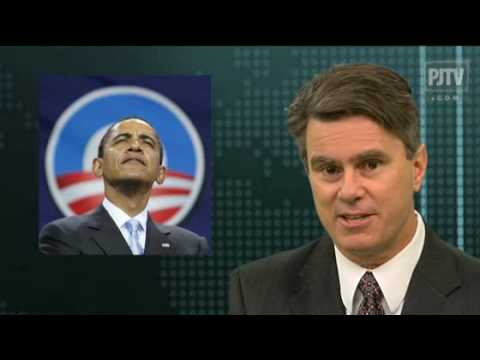
But below is a video where a simple example of game theory is applied to policy. I’ve seen some critics of this claim he’s not accurately representing the dilemma, but I think it’s correct enough to at least give you a better idea of the kind of thing someone means when they use the term.

There’s also a youtube channel pretty much solely dedicated to the subject:

JimBobJenkins

I’ve heard that no one actually uses game theory to solve any real world problems. You learn it, then forget it.

Anyone know if this is true?

The only contact I’ve had with game theory is in pointing out the fallacy in socialists arguements, that they view wealth as a zero sum game, i.e. one persons gain is anothers loss, therefore the rich getting richer means the poor get poorer. While the reality is that competition and production make it a positive sum game, where the economic pie is enlarged by increased production, that wealth is obviously not a static quantity.

The only contact I’ve had with game theory is in pointing out the fallacy in socialists arguements,..

Did you see a formal mathematical proof of this?

I suspect that the terms zero sum game and positive sum game are merely borrowed from game theory, with other arguments used to point out the fallacy.

Did you see a formal mathematical proof of this?

I suspect that the terms zero sum game and positive sum game are merely borrowed from game theory, with other arguments used to point out the fallacy.

No, as I remember it was just a theoretical arguement between a fixed pie (zero sum) and a growing pie (positive sum). I’m pretty sure I’ve run across the arguement somewhere else as well, as I distinctly remember “positive sum” being used, which does not occur in this article, but here is the basic arguement http://www.aynrand.org/site/PageServer?pagename=objectivism_buy_american

Game theory is the study of strategic decision making. More formally, it is "the study of mathematical models of conflict and cooperation between intelligent rational decision-makers.

It seems to me that for this game theory to work, all actors in the economy must act rationally.

That is with every decision they must choose the option with most cost/benefit ratio.

We know that is absurd, not everyone acts rationally in the economy; people want to buy more than they have, or less, or they want a useless luxury, or just something for fun; and how can anyone make every purchase and decision by weighing in on cost/benefit? Alot of emotion runs through our minds when we buy something.

Even when i myself go shopping i might buy too much food or too little food. Or the ‘animal spirits’ kick in and i buy a cake or an extra additional bottle of milk (low cost to benefit, no nutritional value, hurts my health, etc,etc).

As for the video; who is obama to say who is cheating and who is not? Is he the master punisher of all? What if this video was made from an iranian view point? The united states would be the aggressor in this case and iran would be the retaliator(mass sanctions) (iran cant retaliate against united states army). It seems as if this is more war propaganda (how is building a nuke cheating? all other surrounding countries have nukes too).

//offtopic-

Would this be a type of pragmatism?

Or am i getting the definition wrong?

Here’s Mises in Human Action on the matter of rationality:

I’d say to check the definition of rational that you are using.

Well, bear in mind Mises also stated: “…the concepts rational and irra­tional apply only to means, never to ultimate ends. […] Rational and irrational always mean: reasonable or not from the point of view of the ends sought. There is no such thing as absolute rationality or irrationality.”

So while he makes a good case that human ends are always rational, but I don’t see support that human action (which Mises describes as “purposeful behavior”…or, the application of “means”) is always and necessarily rational. In fact that quote directly states otherwise.

This is what bugs me because elswhere he states: “Action is, by definition, always rational.” He supports this in this way:

“When the expressions ‘rational’ and ‘irrational’ are applied to the means employed for the attainment of an end, such a usage has significance only from the standpoint of a definite technology. However, the use of means other than those prescribed as ‘rational’ by this technology can be accounted for in only two possible ways: either the “rational” means were not known to the actor, or he did not employ them because he wished to attain still other ends?perhaps very foolish ones from the point of view of the observer. In neither of these two cases is one justified in speaking of ‘irrational’ action.”

Now, the text where that is found, Epistemological Problems of Economics was first published in 1933, and the source for the first quote, Omnipotent Government, was published in 1944. So maybe Mises evolved a little? Or maybe those statements don’t conflict at all?

Its time i read more mises.

Hmm i guess if i want to buy a cake to eat, it is rational that the cake will make me feel good, however it is bad for my health. The means are certainly irrational (getting good feeling, but having bad health, there are other ways of getting good feelings), but the ends could be (ultimately it serves my goal of feeling good).

Is this what mises is trying to say?

I told my friend that it is impossible to predict millions of people’s decisions but then he just shrugs the argument and says that game theory will work; advancements in technology; trust in the superior scientists (the usual statist bullshit). I told him that empirical data only shows a certain snapshot in time, and that only predictions can be made which are not going to be 100% correct, and therefore is nearly impossible to plan an economy from only empirical data.

JJ - ya i was going to give the definition of action, but you see the same problem too.

Im confused then what is absolute rationality? Any idea? Im guessing he means whats rational to someone doesnt mean its rational to someone else so there can never be absolute rationality?

But if action is always rational then isnt it always absolute rationality to the person making the action?

That’s exactly what he means. From that same passage in EPoE:

“The assertion that there is irrational action is always rooted in an evaluation of a scale of values different from our own. Whoever says that irrationality plays a role in human action is merely saying that his fellow men behave in a way that he does not consider correct.”

And right after he closes out the part about action by saying “Action is, by definition, always rational”, he switches back to talking about ends:

“One is unwarranted in calling goals of action irrational simply because they are not worth striving for from the point of view of ones own valuations.”

If you’re interested, that passage is probably one of the best places to look:

The Distinction Between Means and Ends: The “Irrational”

That’s a contradiction of terms. The entire reason you include the term “absolute” is to distinguish it from the individual. When you say something is “absolute” you are indicating that it is true regardless of circumstances of any kind. If you make the caveat that you are confining “absolute” to a realm only within a specific set of circumstances, then the term loses its meaning and becomes — to use Mises’ term — pleonastic.

What you did there is a perfect example of what is commonly referred to as “over-thinking”.

In that same passage I’m recommending to you, Mises discusses what “absolute rationality” would mean:

“It has never been disputed that man does not always act correctly from the objective point of view; that is, that either from ignorance of causal relations or because of an erroneous judgment of the given situation, in order to realize his ends he acts differently from the way in which he would act if he had correct information. In 1833 the method of healing wounds was different from that used in 1933, and in 2033 still another way will presumably be thought suitable. Statesmen, field marshals, and stock-market speculators act differently at present from the way in which they would act if they knew exactly all the data needed for an accurate judgment of conditions. Only a perfect being, whose omniscience and omnipresence would enable him to survey all the data and every causal relationship, could know how each erring human being would have to act at every moment if he wanted to possess the divine attribute of omniscience. If we were to attempt to distinguish rational action from irrational action, we should not only be setting ourselves up as a judge over the scales of value of our fellow men, but we should also be declaring our own knowledge to be the only correct, objective standard of knowledge. We should be arrogating to ourselves the position that only an all-knowing being has the power to occupy.”

JJ- sometimes i over think simple things. Good points, thanks.

My take on this, and I’ll show how all the quotes agree.

WARNING: Intellectual material. Put on thinking cap before reading.

Let us consider two things. First, what Mr A wants. Second, what Mr A will do to get what he wants.

Each of these two can be looked at from two points of view, what Mr A thinks of them, and what other people think of them.

So lets label the things being discussed with numbers.

  1. What Mr A wants.

  2. What Mr A will do to get what he wants.

  3. What Mr A thinks of 1.

  4. What Mr A thinks of 2.

  5. What other people think of 1.

  6. What other people think of 2.

Well. that’s 99% of the hard work already. All we have to do now is go through the quotes one by one and see which of the six things above Mises was talking about in a particular instance. We then have to see if for any given number above he says two different things. If not, there is no contradiction.

Also, of course, we have to see why what he says in a particular instance applies to the particular number he chooses to talk about in that instance.

Without further ado, let’s hit the quotes.

He’s talking about 1 when he says: When applied to the ultimate ends of action [=1, 3, and 5], the terms rational and irrational are inappropriate and meaningless. The ultimate end of action is always the satisfaction of some desires of the acting man.

In other words, you want what you want. It’s a primal thing that needs no further explanation. I want it because I want it. The human heart is a deep thing, and there is no judge who can say “You should want this” or “You are insane if you want this.”

Why does Mises have this atitude about the basic wants, such as kevin silva’s cake and milk? Because of something Mises wrote about in Theory and History, where he says that there is no way of deciding what is right and wrong and good and bad. Consistent with that philosophy is that if you want something, there is no way of judging it at all, and thus it can not be called rational or irrational.

About 2. he says:

1*. Human action [=2] is necessarily always rational. The term ‘rational action’ is therefore pleonastic [= a phrase with a redundancy] and must be rejected as such.*

This is because Mises uses the word rational in the following sense: Mr A is being rational if he takes steps to get what he wants in the way he thinks is best. And Mises defines action the same way.

Notice that all this is really talking about 4, what Mr A thinks of his plans to get what he wants. Mr A naturally thinks he is doing the best he knows how.

JJ quotes Mises as saying: …the concepts rational and irra­tional apply only to means, never to ultimate ends. […]

Here he is talking about 5 and 6. If we are to judge what A is doing, we can only say he is not going about his goal the same we would, and we think our way is superior. We can thus say Mr A is being irrational when he tries to win the girl he loves by shooting a bullet at her. That’s the first part of the quote, where he says the concepts rational and irra­tional apply only to means, [=6].

But we cannot say he is being irrational because he wants Sally instead of Molly, even though Sally is fatter and uglier and nastier in every way, and even though we would prefer Molly hands down. This is what he means in the second part of the quote, never to ultimate ends. [=5]. We already explained why he thinks this above, where we paraphrase his position in Theory and History.

If you look at the quote in context, using the link JJ provided, you’ll see that’s what he’s talking about.

He then repeats himself for emphasis and says: Rational and irrational always mean: reasonable or not from the point of view of the ends sought. [=6] There is no such thing as absolute rationality or irrationality." [=5]

JJ then quotes Mises as saying "Action is, by definition, always rational. JJ then quotes Mises reasons for making such a statement, and careful reading will show that he is talking about 3 and 4, meaning what Mr A thinks of his means and his goals, with a bit of 5 thrown in, what others think about his ends. I leave it to the reader to go through that section and work it out, for the mind and the fingers tire.

Bottom line, no contradictions. Life is good
Ya don’t say…

Sounds like you need to do some nerd exercises. Gotta get those fingers in shape.

pfft… whut evs. I think its an important distinction to make. haha.

Seeing as how Anthony de Jasay was a game theorist and anarchist, that he used game theory to argue against government (or so I’ve heard), I’m guessing that attempts to use game theory to argue for central planning are unsound at the very least.

I remember something about Bob Murphy being something of a ‘specialist’ in game theory. I’ve also read that game theory is being used to ‘redesign’ microeconomics, in the sense of replacing your standard consumer behavior, et cetera, models.