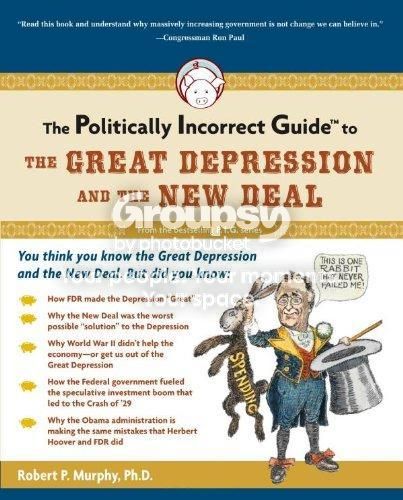
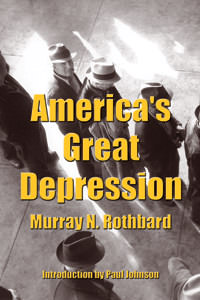
Would you read two books to change minds?
You should read about the actual regulatory history in those days, but no matter when it’s taking place, regulation is a barrier to entry controlled and/or surpassable by the big fish. Regulation is pointless if Congress is effectively owned by industry lobbyists, and any other form of ‘regulation’ is a revolving door for the same guys who run Wall Street.
As for stimulus spending, you can mention the broken window fallacy. If someone’s window breaks, the fact that they have to consume to get it fixed doesn’t make them any richer.
What the Keynesian is really suggesting is that consumption should be forced, because otherwise people will just save their money forever and never spend it on anything. It doesn’t matter so much what they spend it on, as long as it is spent, IMMEDIATELY.
Now, what’s really going to happen if lots and lots of people are left to their own devices to save is that the interest rate will be naturally driven down, because there’s a greater supply of money available for people to borrow, allowing for investment in healthy and sustainable growth as consumers are able to spend their savings on exactly what they want, when they want it. The system does seek a state of equilibrium when it’s left alone.
The Keynesian thinks that this happens too slowly, or something… That deferred consumption in the form of savings is some sort of waste of time, and that the government is in a position to cut to the chase - the spending - by forcing the taxpayer to spend right now on anything, absolutely anything…
It leads to the boom-bust cycle… Forcing the taxpayer to spend money on something they don’t really want right now artificially elevates the apparent value of that something until such a time as the artificial stimulus is no longer available, and then the bubble pops.
For people, money is a means to an end. It’s good for spending now, or spending later, on the real things one actually wants. That’s the utility of money, for an individual person. For Keynesians, money is wealth in itself, and when you have a lot of money sloshing around the balance sheets, things must be going great, even if the money is being spent on things no one in their right mind would want. Incredibly, for those Keynesians who believe that WW2 ended the Great Depression, it doesn’t matter that the money was being spent on killing millions of people and laying waste to half a continent.
I mean, they’ve lost the plot. One is not being an economist by manipulating demonstrated preference with force. You supposed to tell people how they can most efficiently get what they want, not what they should want.
It is a good system for fleecing sheep. It is not a good system for making the sheep wealthier.