surprisingly enough most of them were aristocrats:
Timon
Cato the younger
Augustus
Some Popes (don’t know names)
King Bruce of the scots
Yorkists (war of the roses)
Medici’s
the Orange family
the founders of new england
add or subtract any more
surprisingly enough most of them were aristocrats:
Timon
Cato the younger
Augustus
Some Popes (don’t know names)
King Bruce of the scots
Yorkists (war of the roses)
Medici’s
the Orange family
the founders of new england
add or subtract any more
Van Buren?
Jefferson pre-presidency?
Richard Cobden?
Could you elaborate on why you made these choices? Some of them I’d be interested to know more about, such as King Bruce and Augustus.
I’d nominate Calvin Coolidge, William Howard Taft, Deng Xiaoping, Barry Goldwater, Prince Leonard of the Hutt River Principality, Roger Douglas and Ron Paul.
Invaded Vietnam.
Wanted to nuke Vietnam.
Augustus used the state to engage in public works programs and killed off his opponents; how can you claim that he was libertarian
The Founders of New England certainly believed in government, and for the most part in a government that restricted the religious liberties of her citizens.
Please elaborate as to why you think the Orange and the Yorkists were libertarian/classical liberal leaning.
Cato the Younger: Perhaps, but please elaborate as to your believe why
The Church now is arguably libertarian, at least in terms of the fact that there is no compulsory taxation and people are free to disassociate themselves from the Catholic Church whenever they want, but for most of its history tithes were compulsory.
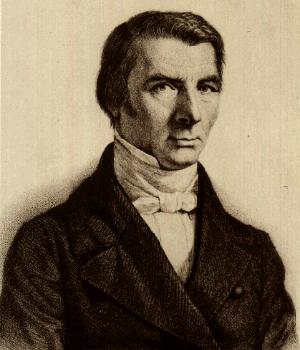
Ladies and gentlemen, let me introduce you to a man, a man they called… Bastait!
And before you ask, yes, he did serve in the French government as a member of their elected council (parliament? Senate?)
pretty short list of statesmen that advocate freedom… mirrors my own experience with the proletariat…
Previously Rome was being torn apart by civil war, obviously hurting its economy, so by restoring peace he automatically promoted economic growth and more freedom (the right to life). Secondly, he did allow some certain cities across the empire to be free of certain taxes and to become free trade posts. Thirdly he built canals and such to further trade within the empire (not really libertarian but it was a regulation that was needed to circumvent obstacles). Fourthly augustus ended conscription for military service which was a central feature of the “republic” (which was way more totalitarian than the empire in my opinion).
Well, most if not all statesmen believe in government but it is possible to distinguish between those who believe more or less. I think that the leaders of the mass.bay company, plymouth company, and the whole london company were pretty libertarian by the standards of the day (though I think that the “levellers” were more so yet I don’t know many who were statesmen). For instance, some of them were responsible for trying to overthrow the monarchy and they did, after all, flee to a whole new land rather than live under oppression.
The latter, because they were involved in the 80 years war to break away from spain and the former just because they were on the losing side of a civil war which makes them sort-of “against the power” in my opinion.
In a world of encroaching stato-populism cato had the balls to oppose the hyper-welfare measures of caesar which ultimately destroyed the republic.
Granted, but the church in compared with other states was surely more liberty-minded than them. Also the church fought in favor of the principle of state-church separation as opposed to the divine-right of kings theory.
I’d consider a statesman libertarian enough if he does what he can to abstain form war. Peace if very high on my value scale. Hence, this guy over here rules:
You forgot to tell us who that is. You are seriously overestimating our knowledge of history if you think we can determine who that is just looking at a picture.
[:)]Sorry, you’re right. The gentlemen is Klemens Wenzel, Prince von Metternich, Habsburg premier until 1848. This guy drafted the map of after Napoleon’s defeat with the explicit intentions of seeing no more Total Wars and Terror Regimes on the continent. No wars raged in until the Crimean campaign, half a century later, no total war until WW1, a precise century latter and no Terror Revolution until…you know that.. Of course, this happened due to the comparatively liberal regimes of the age, but if XIX century’s peace needs a name it surely must be Prince von Metternich.
Well, it must be conceded that the Congress of Vienna in 1815 established far better fundamentals for peace than did the Congress of Berlin in 1878.
of course, who don’t know that? 
Perhaps also add Lincoln while you’re at it, he too also consolidated central authority through massive violence.
The Roman world was built for the rich, by the rich.
Augustus was no libertarian by a long shot, although he was a master politician who made sure to eliminate all power left within the Senate and reform it to make it his own. By his term, the Senate, and it’s high seats (such as the Consul) were largely ceremonial.
Good finds in here from Rothbard.