Seriously. I may be ranting here but these creatures just love to worship the state in any forms and also love to dictate how otehrs should live.
I have no idea why you think architects tend towards a less liberal political philosophy, but I’d hazard a guess that large scale construction projects (be they of government offices or weird monuments like the Juche Tower) provide lots of money for architects. They also blur the line between the intellectual, artistic and managerial classes, many of which are in bed with government.
+1
Also consider that construction is a field that is also highly regulated which means all these people have a lot invested to get into their economic positions. This means they have a huge incentive to support the regulation once they’re in (to prevent others from coming into the field easily). It’s the same for doctors.
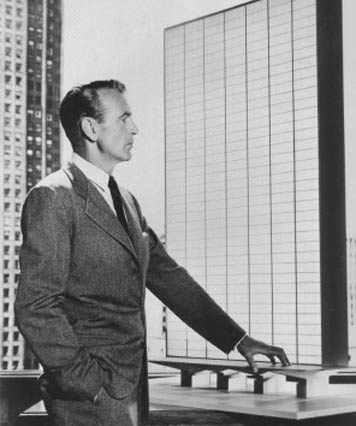
It depends. My brother’s firm has been getting more public sector work than private due to them (the government) practically killing out the private. No private company wants to invest in large scale projects right now, but the State always has someone elses money to invest. He’s told me that there have been some investors who have been hesitant on a large scale project for a few years now because of this problem.
Same reason why intellectuals are statists, they produce nothing that the market demands.
Architecture since the post-war era has been a lot of trash justified by a lot of trashy philosophy.
It’s very simple. You go to an architect to have a building designed. He says he can do it, no problem: it will cost you a quarter of a million. Since you can get the building built by a competent firm with experienced civil engineers for less than that sum you wonder what has he been smoking/sniffing and quietly walk away. Your town decides it needs something (and I am using this word on a purpose) built to fill a space. They invite architects to compete and they choose the winning design. Then the winning architect will tell it’s going to cost a million to design the something. Building costs are of course excluded. The bill will be paid without blinking. Do you still wonder why they love the State?
Who isn’t?
Wow.
I have a friend who is a recently graduated and (state-)accredited civil engineer. He says the damnedest things some times. 
A few years ago, an engineer served as a guest speaker for one of my political science courses in college. Basically, he said that the mentality of an engineer can be summed up by the mantra, “if it can be done, then do it.” In other words, if the technology, manpower, and all other necessary inputs are available, then the project should be carried out. Of course, one important factor is disregarded: market prices. The guest speaker seemed to be aware of this issue, although he used the term, “cost-benefit analysis.” For some engineers, money is a mere quantity relation - just another input. They do not calculate with market prices. I imagine that some architects share the same outlook.
Civil engineers do not attempt to translate deconstructivist tendencies into structural metaphors.
So there wouldn’t be architects in a free market?
I don’t know why all of your posts begin with “So…”
I have no idea what this is supposed to mean.
There wouldn’t be architects in a free market?
Better? [8-)]
So, you are Pro-IP, Pro-child rape/murder, Anti-intellectual, Anti-architect, and Anti-conjuctions at the beginning of sentences?
If architects produce nothing that the market demands, then would architects exist in a free market?
Architects who serve the market would.
It isn’t so much that people accidentally fall into a profession and then become rearguard defenders of their status quo. Statists choose statist professions to begin with. For example, hippies become climatologists so that they can push their junk under a veneer of expertise.
The ratios of libertarian-to-statist run about the same in fields that have the same degree of statist intervention. So you’ll find the same ratio in architecture as in some other arts. There are subcategories: I think the ratio is higher among blues musicians than among classical muscians, because classical musicians get more state grants for their concerts, like the NEH, NEA, etc.
In music there is also a tendency for more structured and composer-dependent material to be appreciated by those with minds that appreciate a high degree of structure and organization, whereas the improvised material that has “unspoken” rules like jazz and blues is enjoyed by those with minds that are nimble, subtle, and ready to improvise. (my opinion)
Going back to architecture – architects are needed when you have a big building that needs LOTS of stuff coordinated, and when its abiltiy to stand depends on having everything coordinated correctly, kind of like a classical music score. This calls for someone with a mind that can grasp the big picture, and can appreciate the notion that small things going wrong can lead to catastrophes. Statists use those arguments for their increasing calls for more power.
You can use this to your advantage, tho. The key here is to use statism as a filter for choosing your architect (or any other artist). The architect who appreciates libertarianism or austrian economics will have a mind that is also tremendously more creative than other architects who don’t appreciate these other areas.
nm