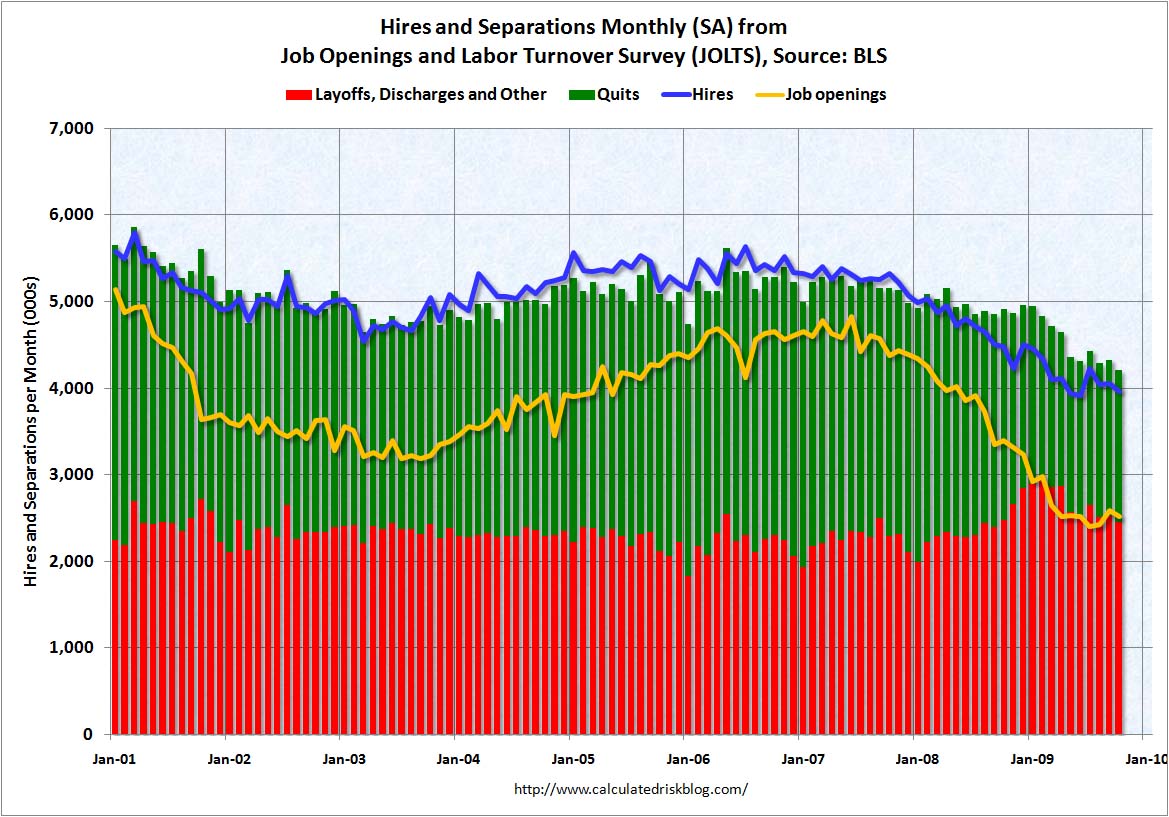
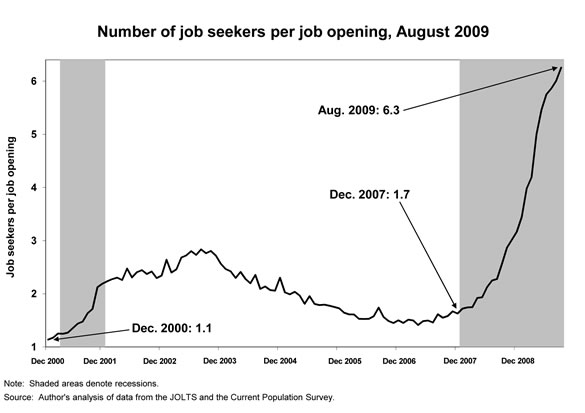
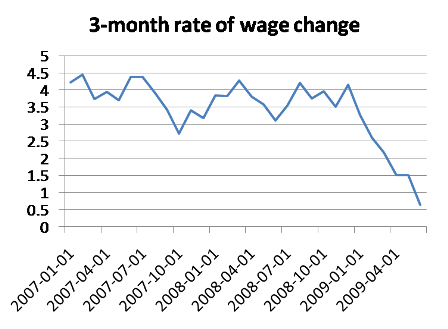
Originally Posted by phattonez Proof? I stated that this idea that there are like 10 people applying for every job probably doesn’t apply for all jobs (especially the lower paying ones). Care to show evidence against that idea?
Almost 600 people have applied already for jobs at the new Wal-Mart Supercent-er under construction in Onley.
The store is expected to open in July or August, spokesman Keith Morris said.
The company plans to hire between 350 and 400 workers for the store, with an even split between full- and part-time positions, store manager Frank Durst said.
The year was especially hard on job seekers. PetSmart had 47,000 online resumes submitted for 256 positions it advertised last year at its corporate headquarters in Phoenix, Helstrom said.PetSmart ended up filling many of those positions through internal promotions and hired 151 people from the outside.
Quote:
A 2006 poll performed shortly after Wal-Mart withdrew itself from negotiations for the Rego Park site showed nearly two-thirds of Queens residents would shop at a Wal-Mart in Queens if there is one. A hoax story in the April Fool’s Day edition of the Queens Tribune sent hundreds of people flocking to Atlas Park looking for jobs and to shop when the lead story joked that a Wal-Mart took over the Glendale mall’s location.
All for retail positions which are generally not considered high paying high quality positions
The quotes there are me, and everything else is from the guy who is saying that there is so much unemployment because there are not enough jobs, and that the reason is not extending unemployment benefits. Where do I go from here?
They don’t. They work against people taking cuts in pay. They stop readjustments. But anyway, I don’t think he’s arguing that. I’m pretty sure he’s arguing some fallacy that there just aren’t enough jobs for all of these people to be hired. How do I respond to that"?
The Fed should print dollars and the government should tax the rich so that it can employ and pay the unemployed to do push-ups eight hours a day. Everybody wins, with an extra bonus of a fitter society (lower health-care costs).
Well, first of all, there are numerous government policies which slow job growth. The minimum wage is definitely one reason why many people can’t get jobs at low-paying retail stores like Walmart. Payroll taxes are a big second. If you think about it, the payroll tax is basically a tax on jobs: every time a firm hires a new worker, the firm has to begin paying taxes for keeping that worker employed. Well, if you tax something you’ll get less of it. Unions, work safety regulations, discrimination laws, and other government interventions also shrink the amount of jobs businesses provide.
Secondly, job growth is a lagging indicator. In other words, job growth doesn’t occur until well after a recession is over and businesses won’t begin laying off workers until well after a recession has started.
Employers already have the advantage in setting wages since as you have noted workers have limited mobility, but also workers are limited in knowing what every firm is willing to pay (in the real world). Wouldn’t you say that during times of large unemployment people are more fearful of quiting their job, since they necessarily may not get one back? Would you say that workers right now are working harder, or more productively than anytime in recent history for less pay? This all seems consistent with the data. Therefore, under monopsony like conditions, raising wages (to a point) through a minimum wage can actually increase employment.
There is never a general lack of demand. Goods and services are produced to be consumed. Everyone wants food, ipods, pizza, but if the price is too high the purchase won’t go through.
Phrasing the problem in terms of ‘demand’ rather than ‘price level’ just plays into the Keynesian Animal Spirits theory. If the price level of goods and services is too high, then we start blaming taxes, inflation, and the minimum wage for the economic glut.
**
If you quit your job, you could always get another one if you could offer to work for less/hour. On the free market, its not like a whole bunch of people have jobs at $5/hr while there are hordes of people willing to work for $4/hr. This fear of quitting-because-you-might-not-find-another-job implies that holding a job is a cushy and rare thing.
Why wouldn’t unemployment be lingering? Nothing fundamental has changed…we just created inflation…why would taking everyones bank account and timing it by 2, reduce unemployment?
It’s a generally understood fact that wage controls can have minimal effects on a specific labor market under monopsony conditions. It’s also generally understood that if you take from someone to give to someone else you don’t have any net benefit. By artificially raising wages in monopsony-like labor markets, you’re in effect reducing investment, and thus reducing long-term productivity growth.