During a public debate between a typical leftist & a libertarian which I saw, the leftist criticized the libertarian for suggesting the abolition of public schools claiming that families from low-income and poverty-stricken areas would likely lack the money to send their children to decent schools and continue paying for it from K-12.
Unfortunately, it was cut short and I didn’t really get to hear much of the libertarian’s argument.
So, in a libertarian society, how would children from low-income & poverty-stricken areas afford schooling?
Should it just be paid for like everything else? Should they consider enrolling in trade schools or what?
How did things work before mandated public education? In a free market children wouldn’t be considered useless until they became teenagers. Trade schools are one idea, along with apprenticeships or just plain old getting a job and starting work.
If there’s a demand for a specific kind of education there will be a supply. For those with less money there will be charities and endowments.
Public education is hardly an education, it’s an indoctrination. The answer to whether children would be indoctrinated in a libertarian society is thankfully not.
In Soviet Russia, everyone had a PhD, but everyone was poor.
Why should everyone have an education?
So what if the poor people don’t get an education?
I can’t afford a Ferrari, should I steal you money so that I can buy one?
Is an education more important than a Ferrari? That is subjective.
To answer your question: there would be charitable institutions that would offer low-cost/free education to poor families.
See Bill Gates and Andrew Carnegie.
Furthermore, what is taught in 13 years in public schooling could easily be taught in a few years.
Cognitive capacity for language PLUS information we pick up from our environment PLUS a personal need to want to speak.
And I would say learning anything else is not different:
Cognitive capacity for learning PLUS information we pick up/seek out from our environment PLUS a personal need to want to be able to perform certain operations.
You don’t need any formal instruction to acquire language. All a baby needs is to be exposed to the natural human world and not be isolated in a box. His or her capacity to acquire the local dialect is based on the fact that language; grammar, syntax, etc… is innately wired in the brain.
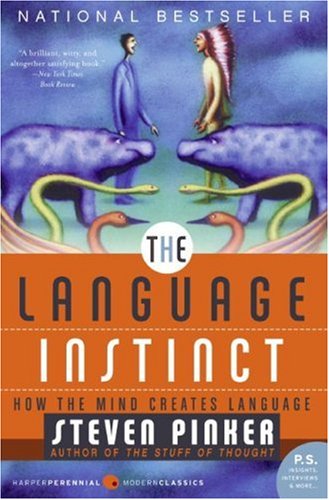
You may want to put this classic on your reading list.
What I’m beginning to call the law of political demand
You worry about not everyone having public education, far, far over 50% of people already do, giving it HUGE support, so are you really so bitter that you need to be coerced in order to pay for another’s education? Wouldn’t you form some sort of organization to provide the poor with education? Furthermore wouldn’t you like to see a good education at the smallest price? Making it more efficient than the terrible public education?
And there is absolutely no reason why those people couldn’t pool resources in order to educate themselves, higher a teacher or two, educate your children, trust me, it would certainly be at least as good as modern education, especially in the poorer inner city areas where these poor people are likely to live.
Not everyone needs a good or advanced education. The simple parts of education can be learned very easily and simply outside of school. Why not let people do basic work with a little bit of school and then work on higher education later on in life?
Why wouldn’t private schools attempt to provide the best education possible at the lowest rate possible on their own?
Especially if receiving normal education is a problem, then I’m sure that online courses would arise either for an incredibly small fee, or for free which would teach kids all of the things that they need.
As I said in 2, not everyone needs an education and if all of the above fail then that shows that it would either take a bunch of money that those people just do not have and therefore those children really probably need to be working anyway, or that there is so little effort and concern about education that its a wonder the schools are even filled and that there are any PTA’s at all, signaling that the current education is so terrible already that there is hardly a point to it.
In a market society, all consumers are satisfied. Mises uses the example of books – the popular romance novels are published for the masses just as philosophy books are available for us geeks. So basically entrepreneurs would see profit opportunities targeting education of the poor. Not too many rich folks frequent McDonald’s, but they do all right (and as a consequence, American poor eat so much they are mostly obese). Sure, a Ribeye from Peter Luger’s would “better for” them, but they aren’t starving by any means.
And, of course, without forced “one size fits all” schooling we would be able to better serve youths, most of whom aren’t built to read all day and create Powerpoint presentations from age 18 to retirement. We’d see lots of apprenticeships with entrepreneurs, for example, which is far more valuable to most than cranking out an essay (which amazingly has very little ROI in the real world).
I should add that I homeschool my 8-year old son (and will homeschool my 5 month old daughter) precisely because school is mostly a gigantic babysitting service put in place so that both parents can work (one to pay taxes, one to pay the bills). They’ll learn far more working with me than writing a gazillion essays (though I do make him write a few).
Yeah, but the fact that you don’t need formal instruction to acquire language doesn’t mean you DO need those to learn other things. You said the things are different; you haven’t shown how.
This has nothing to do with the distinction between formal or non-formal education.
What’s the difference between learning to walk and learning math? Or what’s the difference between learning to walk and learning to read and write?
Well, that is the difference between “learning to talk” and learning to read and write.
Learning to read and write requires a conscious mental effort usually in the form of some kind of training. Reading and writing is a human invention. It is a tool that is a product of human cultural evolution. Language is a product of our biological evolution. Natural selection!
Learning to read and write walk requires a conscious mental effort usually in the form of some kind of training. Reading and writing Walking [like a human] is a human invention.
The line between “cultural” and “biological” evolution is blurry. Individuals that learn to walk tend to be selected over those who do not, and those who learn to read and write tend to be selected over the illiterate.
I’ve added the Pinker book to my reading list. I’d be interested to know how/if he addresses these points. How is an individual learning a language (i.e. learning to talk) categorically any different to an individual learning mathematics or cookery or medicine? And if there is a difference, what does this imply about how children learn things? Why must certain subjects be taught “formally”? Which subjects? And what does “formally” mean in this sense?
I second Nielsio’s recommendation of the homeschooling/unschooling literature. I was already opposed to government schooling of course, but I still felt that private schooling was superior to unschooling. Now I am convinced the opposite is true, at least for many children: children naturally want to learn (to ‘fit in’) and will do so much more effectively without parental compulsion making them go to school involuntary.
Back on topic… To the OP, presuming there is great demand for schools, there will be a hugely diverse range for consumers to choose from. It would be like the food industry. The rich can afford steaks, poorer people make do with fast food or less. For the very poor, there is charity. I think in a free society educational charities would be well-funded with donations. And don’t forget that a free market would be so much more efficient than government that the price of private schooling would be a fraction of what it is now. Fears about the education of poor people in a free market are like the fears of those in the USSR about how the poor will eat if government stops monopolizing food production.
Why are they poor in the first place? Consider the government interventions that strip from families the opportunity to obtain a higher standard of living, and how a much larger number of people would be able to afford the (cheaper, competitive prices of) schooling without various government interventions.