“Action is an attempt to substitute a more satisfactory state of affairs for a less satisfactory one.” Mises on pg. 97 of Human Action.
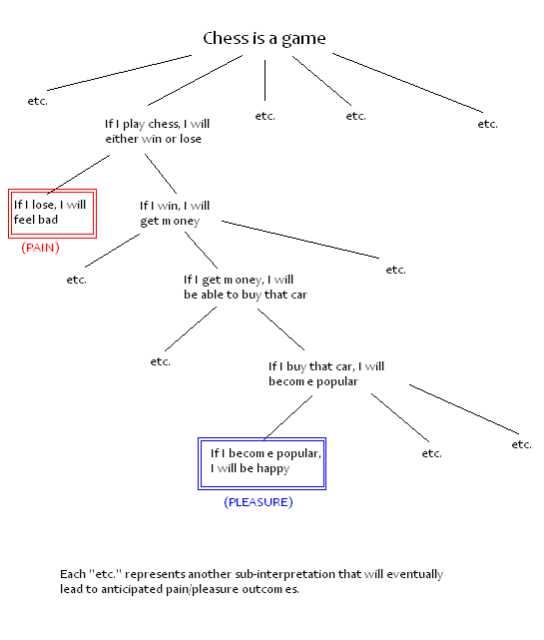
Claim: All statements are praxeological statements, and all knowledge is praxeological knowledge. It is only possible to interpret a statement - or to apprehend knowledge - insofar as one can figure out what it means for one’s future actions.
Definitions:
By statement, I mean basically the usual thing: any utterance that purports to express the speaker’s knowledge.
By praxeological statement, I mean any statement of the form, “If you do X, Y will result,” or any statement that can be only be usefully interpreted in this way. That is, any statement interpreted as being potentially relevant for the interpreter’s efforts to move to a more satisfactory state of affairs.
By praxeological knowledge, I mean knowledge that is potentially relevant to the knower’s efforts to move to a more satisfactory state of affairs.
Explanation:
This is more or less tautological, but everything I know is interpretable into a statement (or set of statements) of the form, “If I do X, Y will result.” Suppose I know that this text is black. This knowledge only has any relevance to me to the extent that I can guide my actions by it. To actually use that knowledge I have to think something like, “If I try to change the text to black, wasting my time will be the result (since it already is black).” You can probably see how I can come up with any number of other “If I do X, Y will result” statements based on this knowledge.
One objection is, “What about my knowledge that a speck of dust just moved somewhere on Pluto? That means nothing for me action.” Well, that is an rather un-useful piece of knowledge precisely because knowledge like, “If I go to Pluto expecting to find that no dust has ever moved there, the result will be disappointment,” is rather unlikely to come in handy. In other words, you give me an esoteric fact, I’ll give you an esoteric praxeological (“If I do X, Y will result”) statement.
Another objection is, “Just knowing that a speck of dust just moved on Pluto doesn’t automatically mean I have considered any action I might take.” This is a great objection, because it gets to the heart of the matter: the claim in this post is that it does mean I have considered at least one action. The claim is that one cannot even comprehend such a thing as dust moving on Pluto without considering a potential action and consequence. The minimal action many people probably consider is, they imagine themselves viewing the planet and seeing a speck of dust move in some direction (did you see it?). This post’s contention is that that imagining constitutes something like, “If I were to go to Pluto right now somehow, that [view of the dust moving] is what I would see,” which is a praxeological statement: “If I do X, Y will result.”
The full explanation is left as an exercise, meaning if you see it upon reflection that is great, and if you don’t then please raise more objections so that I can know where to fill in more explanation. I am not standing behind this claim necessarily; I am throwing it out here for discussion, though I do suspect I will stand behind something rather similar to it.