It’s so stupid. Their defense is it could have been much worse. I remember my macro professor saying that. It would have been even worse if we didn’t spend the money!
According to the very people who said it had to be done, everything would have actually been better if they had actually done nothing. No seriously. They said so. Have a look. (Starts at 0:42)
I think it’s important to know that beyond the bravado, it looks like it’s probably the case that REALLY, very few mainstream economists, really believe anymore that their models can predict anything or can stand to make any reliable predictions, at least not since the 60s. And this isn’t abskebabs the radical “Austrian” speaking, I can tell you for a fact this is pretty much the opinion of the guy who taught us econometrics this year! Correlation doesn’t necessitate causation and finding high R^2 regressions hardly settle issues.
Furthermore, even though it is apdictically valid that for 2 independent distributions that the covariance is zero, the reverse is certainly not necessarily the case, as in the case for instance of many joint probability distributions that are symmetric about the mean of one of the variables. Also, even for probability distributions that are mutually exclusive, it’s highly unlikely that you’ll necessarily yield a covariance of -1. Try it on a few distributioins you know, e.g. with a pack of cards and you’ll see.
As far as the housing bubble, read the FED publication that was sent out to all banks. After that it is easy to link financial crisis.
I start my masters program in december. Tell all your freinds to visit.
Austrian economists did not predict the current recession; neither are they predicting future hyperinflation. They aren’t predicting anything. I know it seems like they are predicting something, but they’re not. A prediction is something more than declaring that some event will happen sometime in the future. An unbounded existential statement is not a prediction. Austrian “predictions” of the current recession and future hyperinflation are like “predictions” that unicorns exist and will be discovered one day. No matter how long we go without finding a unicorn, the claim is never falsified. And if a unicron is discovered we can claim to have accurately “predicted” the event.
Okay, maybe I am being a wee bit harsh. Not all Austrians do this, but some surely do.
Oh please. This “perpetual doomsayer” nonsense again? Is that what you’ll call me if every time you ask me, I reconfirm that yes, you will die someday? I’m just right by default because if I say it long enough eventually it will happen? Or is it that I happen to know something about the reality of your biological makeup, that makes certain things inherently true?
Are you really going to argue that there is no such thing as cause and effect certainty? Is there absolutely nothing that can happen in this world that would allow one to say with a virtual certainty that a certain effect will occur?
And on top of that, these “predictions” were not just blind comments. They were explanations in detail of exactly what would happen and why.
Watch an Austrian do just that…
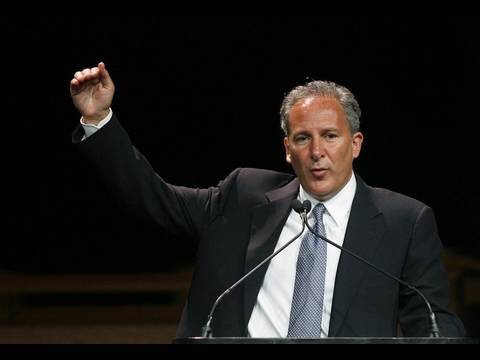
John,
I’ve seen the speech. Back in 2009, I agreed with Schiff. I thought purchasing gold seemed like a good idea. I read Murphy, Woods, and others at the Mises Institute and was genuinely concerned about pending hyperinflation. But the hyperinflation has been imminent for 3 years now. Eventually I decided that I was just wrong – time to look for answers elsewhere. At what point do you call it? How long do we have to wait?
Your certainty is just a feeling; it offers no protection from errors, but it can blind you to them. Learning is a risky business. Every time you cast a judgement it is possible you are making a mistake, but unless you put your ideas on the line you’ll never learn anything at all. Maybe the explanations behind these “predictions” seem compelling to you, but that is just all the more reason to be critical.
Well there’s your problem right there. You obviously didn’t listen to any one of the people you’ve mentioned.
It’s the unprecedented money creation that delayed it. Nobody could have predicted that. As soon as that stops we are going to see the effects Schiff has been predicting for years.
Nero,
How does printing money delay hyperinflation? I always thought it increases inflation?
To Modus Tollens:
Do you regret buying gold in 2009? Gold began 2009 at about $875, ended 2009 at about $1,100. Now it’s flirting with $1,500. What’s not to like?
Lately Peter has been saying we will have high inflation, say 20 to 30 percent a year, but it remains to be seen if the govt will do enough printing to create hyperinflation. He thinks they just might avert it at the last minute. What is the definition of hyperinflation? I’ve seen two definitions. Over !00% a year, or so high that people dispose of money the instant they get it.
The theory is that price inflation is caused by printing money, but that there is a lag between the creation of the money and they increase in prices.
I don’t know how long wehave to wait, but from my shopping for food and gasoline, he have high inflation now.
One last thing. Peter claims the increase in gas prices from $2 to $4, and the rise in commodities across the board, is a consequence of QE1. We have yet to feel QE2.
It does. What I meant was that the money creation keeps the currency from crashing, it’s a stimulus that keeps the machine running and the government able to service it’s debt. The crash that Schiff keeps predicting would have happened if it wasn’t for this unprecedented money creation.
My turn…
How does printing money keep a currency from crashing? I always thought it decreases a currency’s value.
Yes, it decreases the currencies value in the long term. In the short term it creates a bubble, that keeps the boom going.
How does higher prices in a certain sector (aka “boom”/“bubble”) keep a currency from crashing? Aren’t higher prices the result when a currency crashes?
Three eggs for 100 billion dollars?
yup, thats the world of hyerinflation
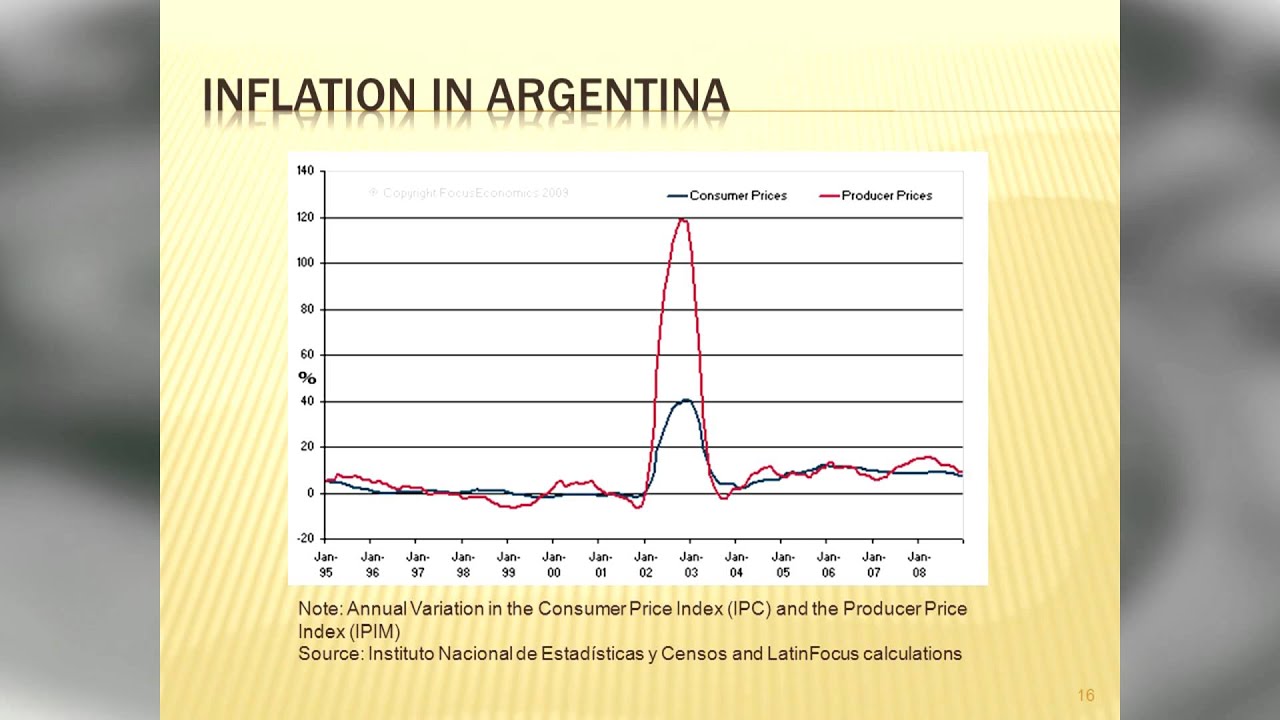
I doubt you’ll find anyone in Zimbabwe using Zimbabwe dollars; most people either use hard currencies (e.g. the USD) or just barter.
Also, unemployment is somewhere in the area of 90%. Most people who are employed are civil servants.
Of course no one uses those dollars now (and everyone is better off for it), but that’s what prices were. Now the price is virtually infinite because the currency is literally worthless.
I thought the fiat money was based on the guarantee of the government accepting it for the purposes of paying taxes.