Superb.
Thanks 
Awesome! Very informative video. By the way, I really like those pictures. Where did you get them from?
I spent many hours in the Creative Commons section of Flickr.
You can find the links to the pictures I ended up using here: http://www.vforvoluntary.com/capitalism .
I finished the closed captions in English (use the ‘cc’ button to make them appear/disappear). It would be nice to have other languages as well.
I’m going to put the lines underneath here, and what needs to be done is to translate and replace the individual sentences under their respective numbers. Then I’ll put the time-codes on them (that I already have) and that’s it.
If you’re going to do a translation, it’s probably a good idea to post here about it so that no double work gets done, or you could cooperate as well with that other person.
Text:
1
Imagine you are all alone in nature.
You’ll need to get goods.
2
You can get these by working.
3
If you have time or savings left after feeding yourself, then you can spend that while making tools.
4
These tools can increase your production.
5
You come across another person.
He has different skills and a different environment.
6
What the two of you can do is that each spends his time doing what he’s best at, and then you trade with each other, making you both better off.
7
This means you’ll be important to each other.
8
After you’ve specialized, those skills will keep improving.
9
A third and fourth person show up.
10
You’ll only do a trade if you think it benefits you.
11
Someone has to offer you that good of a price where you can stop making it yourself; and that is based on your skills, environment and wants.
12
This is the way all can coordinate their production, which they also keep adjusting over time.
13
Becoming wealthier here is a case of producing and trading a lot of what the others value.
14
Interfering with the work or the trading of the individuals means there will be less to trade or it will distort the coordination of work in the group.
15
To prevent this, the concept property can be adopted.
16
It means: what you make out of nature becomes yours, and you are free to trade it.
17
You can choose to hold your property in common ownership with someone else, but it means you stop checking if you’re materially benefited between you and that person, which would be the case under trading.
18
Besides trading what you have for what you want, you can also trade what you have for something you can more easily trade for what you want.
19
This is an indirect trade, and it results automatically in one good outperforming all other goods in facilitating trade.
20
This is then the money.
21
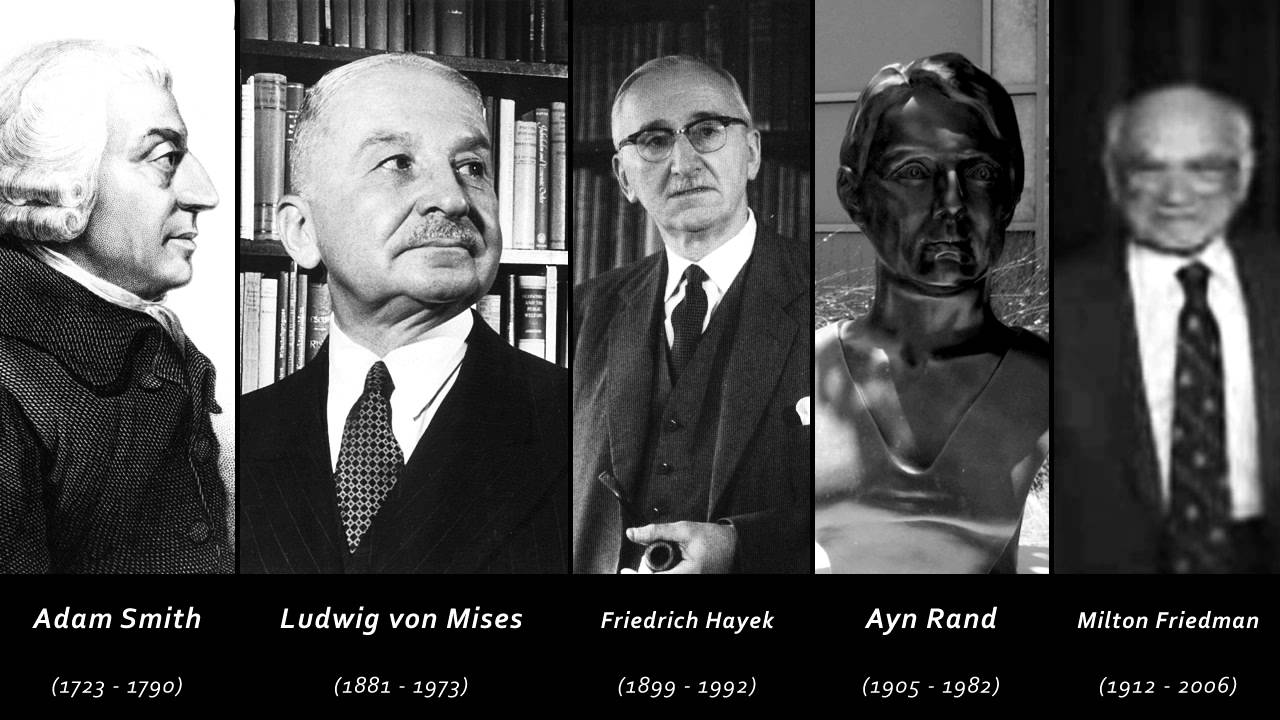
Over time the economy changes, and likewise what the money is changes.
22
When a money has emerged, you buy and sell in terms of the same good, so calculating profits and losses is much easier, as well as predicting your income if you would make something else.
23
Besides trading goods, you can also trade your labor.
24
An entrepreneur invests in labor and goods in the hopes of making profits.
25
The laborer earns a steady positive wage.
26
Goods can be loaned out to another person.
27
Interest is the price paid for it.
28
Many people can invest in an entrepreneurial project and partake in the profits and losses through the use of stocks.
29
Insurance is a trade where one party assumes a specific risk of another party.
30
The customer pays a surplus over the averaged estimated payout.
31
You can provide the service of giving out information about the products of others.
32
Individual consumers have preferences about what degree of uncertainty about offerings they are willing to risk and how much it is worth for them to get more information.
33
You can buy weapons and hire others to protect yourself against crime.
34
But more fundamentally, you can increase the upside of peaceful cooperation and the downside of crime by establishing the reputation of individuals.
35
Third parties can provide this service of arbitrating on and recording the actions between trade partners.
36
Property ownership helps preserve the environment and use it efficiently in a number of ways.
37
You have to carefully manage your waste and chemicals because it’s a crime if it ends up on someone else’s property and causes damage.
38
When you own a resource, then you’re also interested in the value of the resource.
39
This means that you’re not just thinking of the immediate return but also about the returns in the future, and the value of the property itself on the market, which is the estimated returns in the future by buyers.
40
Socialism is not peaceful trading and sharing under property rights, but a forceful grab of all resources in a certain area by a central power.
41
Production and trade no longer determine ownership.
42
All information from prices disappears.
So who is better comparatively at doing what?
43
Which goods are valued and by whom?
Are less valuable goods being transformed into more valuable goods?
44
If a group of men were great at coordinating labor and production, then the proper way of dealing would be to offer these services voluntarily like any other firm.
45
Resorting to violent aggression is an admission that the well-being of the individuals they are dealing with is not valued.
46
Democracy is not peaceful trading and sharing under property rights, but a forceful grab of security and arbitration in a certain area by a central power.
47
Public voting then determines who makes and interprets the rules.
48
So what happens is that everyone tries to use the rule-making power of the state in their own advantage.
49
It will be a constant push towards the erosion of the freedom to produce, own, trade and act, and very little in way of holding it back.
50
Copying an idea or piece of information from someone else is a peaceful act; it does not harm the physical integrity of the property of another.
51
In fact, it is one of the most important ways that producers have to create beneficial offerings, because they can see what works and doesn’t work, and produce what does work cheaper or build upon it in a new way or a new place.
52
There are a number of economists and other figures in history that are associated --by themselves or by others-- with the ideology of capitalism.
53
Among these are Adam Smith (1723-1790), Ludwig von Mises (1881-1973), Friedrich Hayek (1899-1992), Ayn Rand (1905-1982) and Milton Friedman (1912-2006).
54
However, all five were not for individual sovereignty and a voluntary order where security, arbitration and reputation are goods traded on the market.
55
Instead, they advocated a rulership of some over others in the name of peace; a glaring contradiction incompatible with capitalism.
56
On top of this, Smith was also for the monopolistic state to produce roads, bridges, canals, harbors, coinage, a postal service, hallmarking of gold and silver, quality regulation of wool- and linen cloth, regulation of paper money notes, regulation of bank trades, public and compulsory education, publicly funded religious instruction, protection of intellectual property, and more.
57
Hayek was for the state production of roads, education, a social safety net, theaters, sports grounds, certification of professions, building regulations, food regulations, factory safety and health regulations, restriction on the sale of dangerous goods --including drugs–, and more.
58
Friedman was for the state production of roads, city parks and the protection of intellectual property, and if a state had a central bank --which he did finally end up being against-- he advocated it steadily inflate and intervene heavily during a depression.
59
Rand was for the protection of intellectual property.
60
Mises did not advocate additional state interventions.
61
The problems of poverty, low wages and unemployment can all be ascribed to a lack of capitalism.
62
The only way for people in those circumstances to become wealthier, in a sustainable way, is to allow them the freedom to be productive, so they can use their human capabilities in ways that they, and others, find beneficial.
63
If you look at the areas where people are the poorest you will no doubt find enormous restrictions on all industries, from farming to healthcare to factories to money, ..in the strength of their property rights, from buying to exporting, ..and in their freedom to travel and relocate.
64
Microsoft has many thousands of software patent privileges acquired from the state which it can use to stifle competition --just do a search for the words: microsoft.. sues.. patent..–.
65
But most of all, its software falls under copyright protection, which means that anyone who copies the software becomes a target of the state criminal system, even if there wasn’t an agreement between that person and Microsoft.
66
Such a thing could not happen in a free market.
67
Copyrights and patents are a way of shielding established businesses from competition.
68
What we need instead is real capitalism.
69
“I do not ask that you place hands upon the tyrant to topple him over, but simply that you support him no longer; then you will behold him, like a great Colossus whose pedestal has been pulled away, fall of his own weight and break in pieces.” -Étienne de la Boétie, 1553
70
“The highwayman takes solely upon himself the responsibility, danger, and crime of his own act. He does not pretend that he has any rightful claim to your money, or that he intends to use it for your own benefit. [..] Furthermore, having taken your money, he leaves you, as you wish him to do. [..] He does not keep ‘protecting’ you by commanding you to bow down and serve him; by requiring you to do this, and forbidding you to do that.” -Lysander Spooner, 1870
71
“There are two means, and only two, whereby man’s needs and desires can be satisfied. One is the production and exchange of wealth; this is the economic means. The other is the uncompensated appropriation of wealth produced by others; this is the political means.” -Albert J. Nock, 1935
72
“The great non sequitur committed by defenders of the State is to leap from the necessity of society to the necessity of the State.” -Murray N. Rothbard, 1982
Excellent video, though the attack on intellectual property was IMO unnecessary, over-emphasized, and would probably turn away many. Adherence to (and advocacy of) capitalism (voluntary exchange) is not inconsistent with regarding information as property.
of course it is… Economics is only concerned about Economic goods, or goods that are scarce… ideas are not scarce, and will never be scarce. To give a non-economic good (goods that are not scarce) a role in the subject is being highly inconsistent, in my opinion.
I don’t disagree with that, though I think this video endorsing capitalism will turn many away, lol.
[quote=“Isaac “Izzy” Marmolejo”]
of course it is… Economics is only concerned about Economic goods, or goods that are scarce… ideas are not scarce, and will never be scarce. To give a non-economic good (goods that are not scarce) a role in the subject is being highly inconsistent, in my opinion.
[/quote]
My point was that the video excelled in explaining how private property and voluntary exchange of same (i.e. capitalism) is beneficial to humanity. There was no real need (IMO) to also answer the question whether information ought not be considered property. Apparently, as even the video showed, there are plenty of proponents of capitalism (private property + voluntary exchange) that do consider information as property. I am only saying that the video would have been more powerful (effective) without entering the intellectual property debate at all – IMO, of course.
z1235,
Private property and private intellectual property are not compatible. Intellectual property is not a seperate area independent from material property, that we can have a seperate discussion about.
If you can own an idea, that means nothing other than that other people cannot use their material property in certain ways. In the information age this is even more important than it already was.
The reason this got extra time is because Microsoft is the most often suggested example of a monopoly by regular people. They think it can use ‘monopoly power’ because it is big. But that’s not the real reason why it is as big as it is, and the software world would be completely different were it not for intellectual property.
I did not intend to make an agreeable video. If that were my goal I would have made a video against capitalism. What I intended was to make a video supporting real freedom, and then making it as agreeable and inviting as possible.
Nielsio, I disagree, but kudos for your otherwise excellent video, regardless.
I thoroughly enjoyed your video. Excellent job!!
I made a few snippet videos for easy linking if the issue comes up (and also, so that it will be found on Youtube). They include the ‘see also’ links as well.
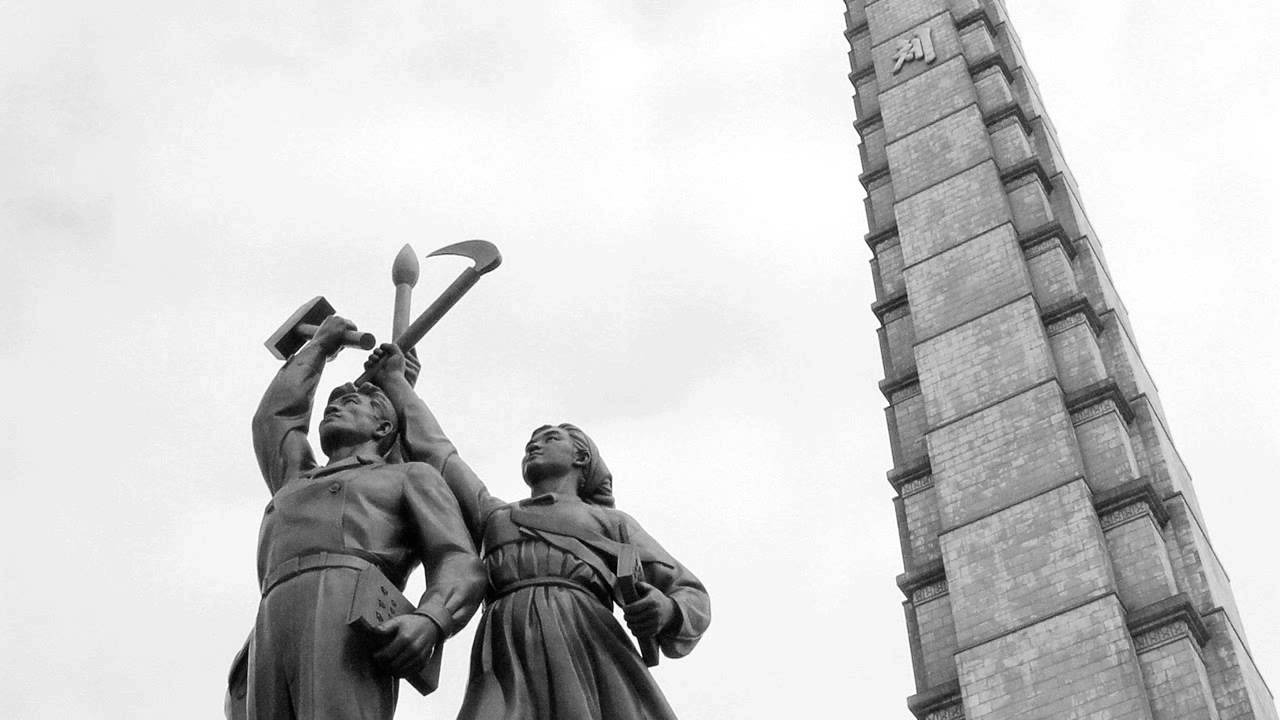
Socialism
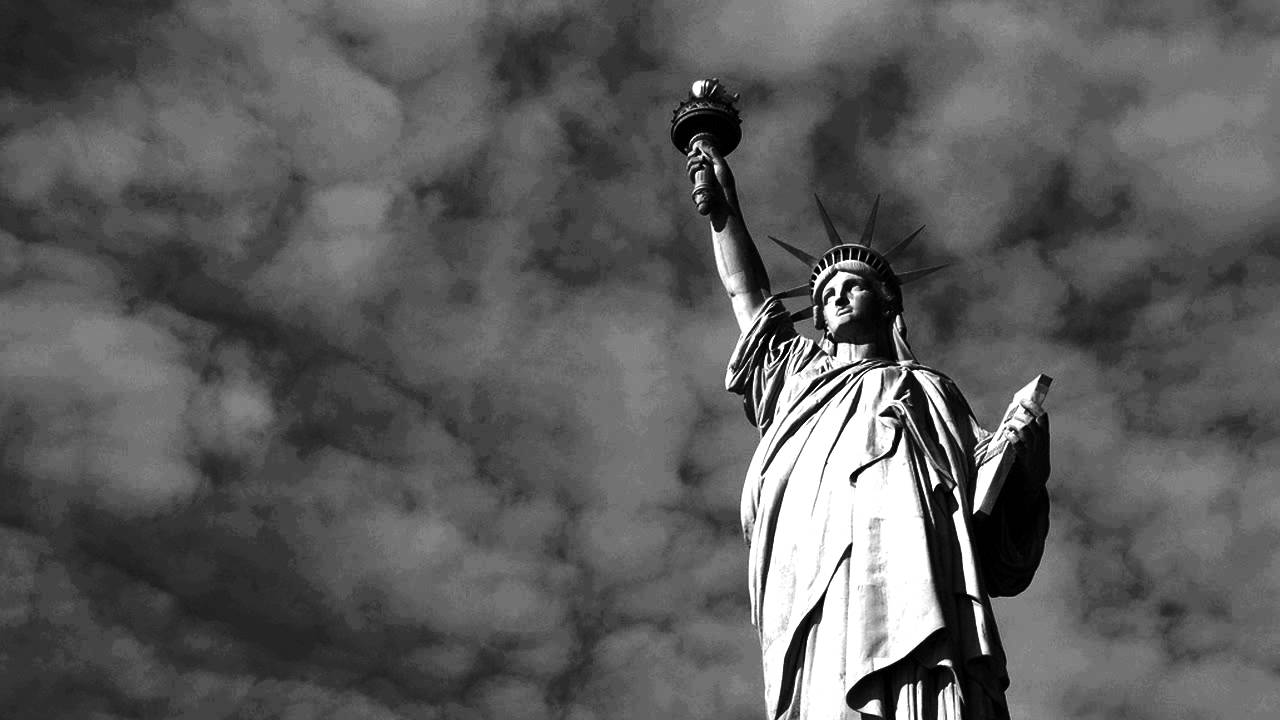
Democracy
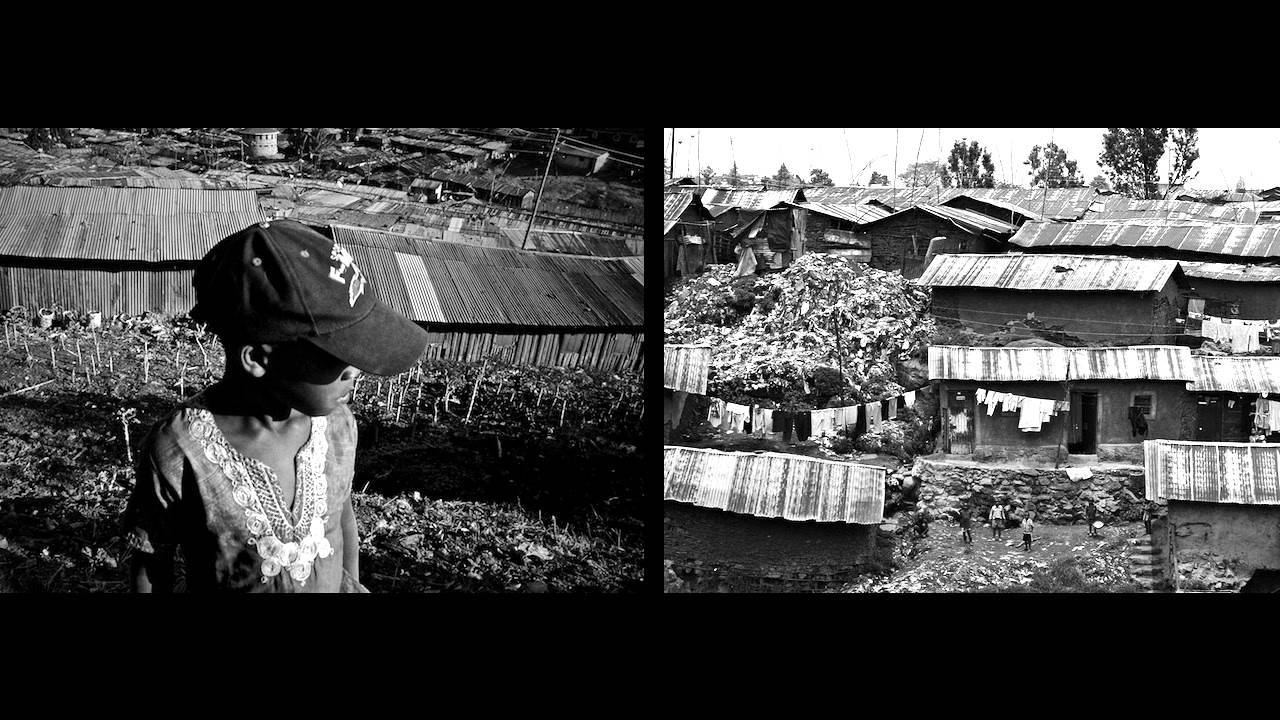
Poverty
The Environment
Adam Smith, Ludwig von Mises, Friedrich Hayek, Ayn Rand, Milton Friedman & Capitalism?
Very slick presentation. I mentioned to you some time back that I compose piano and I would be happy to write some original music if you ever need it.
Can you give us some hints on how you go about producing these? I.e. where do you get the images? What software do you use to encode the movie? And did you do the voiceover yourself on this one with a voice-changer or did you get someone else to vocie it over for you?
Clayton -
What did you use for the voiceovers?
That is great to know. I will keep that in mind and spread the word if you don’t mind.
https://forum.freecapitalists.org/t/capitalism-in-one-lesson-the-video/18910/5
That would be some voice changer.
No problem. I’ve always got stuff in flight that I write for my family, friends or my own amusement but I would welcome the challenge of writing something for a real project.
Clayton -
Yeah, I remember the offer. I’ll try to think of it if it comes up again. There is a lot of creative commons music available though, which makes it reasonably easy to find matching music. In Capitalism In One Lesson, it was cool that I could use the music that I did, which actually comes originally from The God Who Wasn’t There , and will be recognized by many.
I’m hoping you can enlighten me on the following though. You’re saying you want to help but I’ve contacted you in three different ways asking if you want to create your second blog-post on my site but I get no response (not even one explaining why you don’t want to).
I got the images from the Flickr creative commons section ( http://www.flickr.com/creativecommons/ ). I edited them in a way that you could with most general purpose image editors. The popups where created in an image editor too, using transparency, and then in the video editor I applied many transitions to get this effect. Getting the timing right was tedious.
I paid $275 to get the voice job done. I put up my script on two different voice-acting websites. Voices.com is the biggest one. I got up to approx 50 offers for it (on the two sites in total), where about 60% give you a short sample-reading of the script that you put up. It is a really technical script and most of them didn’t get it right at all. So this is a great proces because you can tell exactly what you’re getting.
After I awarded the job it was done quickly. I had asked him to do it slower than in the sample, but it was still too fast. I had to insert a lot of pauses manually, which is fine, but also I had to slow down actual reading itself (which Audacity can take care off, while keeping the pitch in tact). This made the speed workable and proper for the video but sadly it did introduce some sound artifacts that you can hear mainly in the beginning of the video. But most people probably don’t pay attention to it. But such a thing is important to realize when you’re directing someone to do something. In an email later he said if he had known my problem he would have done it again, which I didn’t realize at the time was part of the deal.