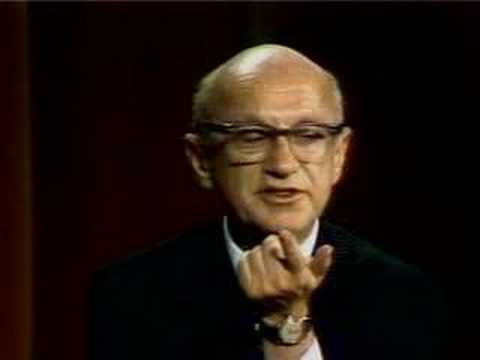
Near the end of this video, Milton Friedman says he wouldn’t pass a law requiring babies to be strapped in cars, but he would make negligent parents subject to suit. In some other video, he also says that companies shouldn’t be required by law to “accurately” label their products but should be subject to suit if they commit fraud.
I get that libertarian rights rule out deterrence as coercive, but is this really sensible? Wouldn’t law enforcement become reactive and not proactive? Wouldn’t more crime arise? Where I live, in Canada, the majority of people are in favour of random breath testing on public roads, and there’s strong evidence that it’s reduced drinking and driving deaths where it’s been implemented (Australia, Finland, etc.) Should we reject it nontheless as a matter of principle? And how could we possibly make this position palatable to people who have lost family members to drunk driving?
(Although I suppose if all policing was privately contracted, drunk driving patrols could be a condition of that contract.)
I’d be interested to see this evidence that random breath tests reduced drinking and driving.
But even still…listen to Friedman here (particularly at 4:03)
The bottom line is, if you simply want to make the argument that “Policy X, which imposes on individuals’ rights, is okay because it makes them safer”…I know a lot of people who would have a dandy ol’ time filling in that variable.
I would rather be exposed to the inconveniences attending too much liberty, than those attending too small a degree of it.
companies shouldn’t be required by law to “accurately” label their products but should be subject to suit if they commit fraud.
I think branding would do away with fraud problems. Companies know that if their brand is problematic, the public will stop buying from it.
Furthermore, simply because there is no state regulation, it doesn’t mean there is no private regulation. There will be licensing companies which label products as “safe”, which the public will come to trust. The desire for safety doesn’t disappear when you become more safe.
And add on contracts to that (“If this product is in any way deficient to you, blah blah, I entitle you to a compensation agreed upon through arbitrator X”).
the majority of people are in favour of random breath testing on public roads, and there’s strong evidence that it’s reduced drinking and driving deaths where it’s been implemented
I think libertarians have already covered that the roads should be private. Hence, if you dislike a specific road’s policy to not test drunk drivers, use another road! If road companies begin to lose customers, they will change their policy. Property rights solve. The problem in a democracy is that there are no recognized property rights, and hence no one has a “right” to institute any policy.
By all means, if a private road finds that customers enjoy the drunk driving testing, then it will stay in business.
Simply because we shouldn’t use a gun to make people take their vitamins it doesn’t mean that people shouldn’t take their vitamins of their volition.
Here’s a report from the MADD research library that summarizes much of it:
(Yes, I know the source is potentially biased. But it shouldn’t be rejected solely on that account.)
Interestingly I found one study that, in the course of arguing for “mobile” and not “static RBT”, says:
According to the MADD report, a successful RBT program has to have the “equivalent of at least one-third of licensed drivers […] tested each year”. It has combine mobile police units with stationary checkpoints. And a heavy level of advertising and publicity must be sustained so that people are convinced that if they drink and drive, they will get caught.
And have you looked into the methodology behind any of those studies? The MADD report seems to say nothing about that. Forgive me if I reserve judgement on these studies pending analysis of their methodologies.
Have you heard of John Lott’s More Guns, Less Crime? It’s a simple matter of arithmetic. Most people are good guys. The more people who have guns, the more good guys there are carrying guns. The more good guys carrying guns, the harder it is to commit a crime without the victim or a nearby good-Samaritan being armed.
The same logic applies to liability as a method of deterrence. If you have an FDA, then only the wise bureaucrats in the FDA are responsible for deciding what is safe, etc. But if everyone is simply liable for impurities in the food they produce and sell, everyone has to look over their own shoulder. Every food expert and every food safety study - whether conducted by the FDA or not - is potential evidence in a lawsuit meaning that the industry must keep itself abreast of the state of the art.
In fact, regulation is ultimately a way to limit liability. Basically, a food producer does not actually need to think about whether he’s producing food in a safe manner. He only needs to make sure he’s filled out all forms and complied with all inspections. Beyond that, he can wash his hands and say “not my department, go talk to the FDA” if someone gets sick from food he produced.
Finally, consider the possibility that food packaging may simply be being done at unsafe scales, or at least, at scales that are too large to be done safely economically and that the FDA acts as a cost-export (onto taxpayers) of large-scale food producers. A smaller farm is better able to track impurities and better separate their animals and crops (a source of impurities as in the recent E. Coli breakout on spinach from pigs walking through a spinach patch last year). We don’t know what the right, safe (and economical) scale of food production is and the FDA makes calculating this scale impossible. Simple legal liability would make operating at unsafe scales uneconomical (due to tort suits) and would force food production down to the correct scale.
In response to child seat belts, an interesting study by Freakonomics Steve Levitt turns conventional wisdom about car seats on its head. This is why regulators can never get it right… they’re flying by the seat of their pants on nothing but glorified hunches.
Drinking is a whole separate subject unto itself… the mania over drunk driving has a lot more to do with neo-Prohibitionism than it does anything to do with road safety. There is also something to be said about liability of the roads department and public police for the dangerousness of driving on public roads.
Basically, a food producer does not actually need to think about whether he’s producing food in a safe manner. He only needs to make sure he’s filled out all forms and complied with all inspections. Beyond that, he can wash his hands and say “not my department, go talk to the FDA” if someone gets sick from food he produced.
Autolykos took the words out of my mouth. It says nothing of the actual study. Since it doesn’t say otherwise, I have to assume it was a “study” conducted by Mothers Against Drunk Driving themselves. Yes, somehow I’m doubtful this is a credible source…I doubt it could even be called a study by any sort of rational standard.
To be honest this is actually less credible than the NAACP claiming there’s been increased racism in the United States over the last 100 years. I think the only thing that tops MADD talking about drunk driving might be Green Peace talking about the environment.
That’s a good question. According to Rothbard, fraud “involves the appropriation of someone else’s property without his consent, and is therefore ‘implicit theft.’”
Read the footnotes. Lots of studies that use data from independent surveys have found the same result, though with lots of qualifications like the ones I mentioned (e.g. in Finland, the drivers that get caught are mostly “problem” drinkers that would likely have been caught anyway, not the sort of people who sip a little too much at a party who are the main target of anti-“drinking and driving” programs), which question the appropriateness of RBT to begin with. But these people are all hacks?
So would you consider what Goldman Sachs and JPM did before the housing bubble burst to be fraud? That is, selling shitty securities and then betting against them because they knew they sucked so much. Under Rothbard’s definition it would seem the answer is no. Or for that matter what about the ratings agencies? With this definition, fraud is constrained to exchanges of goods. That is, does not encompass information-related matters. I can imagine big problems arising out of this if it was the precedent set in courts of law.
Rothbard’s ideal system would be quite different from one everyone is used to. People have grown up in a world where you can sue someone for saying something that embarasses you. You can take someone to court for simply promising to mow your lawn and then not following through on it.
From a logic standpoint, this creates much bigger problems than the ones you say you can probably imagine in a voluntary society. Information is not property. It is not scarce, it cannot be stolen, and it cannot be damaged. Therefore it cannot be owned. To claim you have “a right to your reputation” for example, is to claim you have a right to the thoughts of other people (in this case, what they think about you.) It certainly doesn’t take much to realize the severe flaws in this notion…and the problems that could easily arise not only from a flimsy interpretation, but if this were taken through to logical and even more specific conclusions.
The same goes for promisory contract law…the idea that you should be able to be forced to follow through on a promise…or on the expectations of someone else. Such a system is incredibly dangerous, and certainly is against liberty.