I agree with everything Student has said.
Wouldn’t Mises’ defense of minarchism imply his belief in market failure?
I agree with everything Student has said.
Wouldn’t Mises’ defense of minarchism imply his belief in market failure?
I’m sure Mises, if he were alive, would disagree with you, since praxeologically speaking the concept of “market failure” is fictitious. Markets don’t fail, but people do.
At any rate you do raise a good point that his defense on coercively provided security is inconsistent with the rest of his arguments. Is it too hard to believe that he simply didn’t get that far? Perhaps for political reasons or who knows why?
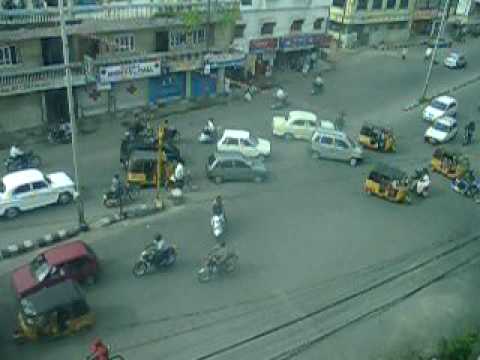
You must appeal to some sort of collective in order to define market failure. Taking the intersection, for example, we can say that “if everybody waited their turn”, they would all get home sooner. That is, if people acted “collectively”, there would be a more desirable outcome. But this outcome (everybody getting home earlier) can only be desired by a “collective” valuation, since rational individuals are indifferent to whether others get home earlier or not. Yes, the valuations of an individual happen to coincide with the “collective” valuation in this instance, but I posit that that is a coincidence of the chosen examples.
Think what you like. I’m more interested in debating substance and learning something in the process than exchanging pre-canned “my experts versus your experts” posts.
“[the] market [does] not do its job” - this is exactly what I mean… “its job” is a collective valuation. You are applying a criterion for success and asserting that the market fails to meet this criterion. You are reasoning about the market as if it has an end, such as being more efficient or maximizing prosperity or whatever. The market - like biological evolution - has no end or purpose, it is atelic.
I doubt the ROI of pondering the concept of “market failure”. Yes, mainstream economists spend a lot of time talking about it and think that it’s an important problem. I dissent. Entrepreneurial endeavor is the “solution” to the “problem” of market failure. What’s the big deal?
OK, so then we are in agreement anyway. It appears that the disagreement is either a “bad choice of words” or some other form of verbal crossed wires.
But the state of affairs where everybody just magically* cooperated to get home sooner is, indeed, a counterfactual world. The actual world we live in is characterized by rational actors who choose the “locally optimal” action irrespective of the larger consequences.
Yes, but the outcome is the outcome of collective action, not the outcome of individual action. If I choose route A over route B and get home faster, the outcome is the result of my own action. This, in turn, influences my future actions. But the outcome of the choices of many individuals cannot influence my future actions since I cannot control the actions of others. If I choose A and achieve a reward, then I may alter my decision-making strategy to incorporate A more of the time. But if I get rewarded or punished regardless of my own choices (as a consequence of the choices of many other individuals), my decision-making cannot be improved since my decision was not the controlling factor in the outcome.
I don’t really like the term “anarcho-capitalist”, I just prefer anti-state or anti-statist. And I’m no fundamentalist. I grew up in fundamental right-wing churches and I’ve gotten more than a lifetime’s worth of pulpit-pounding. I understand the issue of market failure and I assent to your above description of Friedman’s example as accurate. Nevertheless, I think that it’s either an unimportant problem or a poor way to think about the important problems it touches on. I understand that most economists disagree.
Yes, transaction costs are important. There are problems with Coaseanism, however. This is one area where I disagree with David Friedman… he thinks that Coase is, generally speaking, the “solution” to transaction cost problems and property rights disputes. I think the solution is a lot more complex.
Clayton -
*In other words, irrationally
http://blog.mises.org/13561/fix-traffic-problems-get-rid-of-lights-and-signs/
How come they are not listening to their rational self-interest according to friedman?
Maybe it would be easier if they used “The Market” for market transactions in general and “the market” to discuss specific markets?
"I’m sure Mises, if he were alive, would disagree with you, since praxeologically speaking the concept of “market failure” is fictitious. Markets don’t fail, but people do.
At any rate you do raise a good point that his defense on coercively provided security is inconsistent with the rest of his arguments. Is it too hard to believe that he simply didn’t get that far? Perhaps for political reasons or who knows why?"
That has to be some sort of a fallacy. Any brilliant intellectual can be “accused” of not taking his theory a few inches further. And if he did, then there are always a few more tiny steps that he could be “blamed” for not making. And so on and so on, until it is concluded that the first brilliant intellectual should have solved everything.
Mises was already way out there for his time. He was practically an anarchist for that time, which is why I’m sure he went out of his way in quite a few places to say that he’s not. Anyway, it’s easy for us to take all that we know for granted when decades of great works by others is available at our disposal in such an efficient manner.
All truths are easy to understand once they are discovered; the point is to discover them.
–Galileo
I agree DD5. We naively expect too much.
Maybe it should be called “failure to create a market” instead of “market failure.”
Yes. Mises was human. Humans are imperfect. He laid a foundation that has helped lead to positions he didn’t hold. This is true of nearly every thinker. Ideas are part of the process of thought development, not the final authority on any issue.
To be fair, Mises was for conscription though. He didn’t just retreat from anarchism, he saw defense as a non-market good. And I think it is ok to embrace him despite this position, but not in the best interest of Mises or Austrian thought to white wash it (not saying you are, but it does go on in these discussions).
Good one.