You show no intention to keep the air, really. If you stored it in pressurized containers, power to you. But you didn’t.
Why I voted for Ron Paul
by JOE SCARBOROUGH
Foreign Troops Training In Tampa for GOP Convention Take Over?
Really?
In the clip where the mayor was being rescued and lead to the boat, why was he wearing handcuffs? (http://www.youtube.com/watch?v=foqEFUWm0B8#t=139s)
@Muffinburg: I had the same question when I first saw this clip a couple days back on LRC. The whole thing is clearly a psyop (staged propaganda) and I think this was part of it, too. It may actually be a genuine tactical hostage-rescue practice to just cuff everybody - good guys and bad guys alike - for later sorting but if they were actually going into rescue a high-profile target, you can rest assured he would not be handcuffed, particularly hands-behind-the-back.
By the way, everyone should learn about how to escape from standard-issue hand-cuffs:
http://www.youtube.com/watch?v=Qdzso5reovk
This is why SWAT/spec-ops don’t even use these hand-cuffs, they just use zip-ties.
If you’re in good shape and normally proportioned, you can move the hand-cuffs from your back to your front easily. Some people can just twist their shoulder around and move them over their head. I have no idea how they do that.
If you have a little extra weight, you still might be able to move them behind your butt. To do it, lay down on the ground on your back/shoulders and put your feet up in the air above you. Curve your back and use the weight of your legs to push your butt through the opening between your arms. As your arms go down over your butt, you can use your arm strength to curve your back further than you normally would be able to.
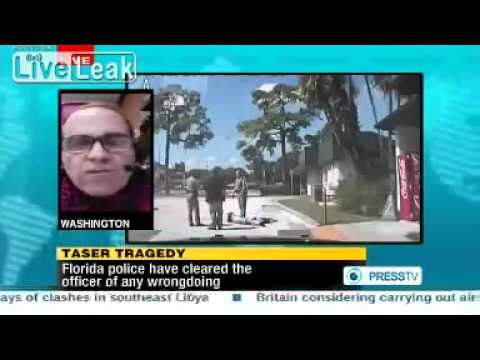
Once you get your arms past your butt, you will now have them ringed behind your knees. Sit up on your butt and catch your breath. The key here is to remove one leg at a time. Keep your left leg straight and bend your right knee to a 90-degree angle. Now, move your right elbow below your right knee. Extract your right foot from the arm-loop. Now bend the left leg and do the same. You have now moved the handcuffs from behind to the front. This is important to know as your life may depend on it if a cop has cuffed you and abandoned you and you need to run for your life. You can’t run nearly as well with your arms behind your back but you can make good time with the cuffs in front. You can also defend yourself to some extent with the cuffs in front. But if you find yourself cuffed for whatever reason, don’t just do this for kicks. It will enrage the police and they will likely resort to brutality to punish you for doing this. Mundanes are not supposed to even know this is possible. This happened to this young woman who is now dead (brain-dead):
Clayton -
Paul Krugman claims he has been right about… everything.
That’s one slippery slope. If you leave your house to go on vacation and I think you’ve abandoned it, more power to me.
Video shows Zimmerman’s account of fatal fight
Moody’s cuts credit ratings of 15 major banks
Murray and PoliticsPosted on June 16, 2012 by Lew Rockwell
Paul Krugman on Ben Bernanke’s ‘Green Shoots’
http://www.pbs.org/newshour/businessdesk/2012/06/paul-krugman-on-ben-bernankes.html
Continuing our profile of economist Paul Krugman, we turn to a topic in the news today: the Federal Reserve. On Monday, remember, we featured Krugman on European austerity, with a response from Jacob Kirekegaard of the Peterson Institute for International Economics: Paul Krugman on Germany’s ‘Whips and Scourges’.
Tuesday, Krugman focused on Spain and Germany with critique from Terence Burnham: Paul Krugman on Europe ‘Doing the Unthinkable’.
We start Wednesday’s post by returning to the First Parish Church in Harvard Square, were Krugman spoke with NPR’s Tom Ashbrook, host of the daily show On Point, which originates in Boston. Ashbrook’s question (a few weeks ago) was about Fed head Ben Bernanke (read the transcript below).
We’ve been getting several responses to Krugman’s take on Bernanke. The first comes from Mark Gertler, an economist and professor at New York University who has authored papers with Krugman.
Response: ‘The Fed Can Do More’
Mark GertlerI disagree with Krugman about monetary policy – I think he vastly overstates what the Fed can do now. While I agree with him on just about everything else, what just happened today is a good example of why things are so difficult for the Fed. The Fed announced a purchase of nearly $250 billion long maturity government bonds, and, basically, long rates did not move. With rates so low, it is difficult to push them down any further. So now it’s up to fiscal policy (unfortunately!).
We also checked in with Wayne Angell, a Kansas Republican politician, economics professor and farmer who served as a Federal Reserve Board governor from 1986 to 1994. He went on to be Chief Economist at Bear Sterns & Co., Inc. and now runs a consulting firm, Angell Economics.
Response: ‘Little Impact from Operation Twist’
Wayne AngellThe Federal Open Market Committee (FOMC) and Chairman Bernanke have focused their attention on lowering long-term interest rates. What they need to do is to unlock short-term funds by lowering the 25-basis point interest rate paid to banks for holding sterile reserves at the Fed.
The threat of stricter international regulation known as Basel III and regulatory intervention here in the U.S. has increased the perception of risk associated with expanding bank balance sheets. The 25-basis point payment for sterile deposits at the Federal Reserve with zero risk has incapacitated monetary policy.
Operation twist and quantitative easing has little effect. Krugman and others see this. It is time for an operational change at the Federal Open Market Committee.
It is time for an operational change at the Federal Open Market Committee.
–WAYNE ANGELLI have suggested to the monetary advisory committee for the FOMC that it is past time to try another tack: lower the payment for NOT extending credit. The power of monetary policy is to alter behavior in the world of credit. The 25-basis point payment, along with extremely low money market rates, enables banks to earn 1/4 percent a year from the Fed for doing nothing.
Paul Solman adds:
A bit of translation is in order. We have written often here on Making Sen$e about the 25-basis point interest rate to which Wayne Angell refers. It’s called the IOER – Interest on Excess Reserves – and indeed, as of the Fed’s last release, U.S. financial institutions (mainly banks) have $1.55 trillion dollars on deposit with the Fed earning this rate of interest. By contrast, in 2007, that number was a mere $12 billion. Much has been made of the Fed’s “exploding balance sheet” and all the new money the Fed has created (electronically) since the Crash began. The total is around $2 trillion. But as you can see, three-quarters of that new money has been redeposited with the Fed. Why? Because, as Wayne Angell points out, the Fed is paying banks those 25 basis points as interest, and what is safer for the banks to do with the money than store it at the Fed? Lend it to a business in today’s shaky economy? To a real estate developer? To me? To you?
This is why Angell argues that the Fed drop the IOER payment: because he thinks it’s discouraging banks from making loans that would rev the economy. Paul Krugman is on vacation. When he gets back, it will be interesting to see if he disagrees with Angell, or concurs.
TRANSCRIPT: ‘Ben Bernanke and Chauncey Gardner’
Video above.Paul Krugman: When Ben Bernanke gave a speech in early 2009 about green shoots in the economy, it, I wonder if it was something subconscious going on because it was almost verbatim the speech in the movie ‘Being There,’ that Chauncey Gardiner gives about to the President about…
Tom Ashbrook: Blossoms.
PK: The blossoms will return in the spring.
Video clip of “Being There”
Chauncey Gardner: Yes, there will be growth in the spring!
Video clip of Ben Bernanke on 60 Minutes in 2009
Scott Pelley: Do you see green shoots?
Ben Bernanke: I do. I do see green shoots. Not everywhere…
Krugman: My former department chairman, now devoted, now demoted to running the world…
Ashbrook: The man who hired you.
Krugman: That’s right.
Ashbrook: You ungrateful wretch.
Krugman: Right. Well, I’m doing… No, I’m helping him.
Ashbrook: Yes.
Krugman: It’s an intervention on his behalf. Anyway it’s… But Ben Bernanke, actually, he has a board too, so there has to be… The Fed can, the Fed can signal, mostly what it can do is it can signal that it’s going to be in no hurry at all to raise interest rates, that it’s willing to allow inflation to rise some, which would help probably not by itself enough but combined with these other things…
Ashbrook: Well, he has said 2014.
Krugman: But that’s, that’s way too close. What he needs to have right now from the outside is someone making that case. He’s been getting all of the sniping at him has been coming from the right, from people who claim that he’s going to turn us into Zimbabwe and he needs somebody saying no…
Ashbrook: 10,000 percent inflation.
It astonishes me that given the reality of catastrophic unemployment, catastrophic long-term unemployment, people instead of being frightened of that are frightened about hypothetical inflationary breakouts which are nowhere on the horizon.
–PAUL KRUGMANKrugman: Right, turning us into a second Great Depression. How can I say this. It astonishes me that given the reality of catastrophic unemployment, catastrophic long-term unemployment, people instead of being frightened of that are frightened about hypothetical inflationary breakouts which are nowhere on the horizon.
Ashbrook: But you’re confident that the Fed can reel it back in on the other side?
Krugman: Yes!
Ashbrook: They have the tools. They have, Bernanke expressed some…So we don’t want to put at risk the credibility that we’ve built…
Krugman: Yeah, but he’s also said on other occasions that we would have no trouble controlling inflation. So, if we could wave away the politics, it could be done very quickly. In the real world, well, this is why we write books, right, to make a case, to pound on this so that people understand that none of this has to be happening. So that’s one thing but I’m not sure how…
Ashbrook: You’re going to have a great reunion with Ben Bernanke.
Krugman: I know, that’s going to be interesting.
I doubt that’s even in the top five reasons. Zip-ties are cheaper, lighter, smaller, (in some respects) quicker…and you can carry a ton of them.

An interesting website: http://www.panarchy.org/index.html
I remember seeing a video on breaking out of zip ties pretty easily…
Yeah that was Scam School too. Problem is, it’s too basic, and only works on a regular zip tie. They take 15 minutes to essentially just tell you to make sure you position your arms in such a way to make the zip tie seem tighter and more secure on you than it actually is, so that you can just slip your hands out of it.
This one was much cooler, and only took 50 seconds…but again, it only works on a single zip tie. These method will obviously not work on the actual zip-tie cuffs that the pigs use.

My latest article:
Menger versus Mises and Rothbard
http://nielsio.tumblr.com/post/25583537960/menger-versus-mises-and-rothbard
Eye for an eye, hair for hair? Judge orders Price woman to cut off daughter’s ponytail in court
AWESOME
I don’t care if this judge has made terrible rulings in the past, this is just pure gold.
Bilderberg Operative Pushes Mandatory Internet ID for Europe
A Forewarning: Cities Shutting Off Street Lights to Save Money
New York Lawmakers Messing Big Time with Anonymous Commenters
Lew Rockwell: What To Expect at the GOP Convention in Tampa
What Was the Federal Reserve Telling GS CEO Lloyd Blankfein During the Financial Crisis?
Ron Paul versus Barack Obama, on Weed
Romney’s Big Fat Wet Kiss to Keynesian Economics
How to Land a Job Using Social Media
The Account the Department of Homeland Security Uses to Monitor Social Media?
Lawyers to Multinationals: Get Your Money Out of Greece
Another Politician Taking Credit for a Dubious Economic “Comeback” (It’s Chris Christie)
The Nouveaux Statists Party On in Über-Washington
Fed to Money Market Funds: Get Your Money Out of Europe
“U.S. officials are very concerned about the eurozone blowing up. How concerned? This Keynesian former senior Treasury official asked me in something close to exasperation, 'How would the Austrians handle this situation?'”